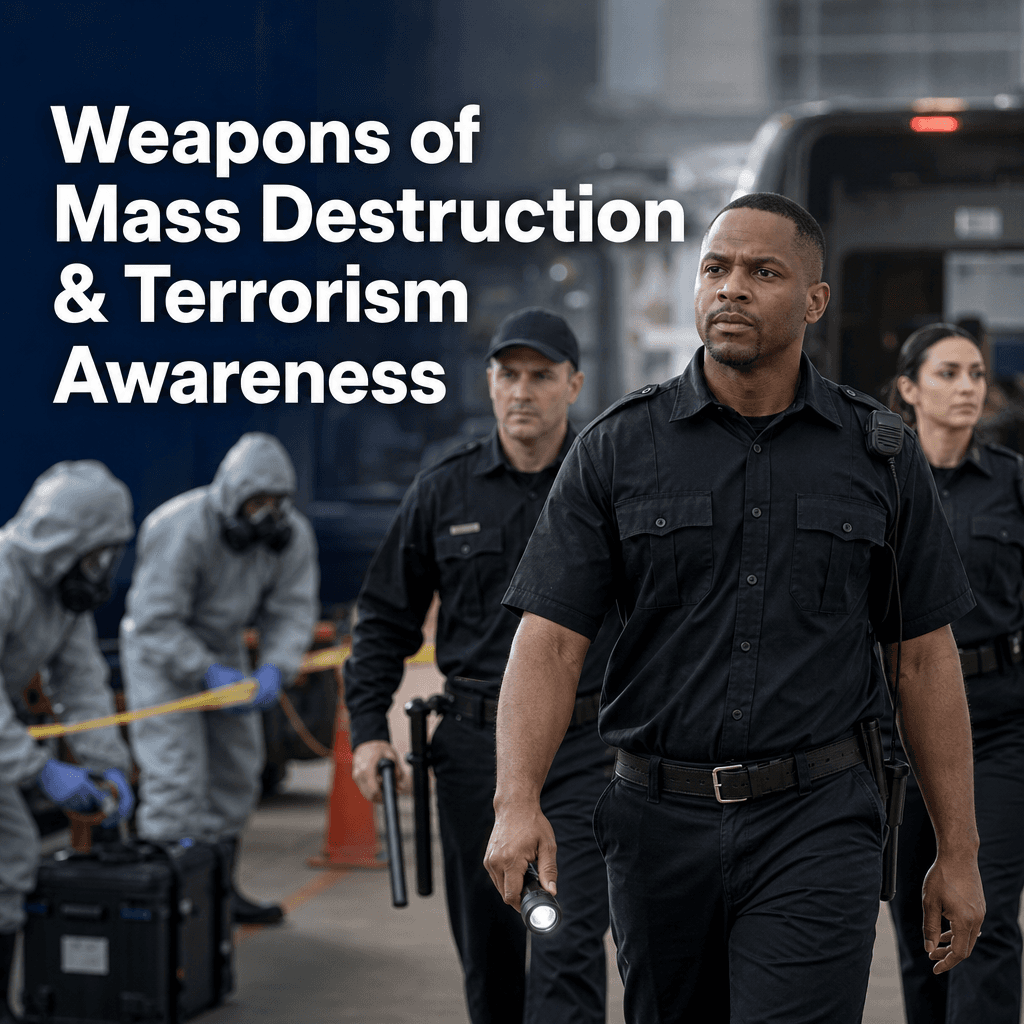
This course provides comprehensive terrorism and Weapons of Mass Destruction (WMD) awareness training for security professionals, emphasizing prevention, recognition, reporting, and appropriate response. Participants examine the fundamentals and changing nature of terrorism, the role security personnel play in preventing WMD-related incidents, the Terrorism Planning Cycle, suspicious activity and pre-incident indicators, and the major categories of Weapons of Mass Destruction. The course also addresses WMD incident management and response, personal safety considerations, and the coordination and sharing of critical information with supervisors, emergency responders, law enforcement, and other appropriate authorities. Together, these modules strengthen situational awareness, threat recognition, professional judgment, communication, and emergency-response readiness, helping security professionals identify developing threats, protect themselves and others, and contribute effectively to terrorism prevention and coordinated incident response.
CA PPO #16744 & CA PI #27756
What's included
Work through the modules at your own pace. Your progress saves automatically, so you can stop and pick up where you left off.
3A Intro to Terrosim and WMDs
This module introduces security professionals to the fundamental concepts of terrorism and Weapons of Mass Destruction (WMDs), emphasizing the role private security personnel can play in prevention and early detection. Participants examine the basic characteristics of terrorist activity, common threat considerations, and the importance of situational awareness when identifying behavior or circumstances that may indicate potential security concerns. The training establishes a foundation for understanding how terrorism-related threats may affect private-sector environments and why security professionals are often positioned to observe important pre-incident indicators. By completing this module, participants will strengthen their awareness of terrorism and WMD-related risks and better understand their responsibility to observe, recognize, and appropriately report potential threats.
3B The Role of a Security Officer in Preventing WMDs
This module examines the critical role security professionals play in helping prevent terrorist activity involving Weapons of Mass Destruction (WMDs). Participants explore the nature of terrorism, why California may be considered a potential target environment, and the responsibilities and tasks security personnel perform as part of broader prevention efforts. The training emphasizes observation, awareness, recognition of unusual or suspicious activity, and the importance of understanding how routine security duties can contribute to identifying potential threats before an incident occurs. By completing this module, participants will better understand how their position, daily responsibilities, and access to people and environments can support terrorism prevention, public safety, and timely communication of security concerns.
3C Terrorism Planning Cycle
This module examines the critical role security professionals play in helping prevent terrorist activity involving Weapons of Mass Destruction (WMDs). Participants explore the nature of terrorism, why California may be considered a potential target environment, and the responsibilities and tasks security personnel perform as part of broader prevention efforts. The training emphasizes observation, awareness, recognition of unusual or suspicious activity, and the importance of understanding how routine security duties can contribute to identifying potential threats before an incident occurs. By completing this module, participants will better understand how their position, daily responsibilities, and access to people and environments can support terrorism prevention, public safety, and timely communication of security concerns.
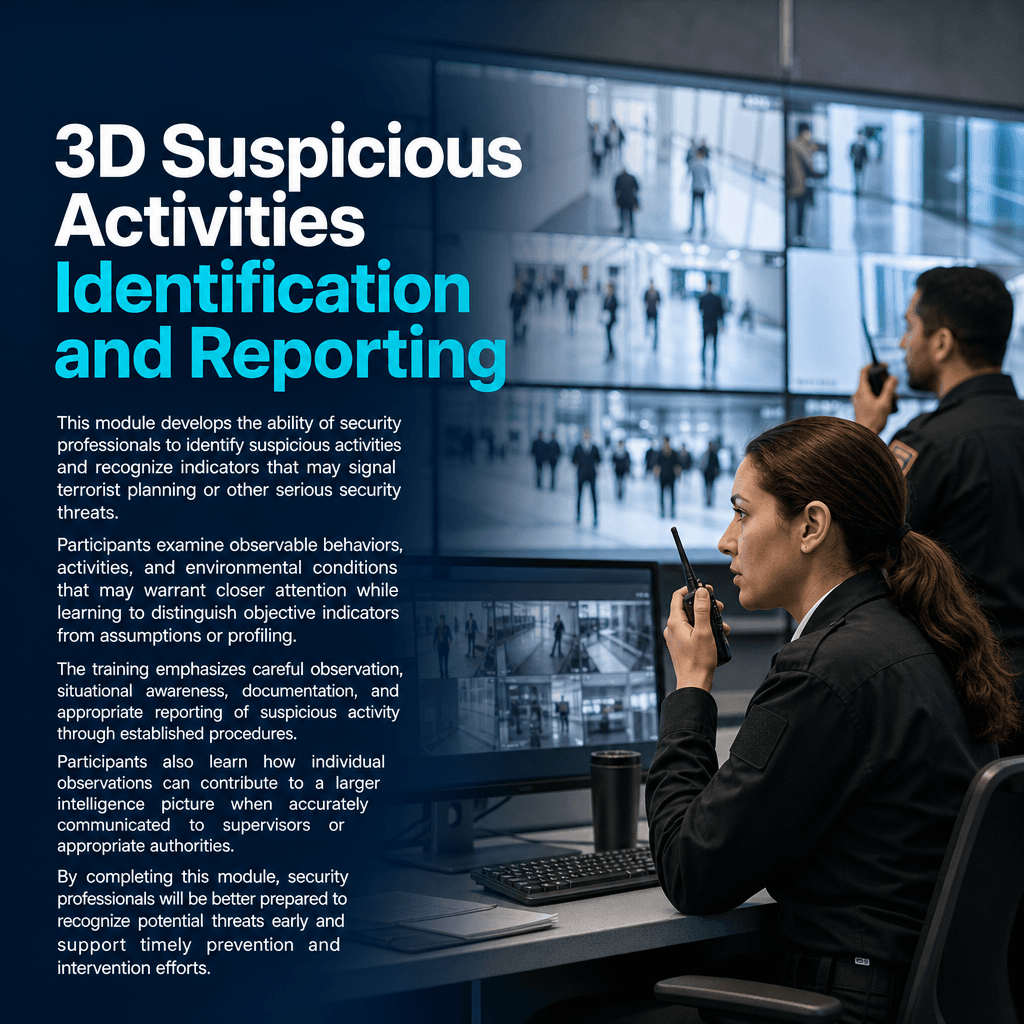
3D Suspicious Activities Identification and Reporting
This module develops the ability of security professionals to identify suspicious activities and recognize indicators that may signal terrorist planning or other serious security threats. Participants examine observable behaviors, activities, and environmental conditions that may warrant closer attention while learning to distinguish objective indicators from assumptions or profiling. The training emphasizes careful observation, situational awareness, documentation, and appropriate reporting of suspicious activity through established procedures. Participants also learn how individual observations can contribute to a larger intelligence picture when accurately communicated to supervisors or appropriate authorities. By completing this module, security professionals will be better prepared to recognize potential threats early and support timely prevention and intervention efforts.
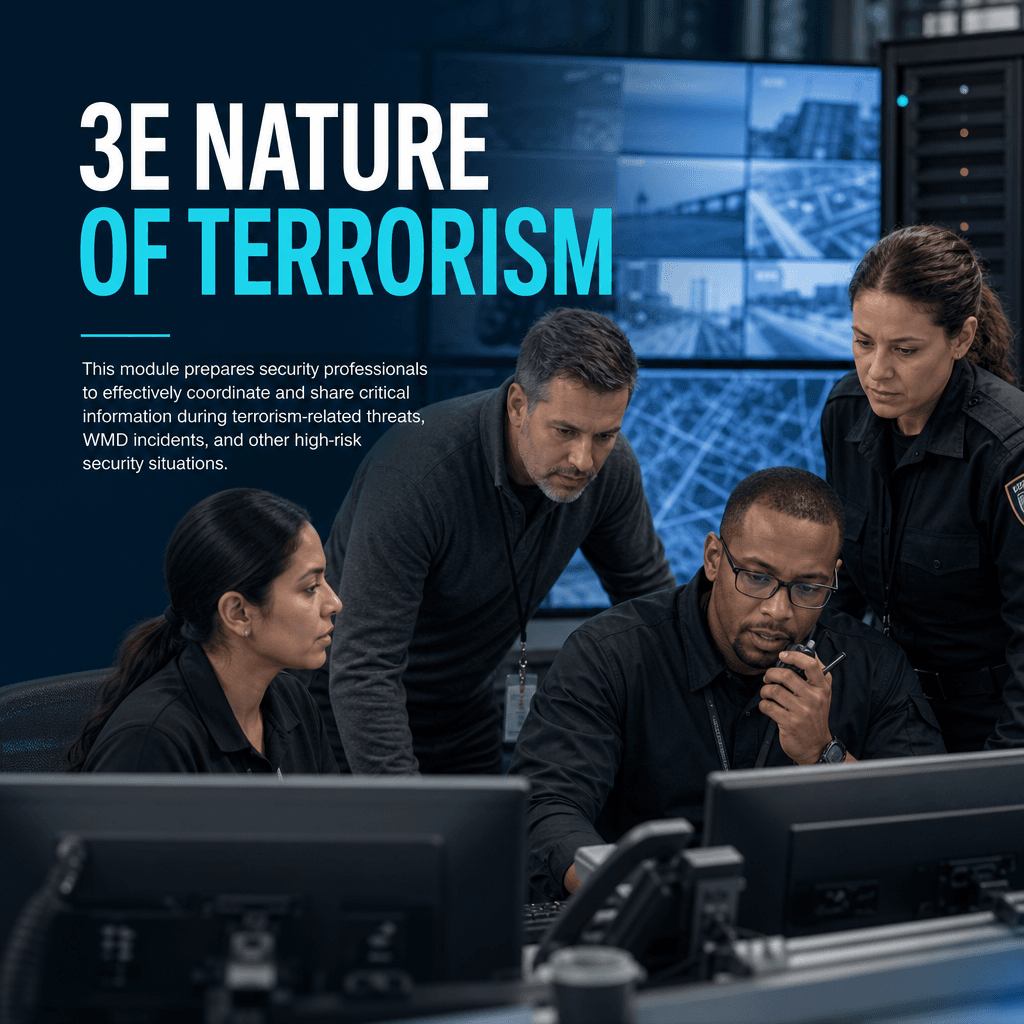
3E Nature of Terrorism
This module prepares security professionals to effectively coordinate and share critical information during terrorism-related threats, WMD incidents, and other high-risk security situations. Participants examine how information should flow between security personnel, supervisors, emergency responders, law enforcement, and other appropriate stakeholders. The training emphasizes timely, accurate, and relevant communication, helping participants understand how incomplete, delayed, or poorly communicated information can affect threat prevention and emergency response. Security personnel also learn the importance of documenting and communicating observations through established reporting channels. By completing this module, participants will strengthen their ability to contribute useful information to coordinated security operations and support faster, more informed decision-making during developing incidents.
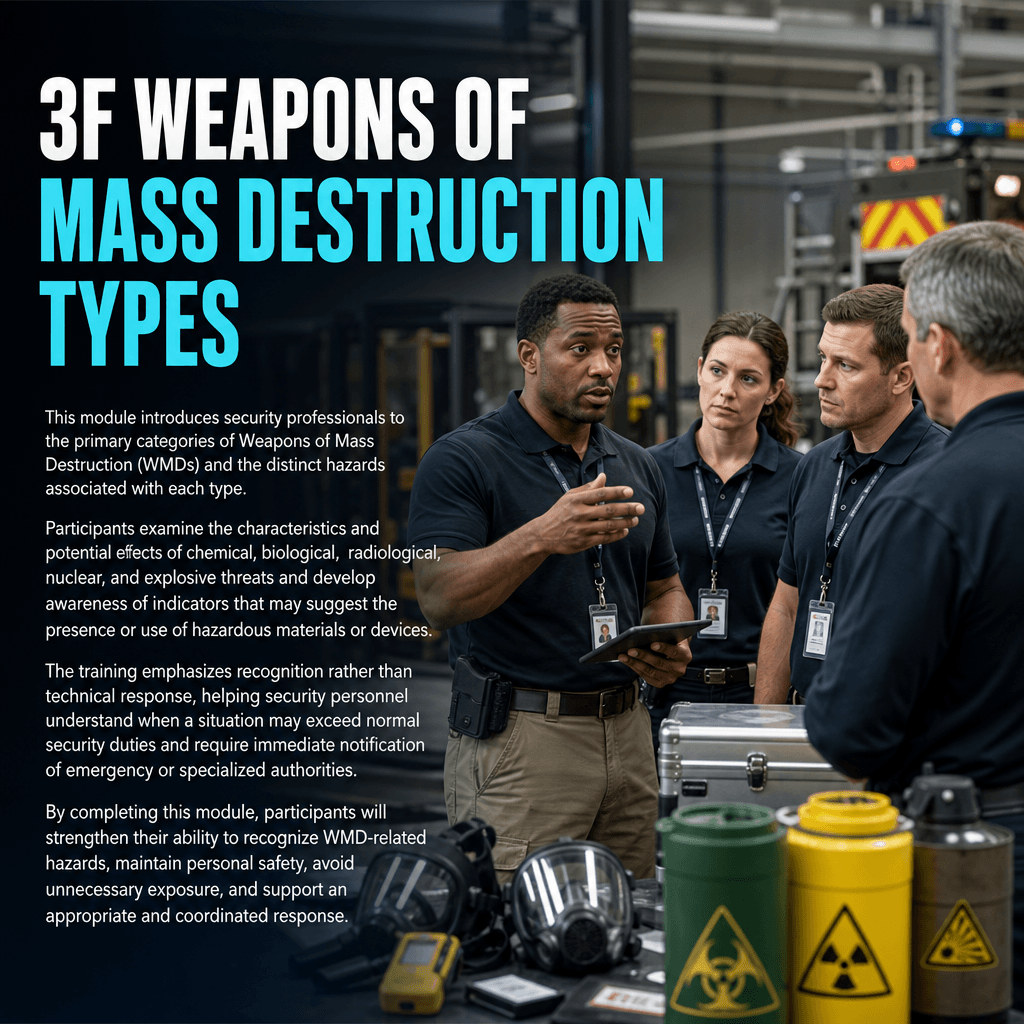
3F Weapons of Mass Destruction Types
This module introduces security professionals to the primary categories of Weapons of Mass Destruction (WMDs) and the distinct hazards associated with each type. Participants examine the characteristics and potential effects of chemical, biological, radiological, nuclear, and explosive threats and develop awareness of indicators that may suggest the presence or use of hazardous materials or devices. The training emphasizes recognition rather than technical response, helping security personnel understand when a situation may exceed normal security duties and require immediate notification of emergency or specialized authorities. By completing this module, participants will strengthen their ability to recognize WMD-related hazards, maintain personal safety, avoid unnecessary exposure, and support an appropriate and coordinated response.
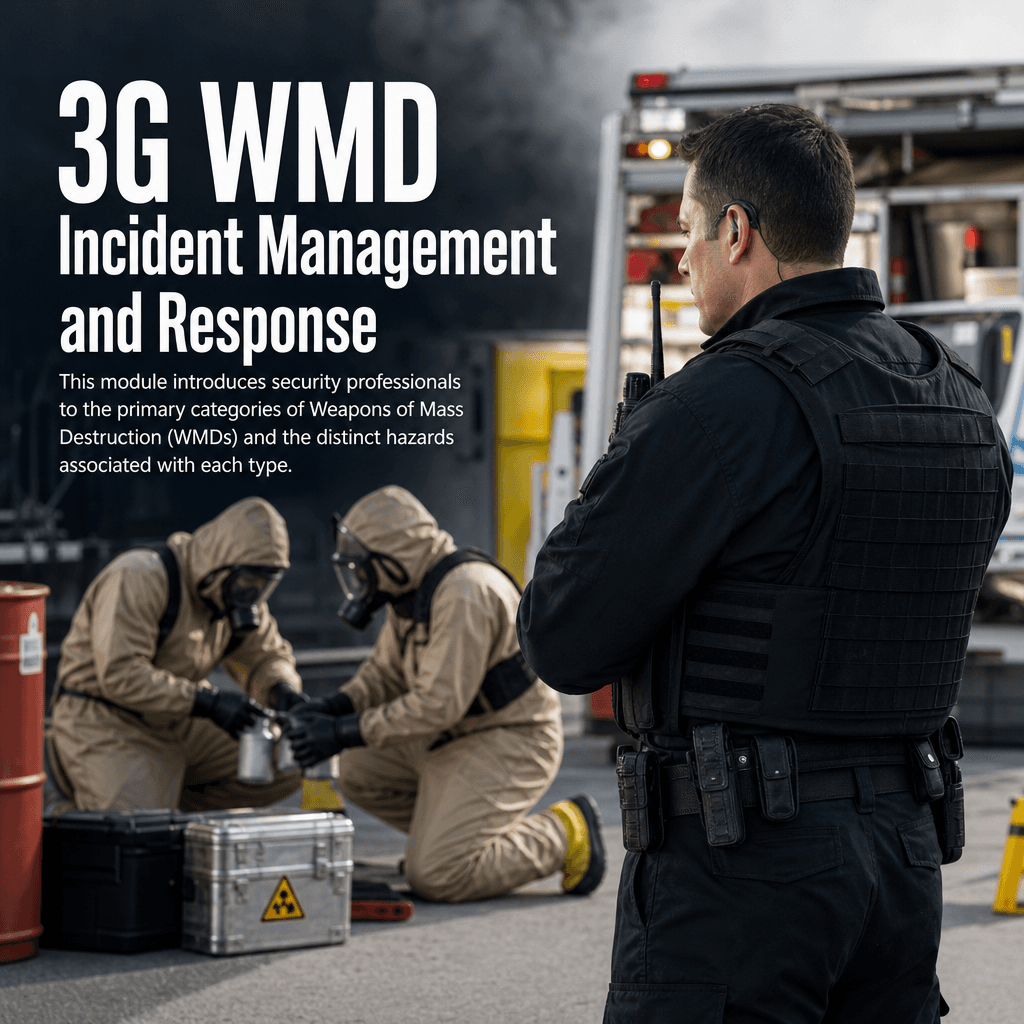
3G WMD Incident Management and Response
This module introduces security professionals to the primary categories of Weapons of Mass Destruction (WMDs) and the distinct hazards associated with each type. Participants examine the characteristics and potential effects of chemical, biological, radiological, nuclear, and explosive threats and develop awareness of indicators that may suggest the presence or use of hazardous materials or devices. The training emphasizes recognition rather than technical response, helping security personnel understand when a situation may exceed normal security duties and require immediate notification of emergency or specialized authorities. By completing this module, participants will strengthen their ability to recognize WMD-related hazards, maintain personal safety, avoid unnecessary exposure, and support an appropriate and coordinated response.
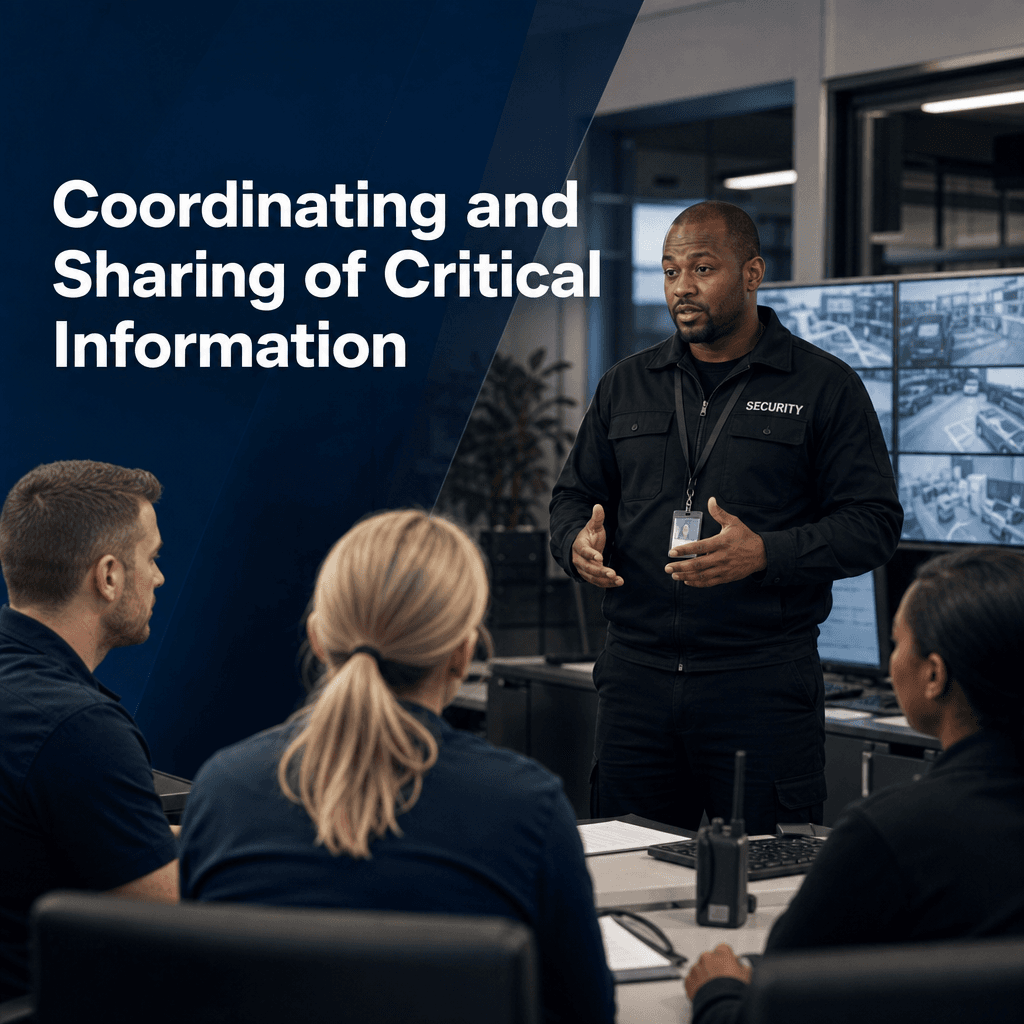
3H Coordinating and Sharing of Critical Information
This module introduces security professionals to the fundamental concepts of terrorism and Weapons of Mass Destruction (WMDs), emphasizing the role private security personnel can play in prevention and early detection. Participants examine the basic characteristics of terrorist activity, common threat considerations, and the importance of situational awareness when identifying behavior or circumstances that may indicate potential security concerns. The training establishes a foundation for understanding how terrorism-related threats may affect private-sector environments and why security professionals are often positioned to observe important pre-incident indicators. By completing this module, participants will strengthen their awareness of terrorism and WMD-related risks and better understand their responsibility to observe, recognize, and appropriately report potential threats.
How it works
Step 1
Purchase
Sign in and pay once through Stripe. Your training unlocks immediately.
Step 2
Complete the training
Work through the modules at your own pace. Your progress saves automatically.
Step 3
Finish and get credit
Your completion is recorded on your MyGuardForce profile, so you and your employer can see where you stand.
Officers working toward CA Guard Card. This course is published under that license.
Training your whole team?
Assign this course to every new hire from your MyGuardForce dashboard and get bulk pricing.
Our programs are hand-crafted by security, public safety, and military experts to provide highly specialized instruction designed to activate the learning centers in the brain. By combining information and experiential training, AEGIS efficiently shares, practices, and tests practical knowledge to ensure mastery of every subject.