This course provides comprehensive training on the role and responsibilities of security professionals working in educational environments, focusing on the legal, organizational, interpersonal, and operational aspects of school security. It covers the history of school security, the right to safe schools, authority to question individuals, responsibilities within learning environments, and the structure and organization of educational institutions. Participants will also examine relationships with students, faculty, staff, and other educational constituent groups, along with the broader responsibilities and limitations of security personnel. Through professional conduct, communication, observation, documentation, and report-writing principles, the course strengthens participants’ ability to support safe learning environments, make appropriate decisions within their authority, collaborate effectively with school communities, and perform their duties with professionalism, integrity, and accountability.
CA PPO #16744 & CA PI #27756
What's included
Work through the modules at your own pace. Your progress saves automatically, so you can stop and pick up where you left off.
44A History of School Security
This module examines the evolving role and responsibilities of security professionals within school environments, with emphasis on the principles and practices that support a safe educational setting. Participants will explore proactive and reactive approaches to school security, including the fundamental responsibility to prevent, observe, and report, the role of school security officers, and their relationship with local law enforcement. The training also examines the distinction between apprehension and prevention and applies these concepts to realistic school-based situations, helping participants strengthen critical decision-making, de-escalation, and professional responses while supporting the safety of students, staff, and the broader school community.
44B Right to Safe Schools
This module examines California’s constitutional guarantee of safe schools and the responsibilities associated with maintaining secure educational environments. Participants will explore Article I, Section 28 of the California Constitution, including the rights it establishes for students and staff, the shared responsibility for maintaining school safety, and the frontline role security officers play in deterring crime and supporting a safe learning environment. Through practical school-based context, the training connects these constitutional principles to the daily responsibilities of security personnel, helping participants understand how professional security practices contribute to protecting students, staff, and the broader school community.
44C Authority to Question
This module prepares school security professionals to question individuals appropriately while remaining within their legal authority and established school procedures. Participants will examine the basis for security decisions involving risk, threats, and assigned duties, along with relevant California Penal Code and Education Code provisions, jurisdictional limits on and off campus, and local policies and procedures. The training emphasizes distinguishing appropriate questioning from actions that may exceed legal boundaries, making sound decisions under pressure, and documenting interactions clearly and professionally. Participants will strengthen their ability to conduct school-based contacts with integrity, neutrality, respect, and an understanding of the limits of their authority.
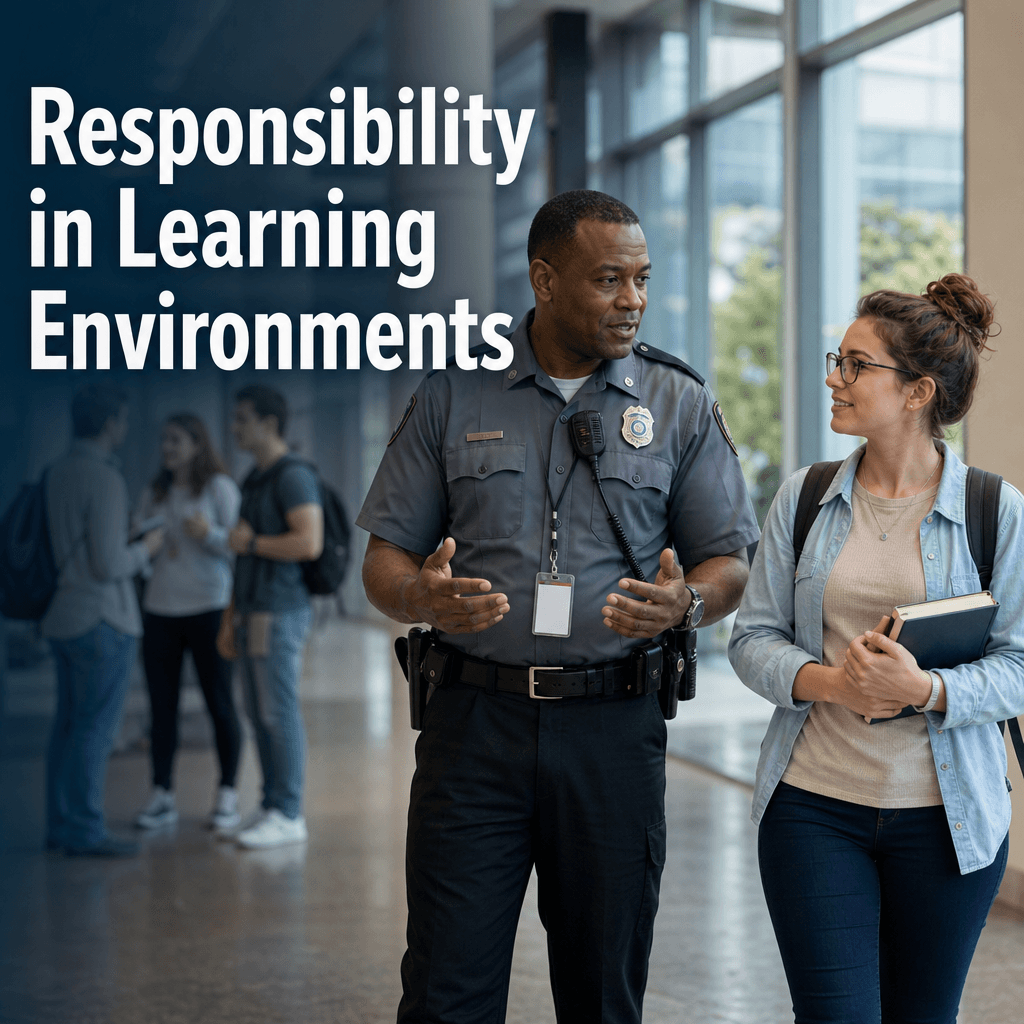
44D Responsibility in Learning Environments
This module examines the responsibilities of security professionals in maintaining safe, supportive, and legally compliant educational environments. Participants will explore the importance of recognizing students as primary clients while balancing security responsibilities with empathy, care, and respect for the learning process. The training addresses mandatory safety plans, disclosure of campus security policies and crime statistics, and the Kristin Smart Campus Safety Act. Participants will also strengthen their understanding of campus regulations, communication and coordination with educational staff, and the proactive role security personnel play in supporting campus safety without unnecessarily disrupting the educational environment.
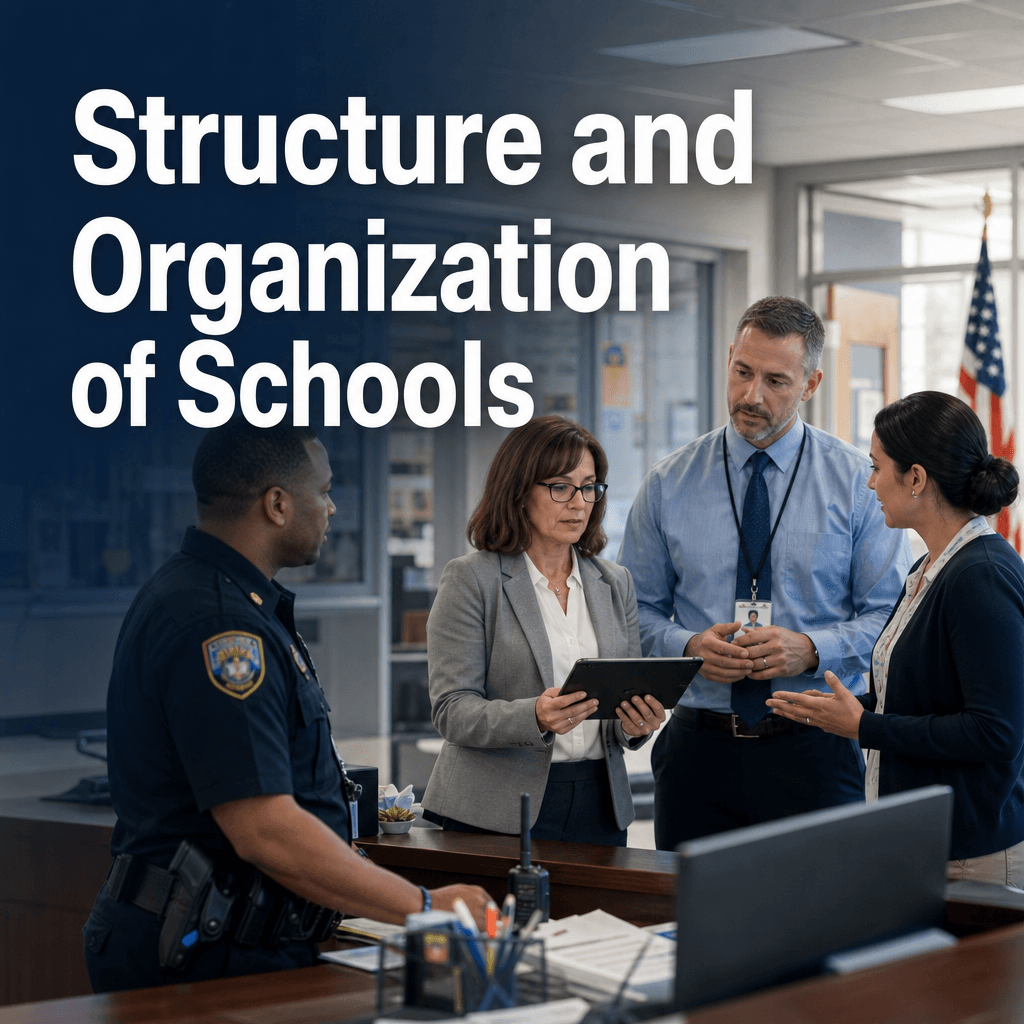
44E Structure and Organization of Schools
This module provides school security professionals with an understanding of how educational institutions are structured, administered, and supported, and how security functions within that organizational framework. Participants will examine school funding concepts, including ADA and FTES, organizational hierarchies, administrative roles, and the functions of ancillary groups that contribute to school operations. The training helps participants understand lines of authority and decision-making within educational institutions, strengthening their ability to communicate effectively with school personnel, navigate institutional protocols, coordinate appropriately with different departments and stakeholders, and support security objectives in alignment with the school’s broader educational operations.
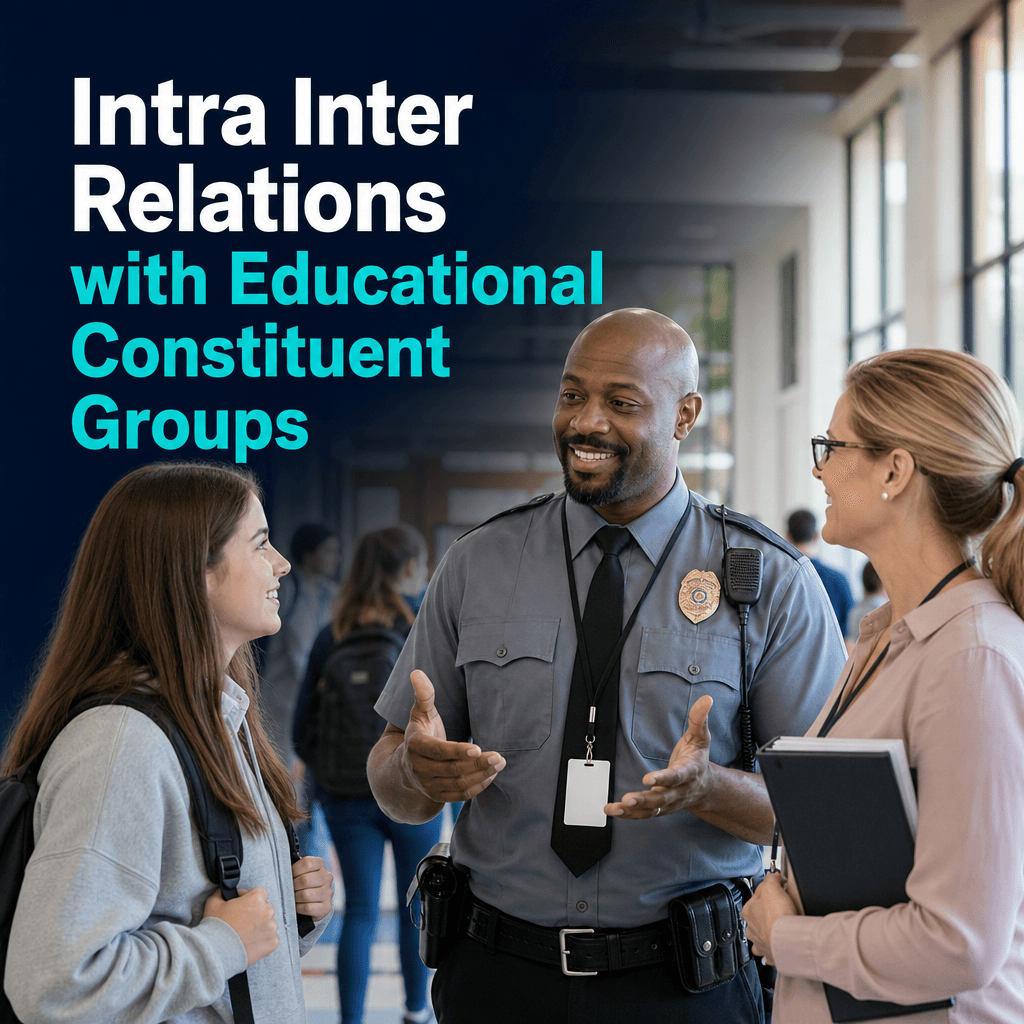
44F Intra Inter Relations with Educational Constituent Groups
This module prepares school security professionals to build and maintain effective relationships with the diverse groups that make up an educational community. Participants will examine how positive contacts, role modeling, student mentoring, ethical officer conduct, and sensitivity to campus-specific issues contribute to a safe and respectful learning environment. The training emphasizes trust, professional communication, and appropriate collaboration with students, faculty, staff, and other constituent groups. By strengthening interpersonal awareness and relationship-building skills, participants will be better prepared to serve as positive influences, navigate sensitive school situations, and support campus safety while maintaining professionalism and ethical standards.

44G Role Responsibility of Security
This module defines the fundamental role, responsibilities, and professional expectations of a security officer. Participants will examine the distinction between security officers and peace officers, the responsibilities associated with protecting people and property, and the importance of earning community trust through professional conduct. The training also addresses the differences between arresting and detaining a suspect, the process involved in making an arrest, and the application of reasonable use of force. Emphasis is placed on prevention, observation, and reporting as core security functions, preparing participants to recognize suspicious activity, prevent harm and property damage, and respond appropriately while remaining within the scope of their authority.

44H Report Writing
This module develops the report-writing and documentation skills security professionals need to accurately communicate incidents, observations, and evidence. Participants will learn how to gather relevant information, distinguish facts from conclusions, and prepare clear, concise, and effective incident reports. The training also addresses proper evidence collection and reporting procedures, including the value, collection, and transfer of photographic and video evidence. Emphasis is placed on accurate documentation and professional communication as essential components of effective security operations and positive working relationships with law enforcement. By completing this module, participants will be better prepared to document incidents objectively, preserve relevant information and evidence, and produce professional reports that clearly communicate the facts of an event. TIENES TODA LA RAZON , ERA EL H, ERROR MIO, GRACIAS POR NOTARLO, Y HACERMELO SABER Perfecto. Entonces queda corregido en nuestros records: Report Writing GC = 44H. Y seguimos con esa misma regla: si veo una numeración, título o mapping que no cuadra con lo que ya tenemos establecido, te lo marco en vez de asumir que está bien.
How it works
Step 1
Purchase
Sign in and pay once through Stripe. Your training unlocks immediately.
Step 2
Complete the training
Work through the modules at your own pace. Your progress saves automatically.
Step 3
Finish and get credit
Your completion is recorded on your MyGuardForce profile, so you and your employer can see where you stand.
Officers working toward CA Guard Card. This course is published under that license.
Training your whole team?
Assign this course to every new hire from your MyGuardForce dashboard and get bulk pricing.
Our programs are hand-crafted by security, public safety, and military experts to provide highly specialized instruction designed to activate the learning centers in the brain. By combining information and experiential training, AEGIS efficiently shares, practices, and tests practical knowledge to ensure mastery of every subject.