
This course provides security professionals with essential knowledge and practical strategies for maintaining personal safety, situational awareness, and operational readiness across a wide range of working conditions and potential hazards. It covers environmental threat assessment, safer subject contact, situational awareness, bloodborne pathogen exposure, cold and hot weather operations, hazardous materials, and communication strategies related to use-of-force situations. Participants will learn to identify developing risks, evaluate environmental and behavioral hazards, apply appropriate protective measures, use communication and de-escalation effectively, and make informed decisions that help reduce injuries, unnecessary escalation, exposure to hazards, and other risks while protecting themselves and others in the line of duty.
CA PPO #16744 & CA PI #27756
What's included
Work through the modules at your own pace. Your progress saves automatically, so you can stop and pick up where you left off.
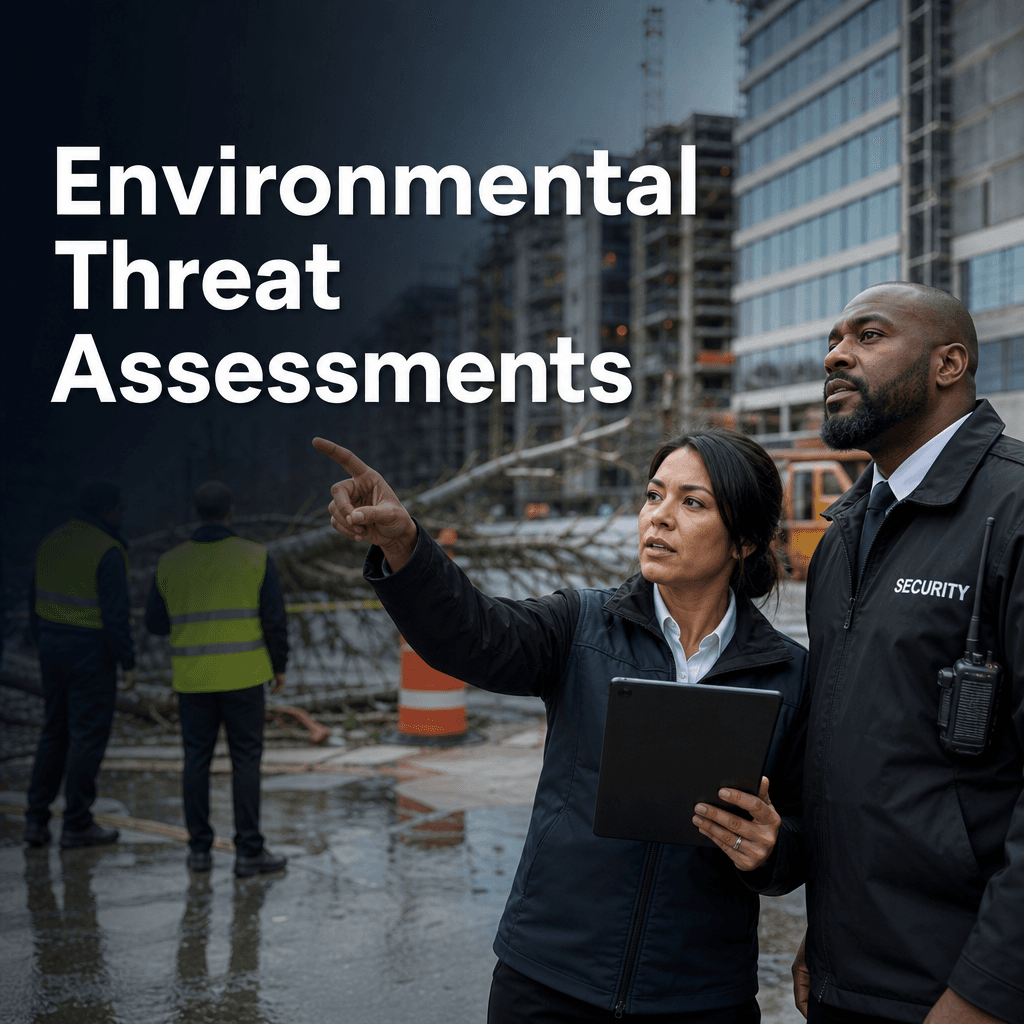
11A Environmental Threat Assessments
This module introduces security professionals to environmental threat assessment, focusing on recognizing and evaluating conditions that may affect safety, property, and business continuity. It covers natural disasters, climate-related disruptions, risks within city and neighborhood environments, and vulnerabilities created or reduced by urban and structural design. Participants will learn proactive assessment and prevention strategies, how to identify factors within their sphere of control, and how their decisions and actions can help reduce vulnerabilities, strengthen preparedness, and protect people and assets in changing environments.
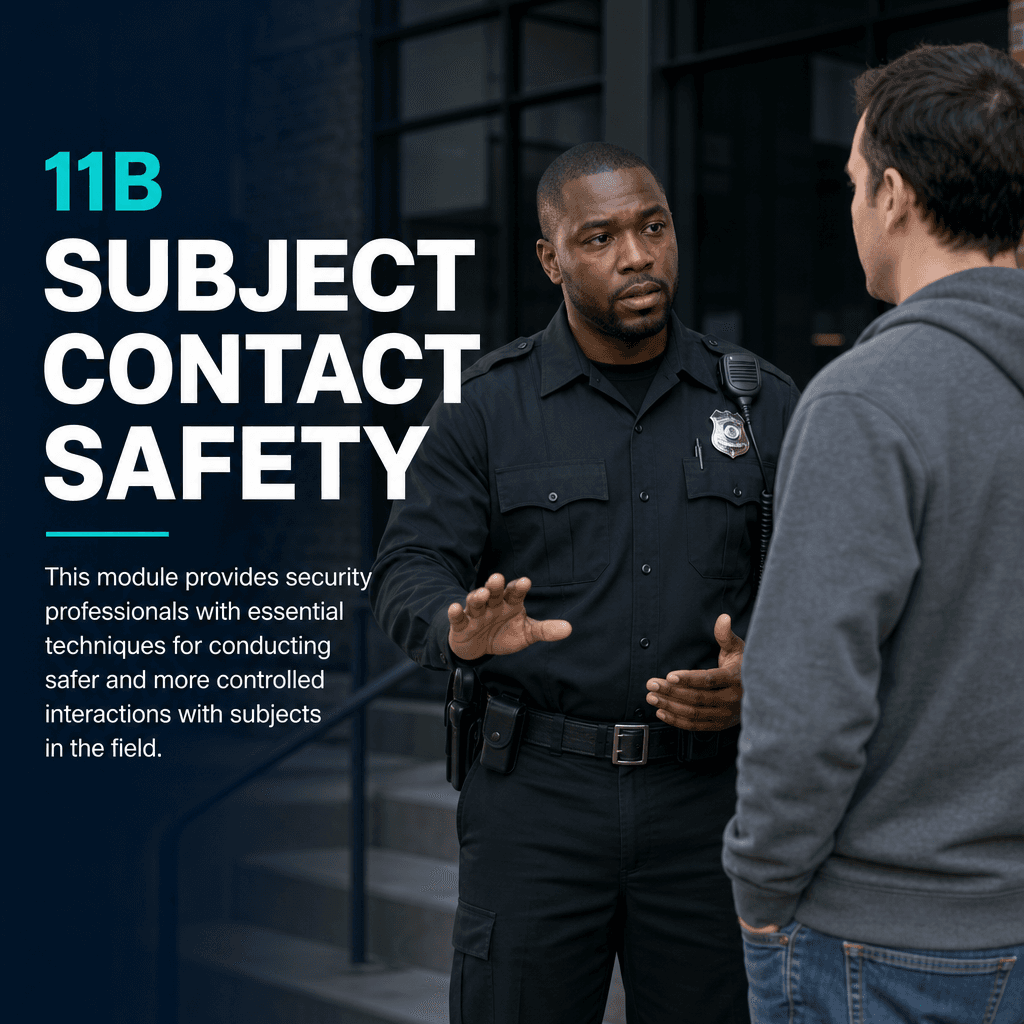
11B Subject Contact Safety
This module provides security professionals with essential techniques for conducting safer and more controlled interactions with subjects in the field. It covers evaluating the environment before making contact, maintaining appropriate distance and using physical barriers, applying proper field interview stances, recognizing when to request assistance, and disengaging when necessary as a last resort. Participants will learn how these practices can reduce the risk of injury, unnecessary escalation, employer liability, and professional misconduct while supporting safer and more professional subject interactions.
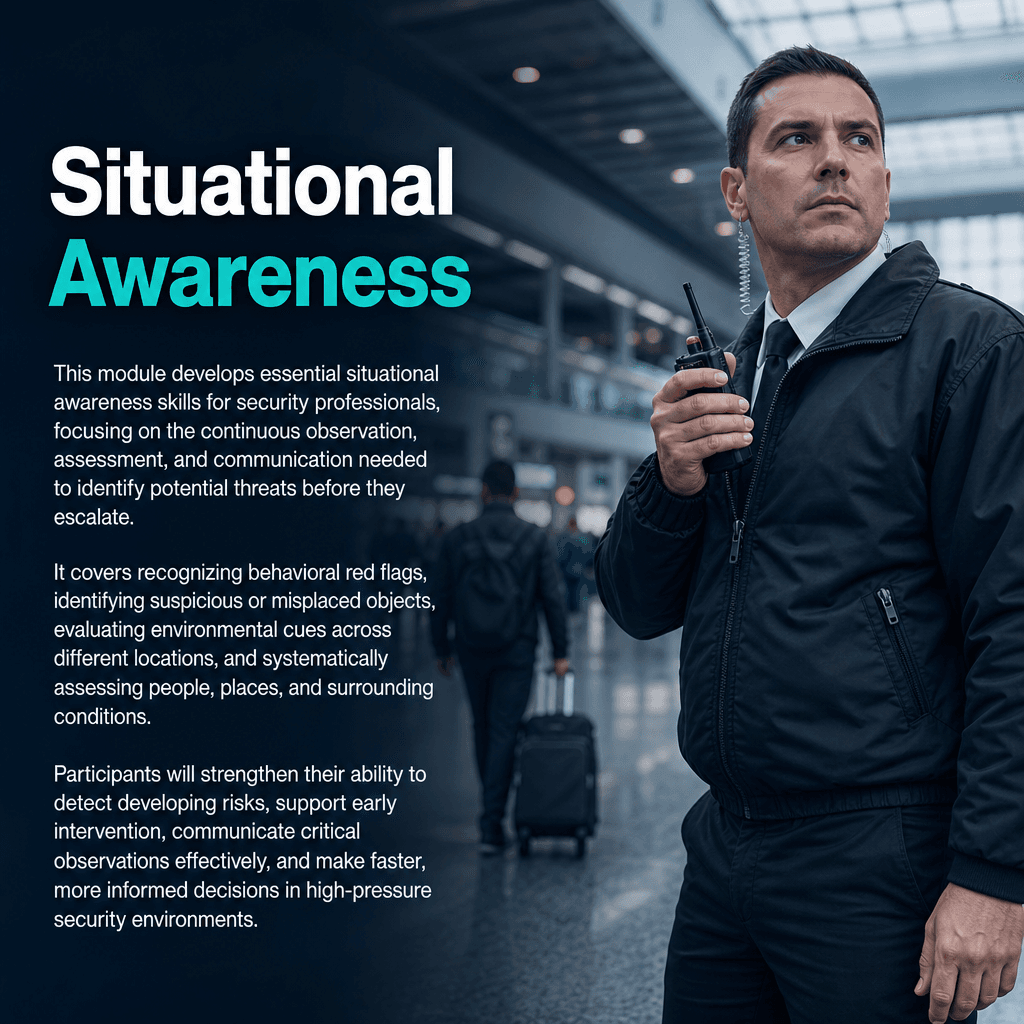
11C Situational Awareness
This module develops essential situational awareness skills for security professionals, focusing on the continuous observation, assessment, and communication needed to identify potential threats before they escalate. It covers recognizing behavioral red flags, identifying suspicious or misplaced objects, evaluating environmental cues across different locations, and systematically assessing people, places, and surrounding conditions. Participants will strengthen their ability to detect developing risks, support early intervention, communicate critical observations effectively, and make faster, more informed decisions in high-pressure security environments.
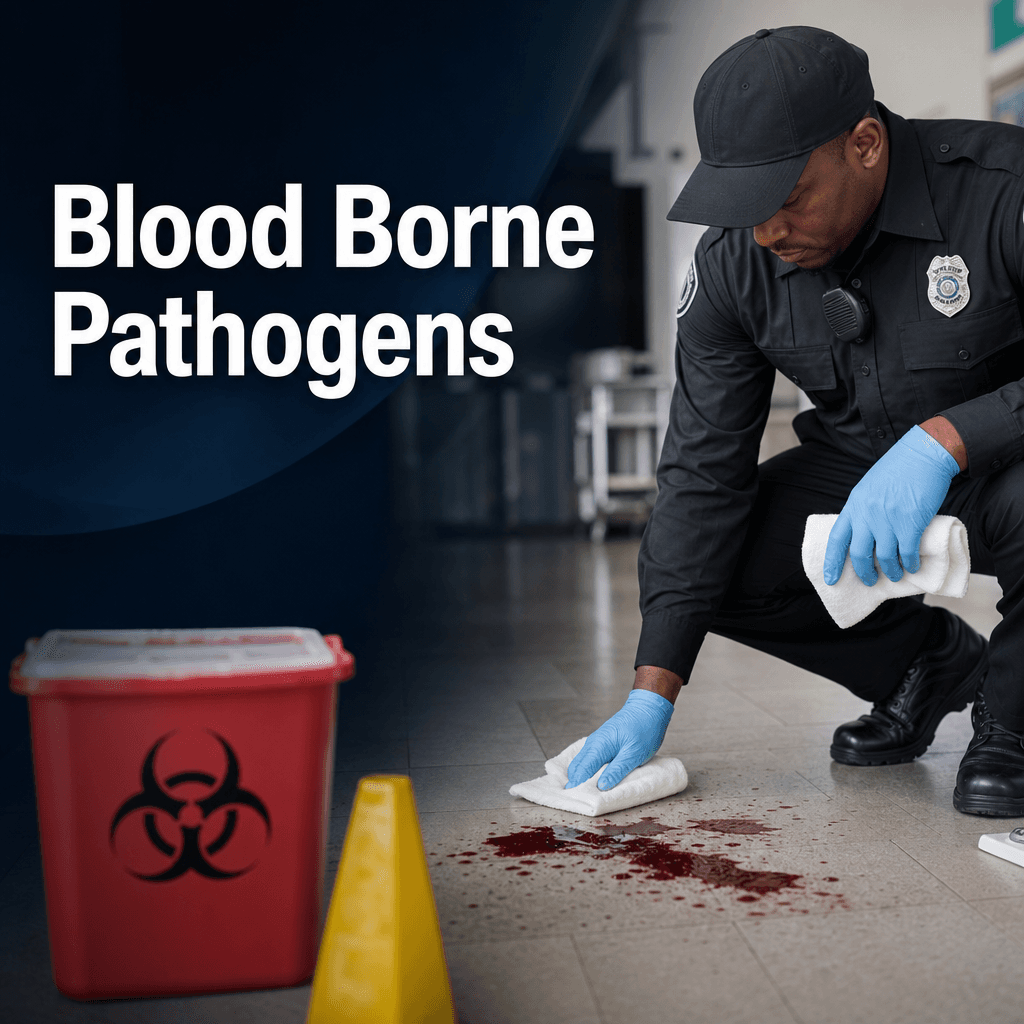
11D Blood Borne Pathogens
This module provides security professionals with essential knowledge and procedures for recognizing and managing potential exposure to bloodborne pathogens (BBPs), including HIV, Hepatitis B, and Hepatitis C. It covers common exposure risks, universal precautions, personal protective equipment, blood-to-blood contact, bodily fluid spills and contaminated materials, accidental injections or sharps injuries, and appropriate post-exposure response. Participants will learn how to assess biological hazards, reduce infection risks, follow proper reporting and decontamination procedures, and apply OSHA-compliant workplace safety practices when encountering blood or bodily fluids in the line of duty.
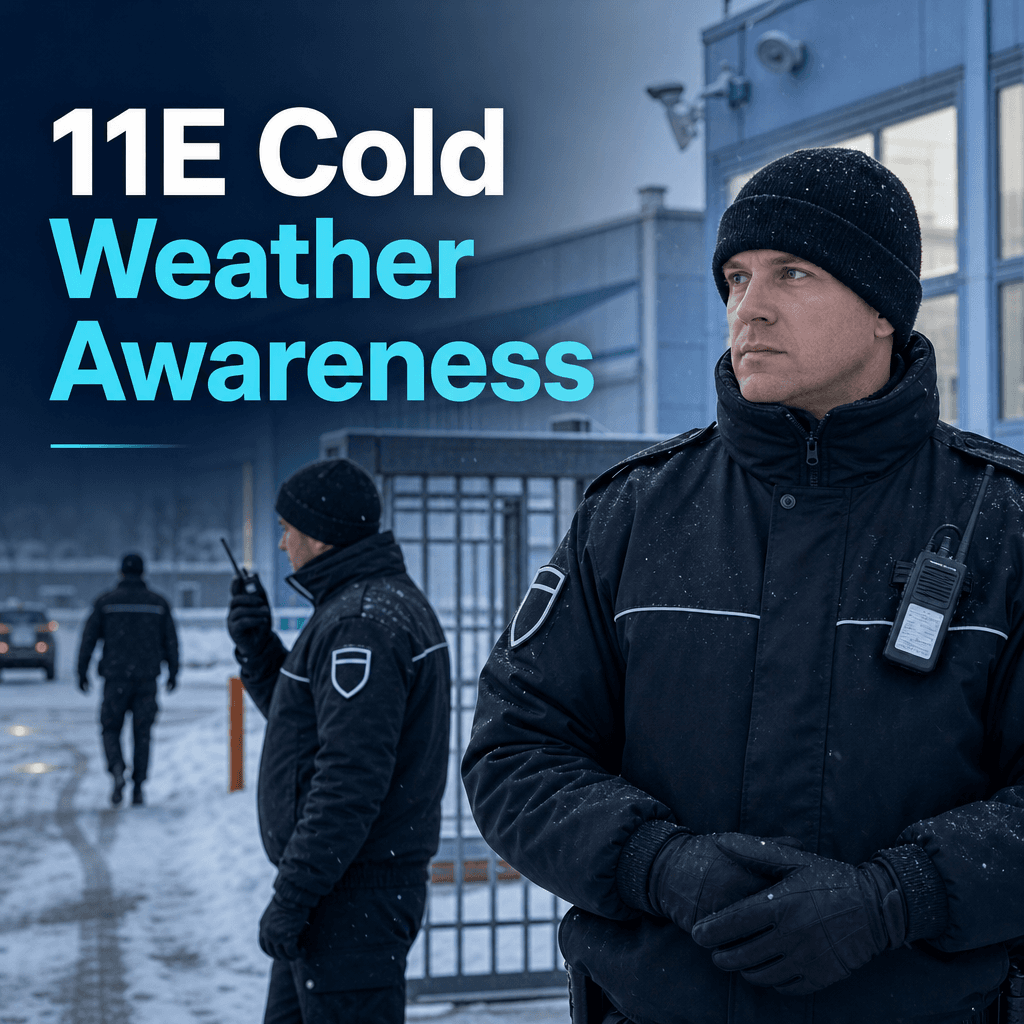
11E Cold Weather Awareness
This module prepares security professionals to operate safely and effectively in cold-weather environments where low temperatures, wind chill, snow, and ice can create serious health and operational risks. It covers monitoring cold-weather patterns and alerts, recognizing how cold exposure affects the body, selecting appropriate clothing and emergency supplies, and using proper breaks, nutrition, and recovery practices during extended exposure. Participants will also examine biomechanical challenges created by freezing conditions and learn practical strategies for maintaining awareness, physical performance, personal safety, and operational readiness during winter patrols and other cold-weather assignments.
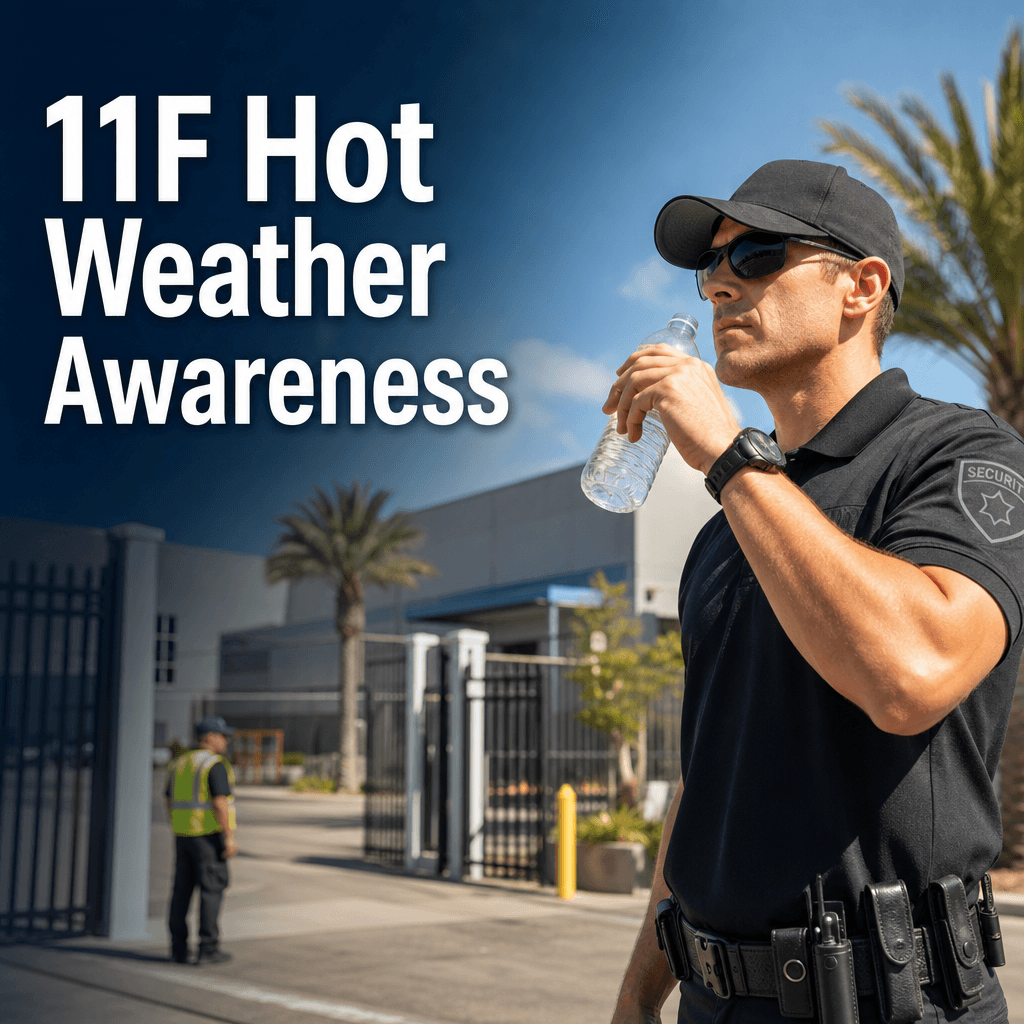
11F Hot Weather Awareness
This module prepares security professionals to operate safely and effectively in extreme heat, where high temperatures can affect health, judgment, alertness, and physical performance. It covers monitoring hot-weather risks, anticipating environmental challenges, selecting appropriate clothing and supplies, understanding how heat affects the body and physical movement, and planning effective breaks to reduce heat-related stress. Participants will learn practical strategies for maintaining situational awareness, personal safety, and operational readiness while protecting themselves and others during demanding hot-weather assignments.
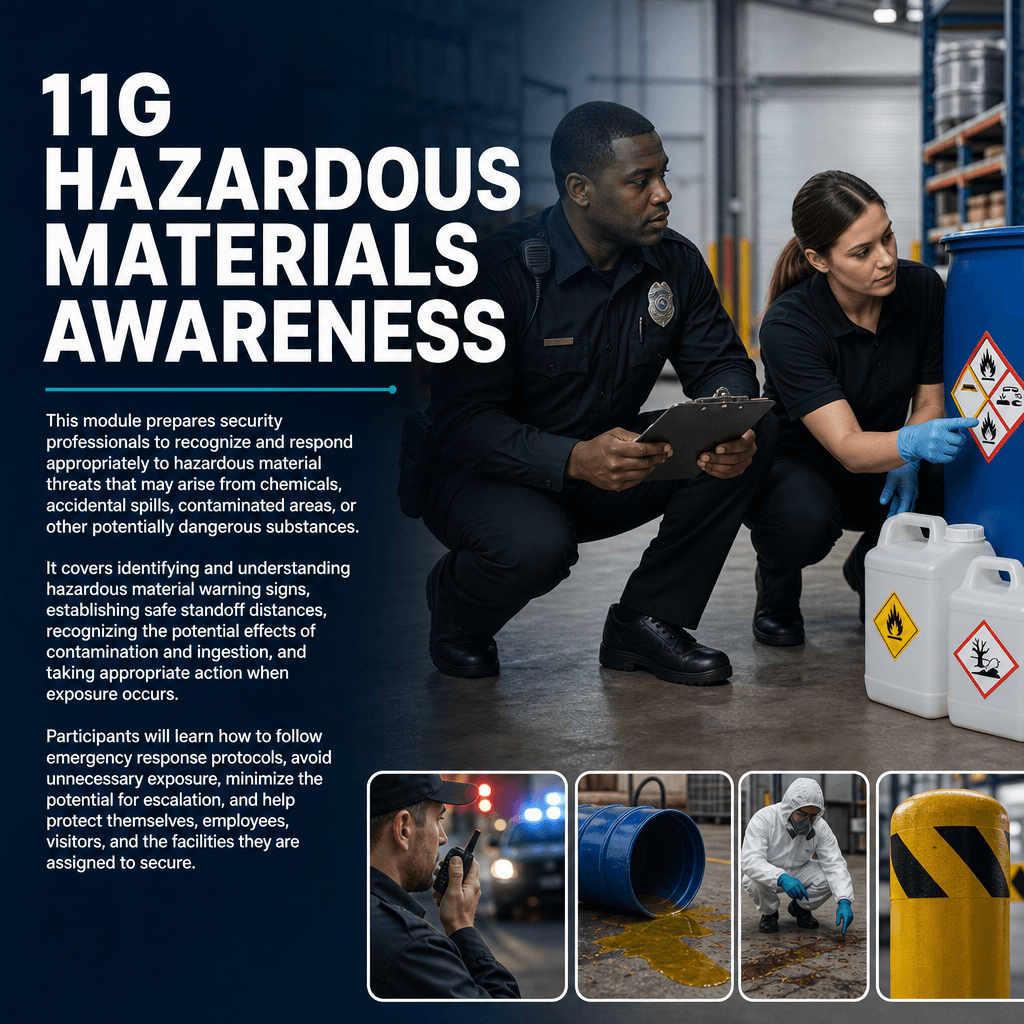
11G Hazardous Materials Awareness
This module prepares security professionals to recognize and respond appropriately to hazardous material threats that may arise from chemicals, accidental spills, contaminated areas, or other potentially dangerous substances. It covers identifying and understanding hazardous material warning signs, establishing safe standoff distances, recognizing the potential effects of contamination and ingestion, and taking appropriate action when exposure occurs. Participants will learn how to follow emergency response protocols, avoid unnecessary exposure, minimize the potential for escalation, and help protect themselves, employees, visitors, and the facilities they are assigned to secure.
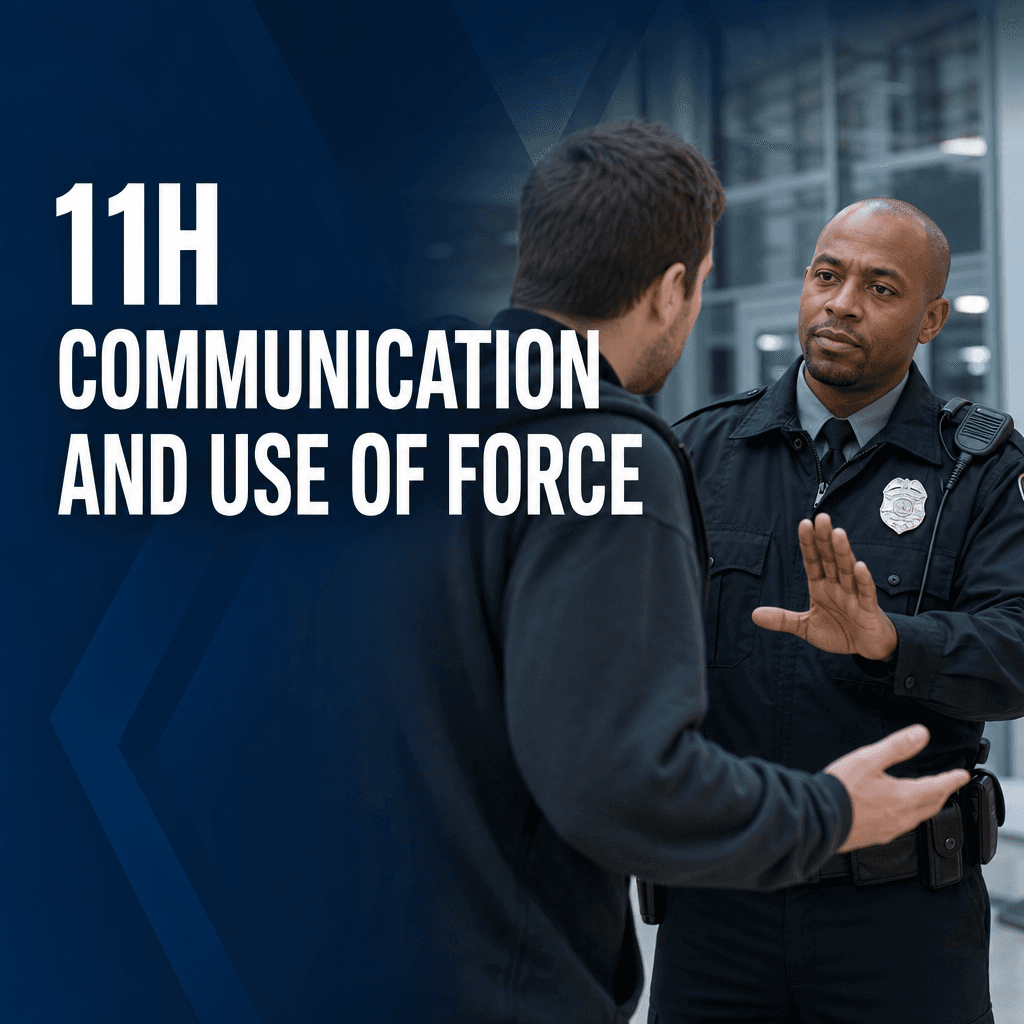
11H Communication and Use of Force
This module prepares security professionals to manage force-related situations through effective communication, sound judgment, and appropriate response strategies. It emphasizes interpersonal communication as a primary tool for managing potentially violent encounters, with techniques for de-escalating tense situations and avoiding actions that may unnecessarily contribute to escalation. Participants will also examine considerations when interacting with individuals with disabilities or behavioral issues and learn how to use time, distance, cover, and concealment to create safer response options and manage potentially force-related encounters more effectively.
How it works
Step 1
Purchase
Sign in and pay once through Stripe. Your training unlocks immediately.
Step 2
Complete the training
Work through the modules at your own pace. Your progress saves automatically.
Step 3
Finish and get credit
Your completion is recorded on your MyGuardForce profile, so you and your employer can see where you stand.
Officers working toward CA Guard Card. This course is published under that license.
Training your whole team?
Assign this course to every new hire from your MyGuardForce dashboard and get bulk pricing.
Our programs are hand-crafted by security, public safety, and military experts to provide highly specialized instruction designed to activate the learning centers in the brain. By combining information and experiential training, AEGIS efficiently shares, practices, and tests practical knowledge to ensure mastery of every subject.