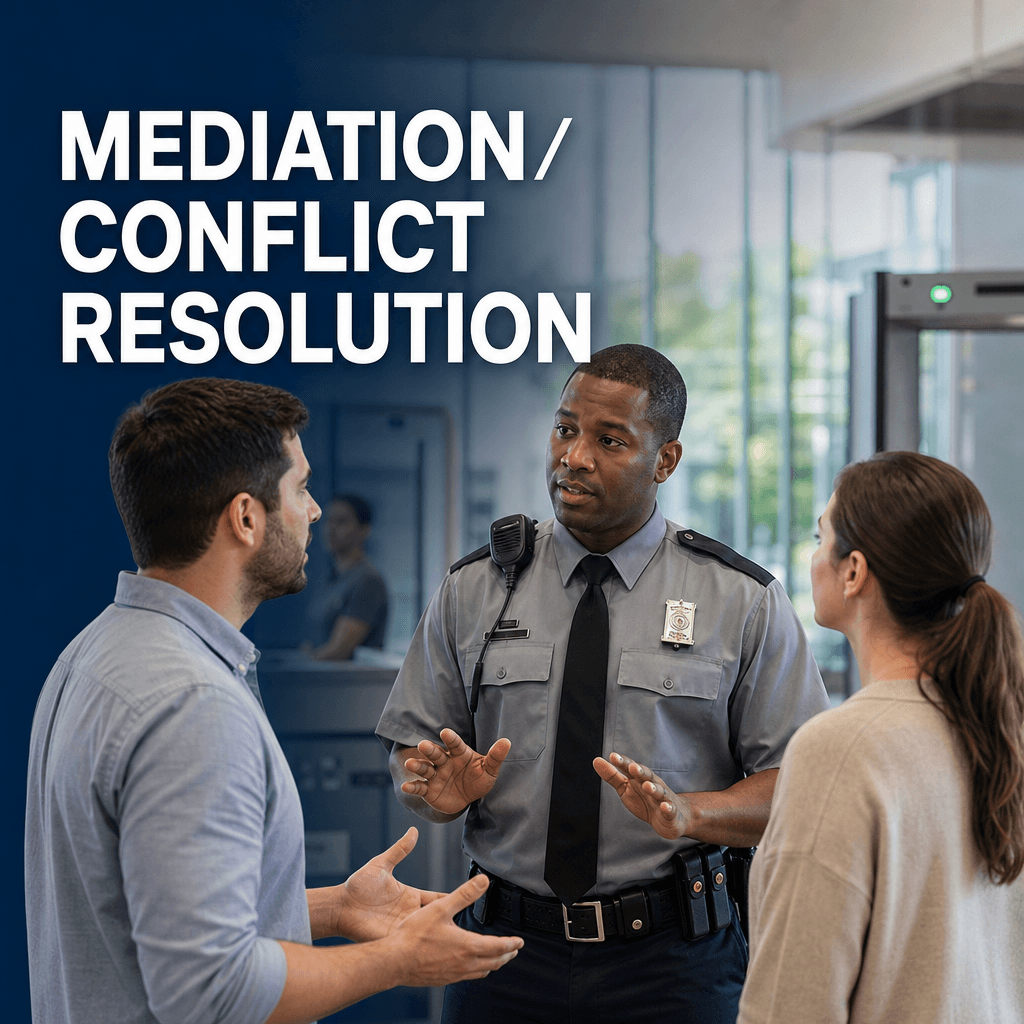
This course provides comprehensive training in communication, behavioral awareness, and professional interaction for security personnel working in diverse and challenging environments. Participants will develop skills in behavioral assessment, interpersonal communication, de-escalation, situational awareness, body language, and public relations while learning how these competencies support effective security operations. The course also addresses communication during force-related situations, recognition and reporting of suspicious activity, professional interactions with the public, and techniques for interpreting behavioral and nonverbal cues. By completing this course, participants will be better prepared to communicate effectively, recognize developing concerns, reduce unnecessary escalation, build public trust, and make professional decisions that support safety and effective security operations.
CA PPO #16744 & CA PI #27756
What's included
Work through the modules at your own pace. Your progress saves automatically, so you can stop and pick up where you left off.
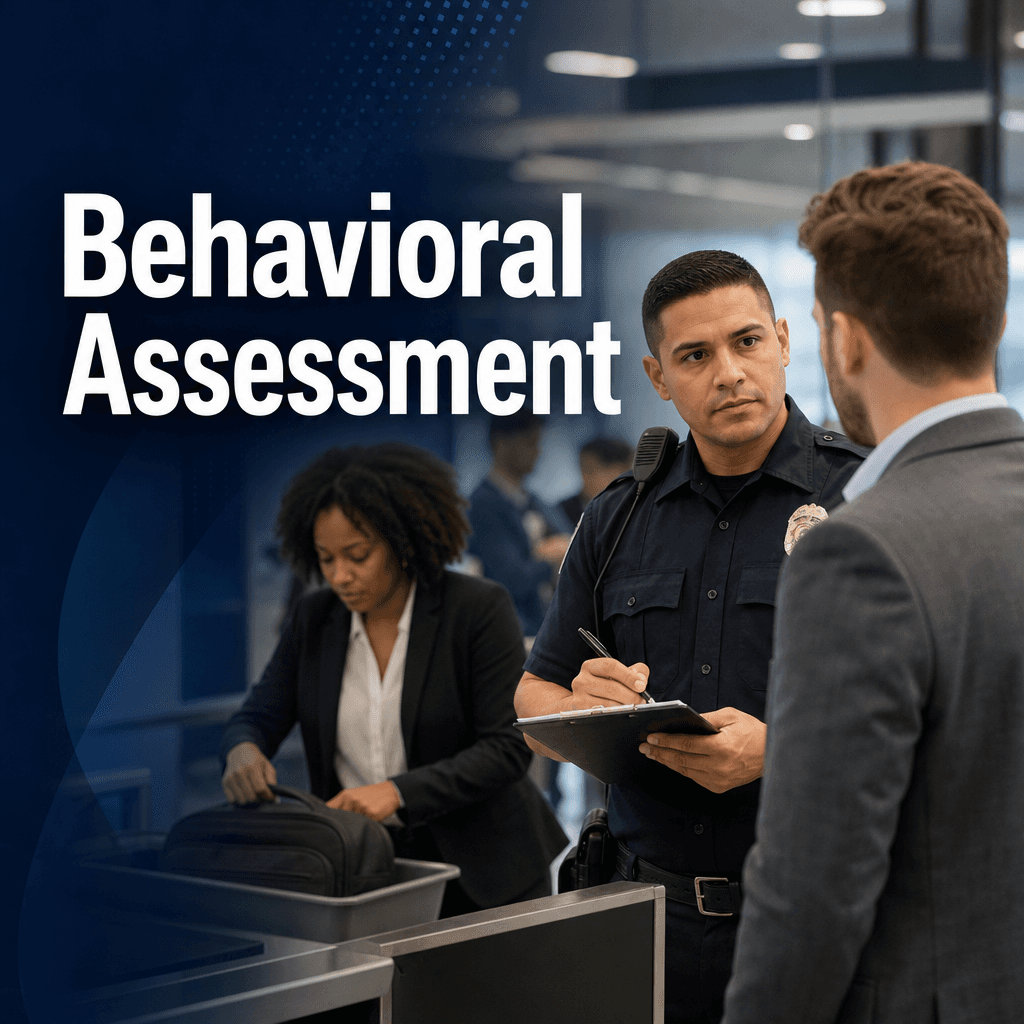
48A Behavioral Assessment
This module develops the behavioral assessment skills security professionals need to recognize potential concerns while maintaining professionalism, neutrality, and situational awareness. Participants will examine environmental behavioral assessment, customer service-based indicators, credential screening, and observable behavioral cues that may warrant additional attention. The training also addresses appropriate Suspicious Activity Reporting (SARs), emphasizing objective observation rather than assumptions, profiling, or personal bias. By completing this module, participants will be better prepared to evaluate behavior in context, communicate professionally, recognize potential security concerns, and document and report suspicious activity accurately in real-world security environments.
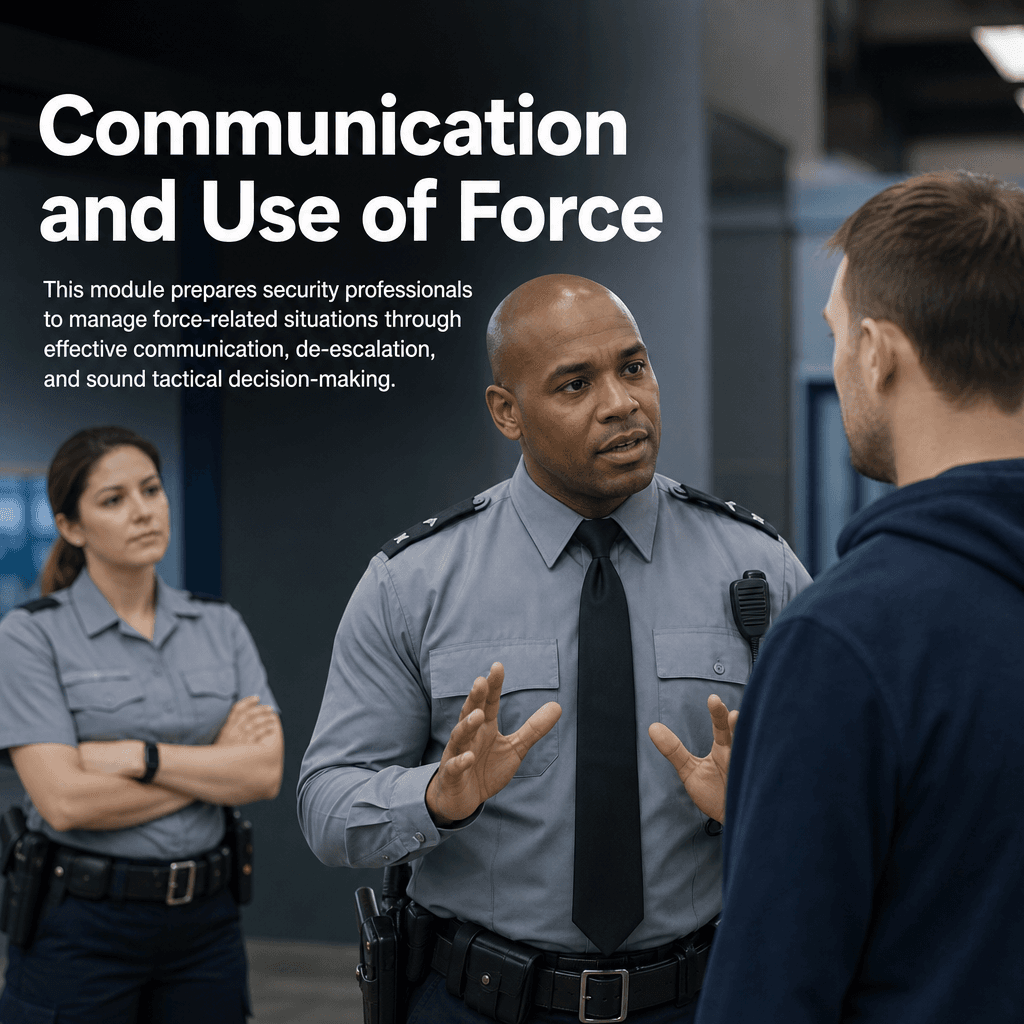
48B Communication and Use of Force
This module prepares security professionals to manage force-related situations through effective communication, de-escalation, and sound tactical decision-making. Participants will examine the importance of interpersonal communication in managing potentially violent encounters, techniques for de-escalating tense situations and avoiding unnecessary escalation, and strategies for interacting with individuals with disabilities or behavioral issues. The training also emphasizes the tactical use of time, distance, cover, and concealment to improve safety and reduce the need for force. By completing this module, participants will be better prepared to communicate effectively under pressure, recognize opportunities to de-escalate, and make safer, more professional decisions during force-related incidents.
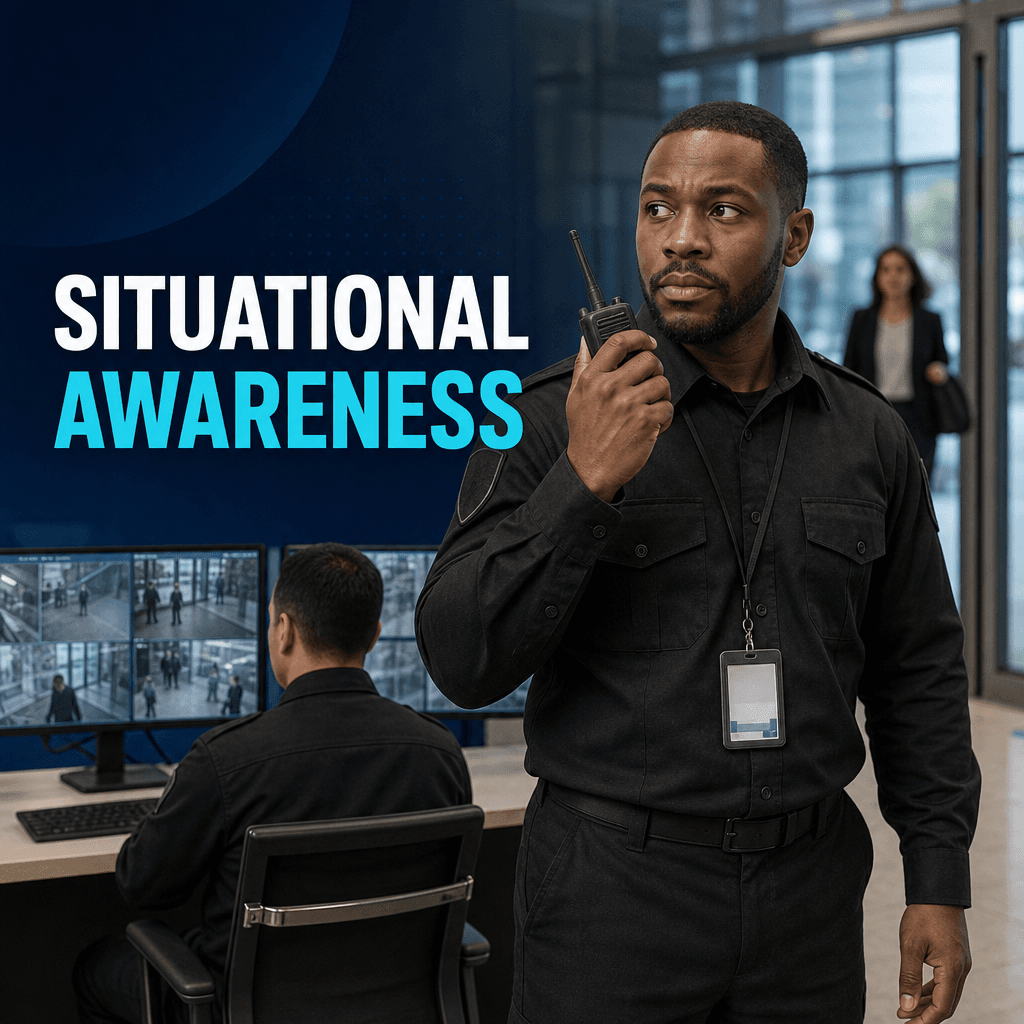
48C Situational Awareness
This module prepares security professionals to develop and maintain strong situational awareness in dynamic security environments. Participants will learn how to observe their surroundings, recognize changes and potential threats, assess developing situations, and make informed decisions before incidents escalate. The training emphasizes proactive observation, environmental awareness, threat recognition, and maintaining attention while performing routine security duties. By completing this module, participants will be better prepared to identify potential risks early, respond appropriately to changing conditions, and support safer and more effective security operations.
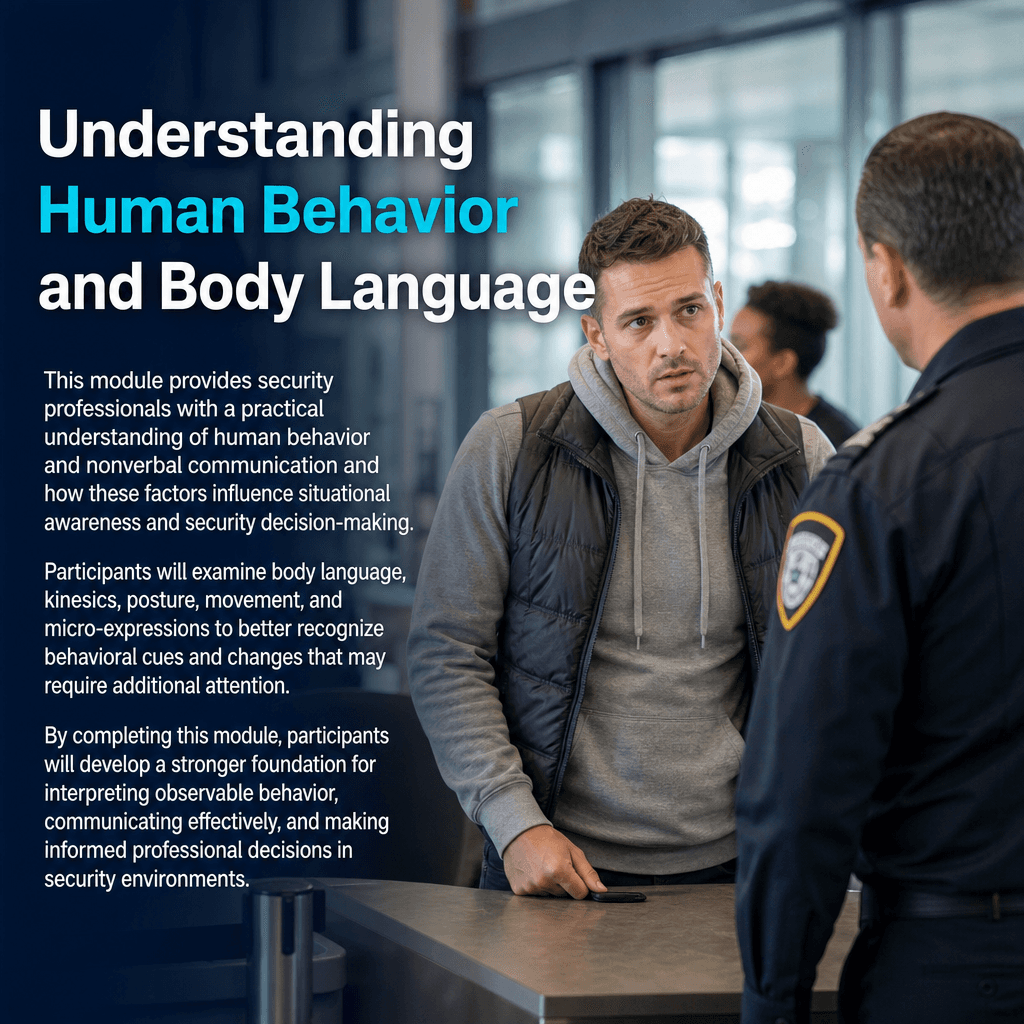
48D Understanding Human Behavior and Body Language
This module provides security professionals with a practical understanding of human behavior and nonverbal communication and how these factors influence situational awareness and security decision-making. Participants will examine body language, kinesics, posture, movement, and micro-expressions to better recognize behavioral cues and changes that may require additional attention. By completing this module, participants will develop a stronger foundation for interpreting observable behavior, communicating effectively, and making informed professional decisions in security environments.
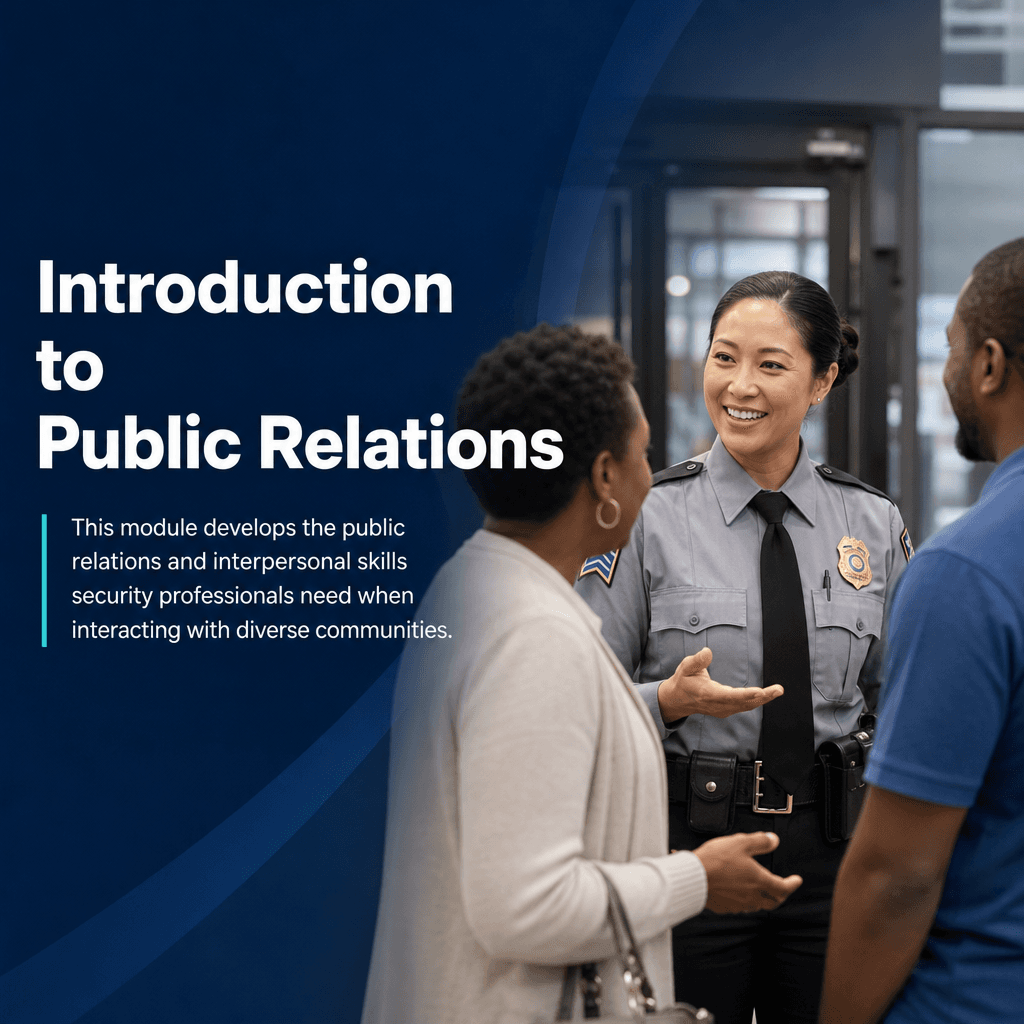
48E Introduction to Public Relations
This module develops the public relations and interpersonal skills security professionals need when interacting with diverse communities. Participants will examine cultural awareness, respect, professional image, attitude, perception, and the impact of stereotypes on security interactions. The training emphasizes honest, ethical, and respectful conduct as essential components of building public trust. By completing this module, participants will be better prepared to communicate effectively with diverse individuals, project a professional image, and build positive relationships while maintaining appropriate security standards.
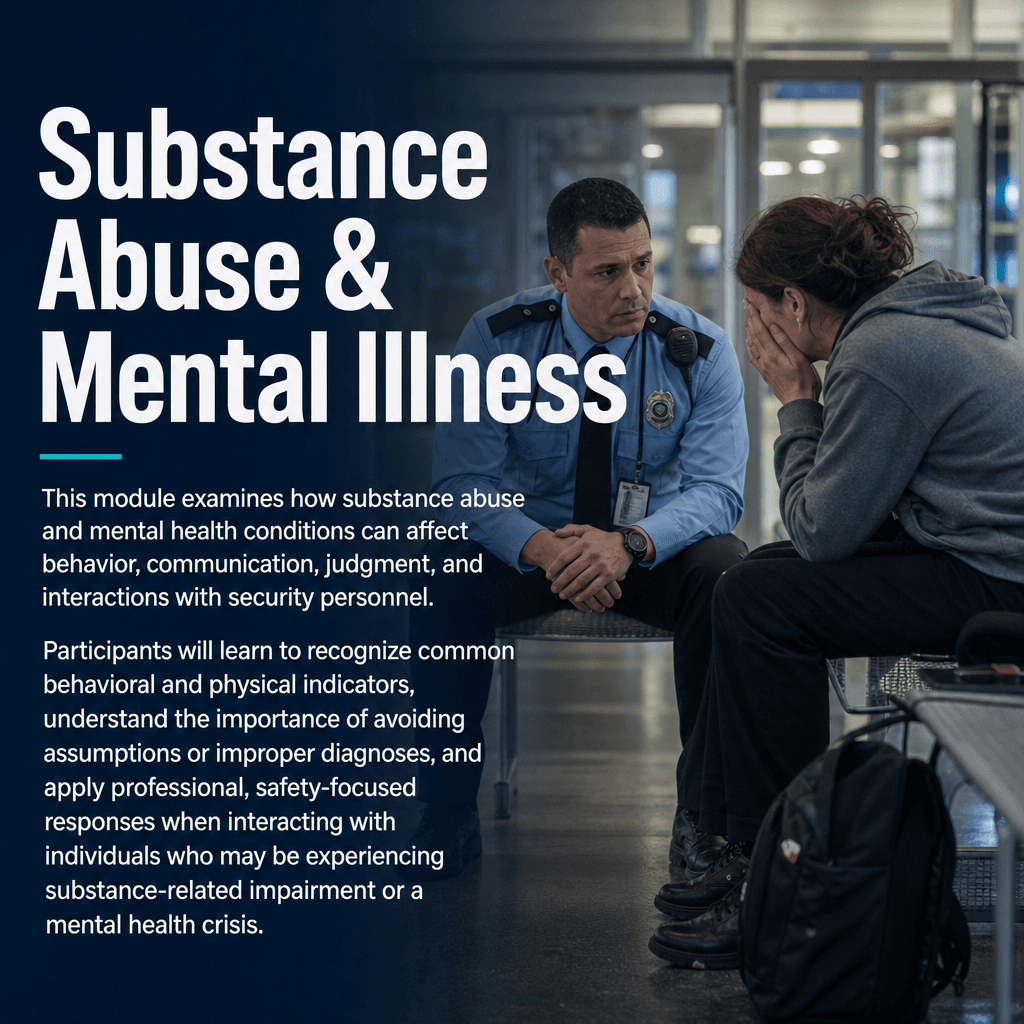
48F Substance Abuse & Mental Illness
This module examines how substance abuse and mental health conditions can affect behavior, communication, judgment, and interactions with security personnel. Participants will learn to recognize common behavioral and physical indicators, understand the importance of avoiding assumptions or improper diagnoses, and apply professional, safety-focused responses when interacting with individuals who may be experiencing substance-related impairment or a mental health crisis.
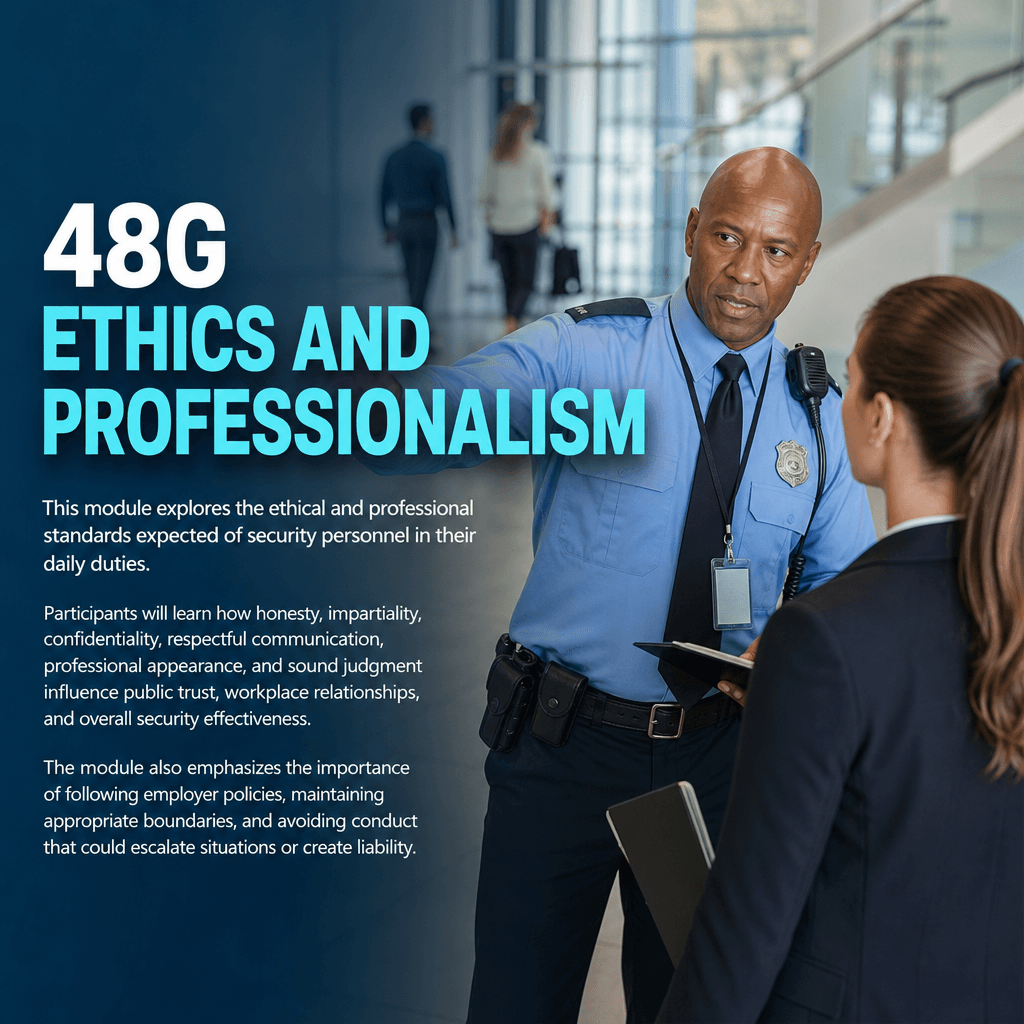
48G Ethics and Professionalism
This module explores the ethical and professional standards expected of security personnel in their daily duties. Participants will learn how honesty, impartiality, confidentiality, respectful communication, professional appearance, and sound judgment influence public trust, workplace relationships, and overall security effectiveness. The module also emphasizes the importance of following employer policies, maintaining appropriate boundaries, and avoiding conduct that could escalate situations or create liability.
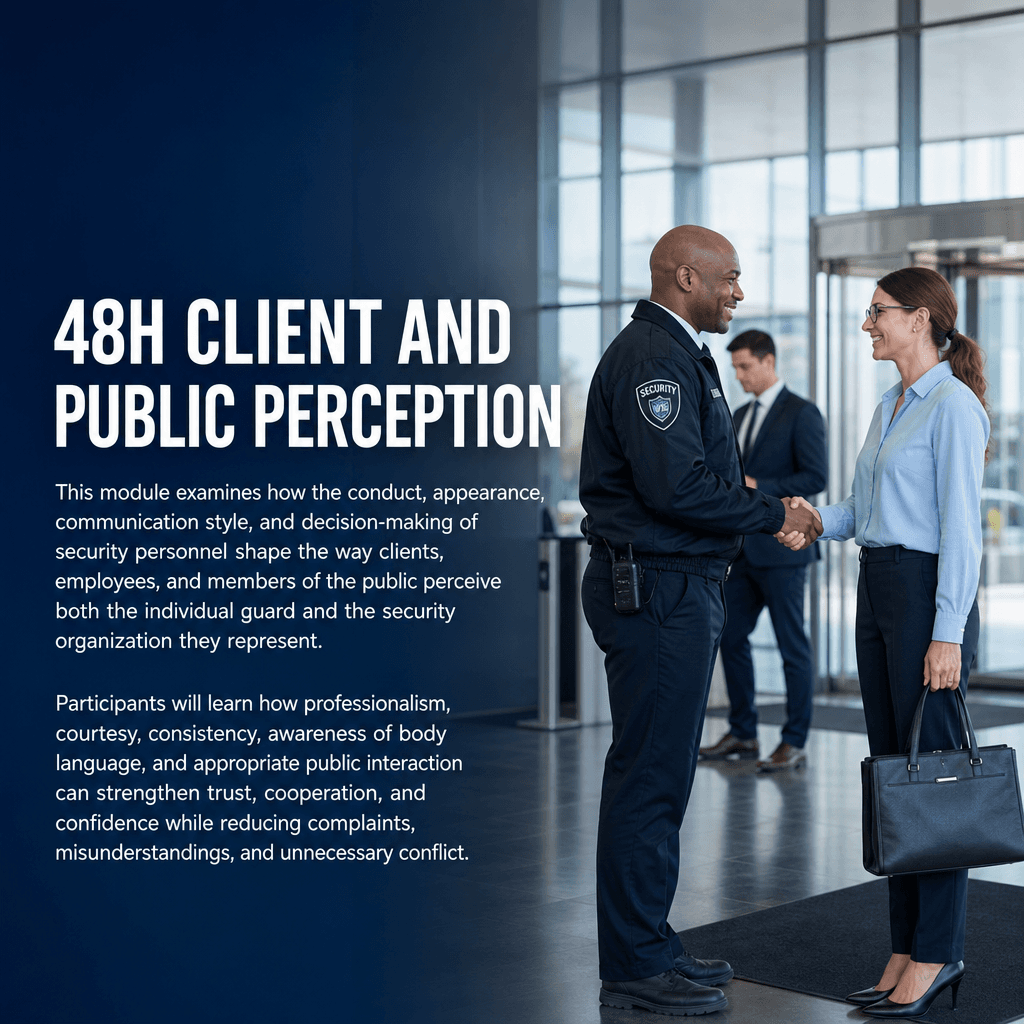
48H Client and Public Perception
This module examines how the conduct, appearance, communication style, and decision-making of security personnel shape the way clients, employees, and members of the public perceive both the individual guard and the security organization they represent. Participants will learn how professionalism, courtesy, consistency, awareness of body language, and appropriate public interaction can strengthen trust, cooperation, and confidence while reducing complaints, misunderstandings, and unnecessary conflict.
How it works
Step 1
Purchase
Sign in and pay once through Stripe. Your training unlocks immediately.
Step 2
Complete the training
Work through the modules at your own pace. Your progress saves automatically.
Step 3
Finish and get credit
Your completion is recorded on your MyGuardForce profile, so you and your employer can see where you stand.
Officers working toward CA Guard Card. This course is published under that license.
Training your whole team?
Assign this course to every new hire from your MyGuardForce dashboard and get bulk pricing.
Our programs are hand-crafted by security, public safety, and military experts to provide highly specialized instruction designed to activate the learning centers in the brain. By combining information and experiential training, AEGIS efficiently shares, practices, and tests practical knowledge to ensure mastery of every subject.