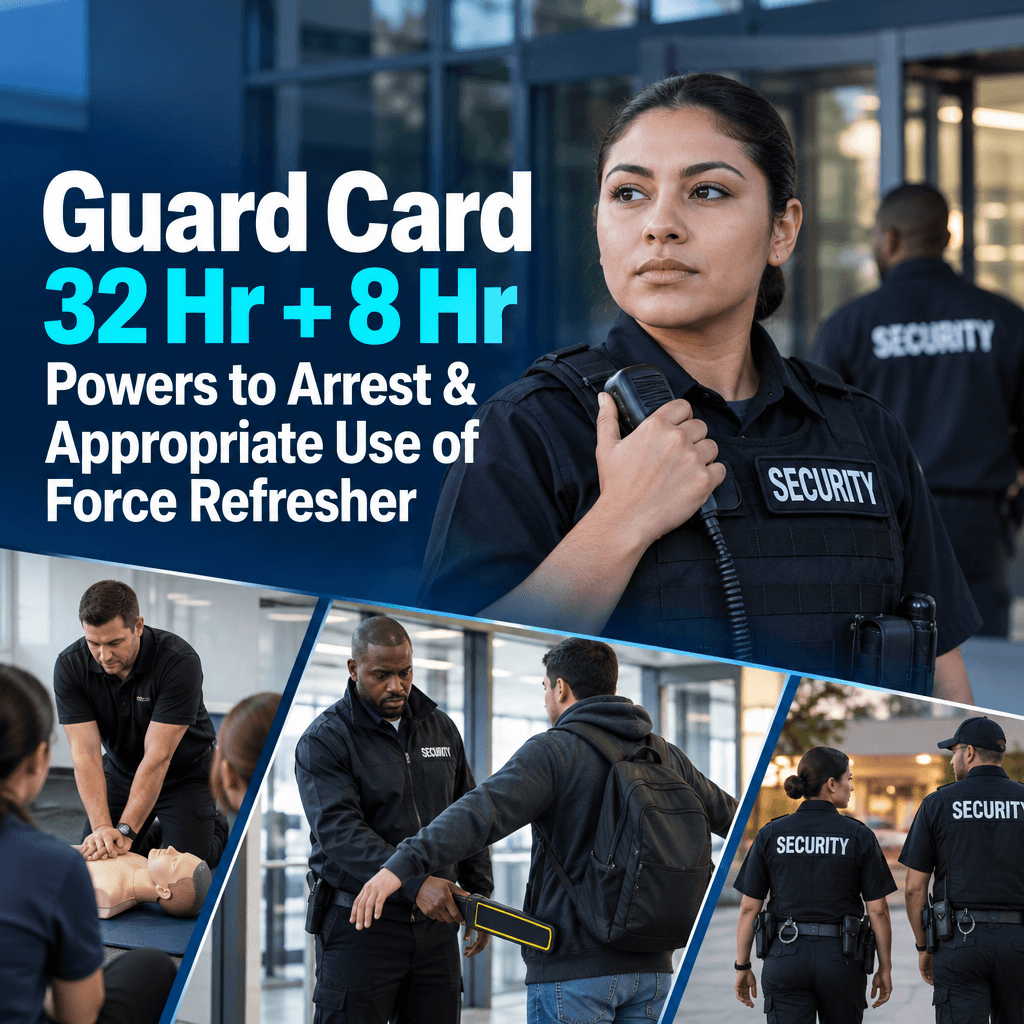
IMPORTANT: THIS TRAINING DOES NOT QUALIFY FOR THE INITIAL 8 HOUR TRAINING. THIS IS THE 16 HOUR MANDATORY CORE COURSES + 16 HOUR ELECTIVES + 8 HOUR ANNUAL REFRESHER. This bundle provides a broad selection of elective training for Guard Card licensed security officer, strengthening the legal, operational, communication, and emergency-response skills required across diverse security assignments. The training covers Powers to Arrest and Use of Force, public relations, observation and documentation, communication, liability and legal aspects, emergency procedures, officer safety, arrest, search and seizure, access control, First Aid, CPR and Stop the Bleed, handling difficult people, and workplace violence prevention. Participants also receive advanced active shooter training addressing prevention, preparedness and response, higher education environments, and the unique considerations of bars, restaurants, and clubs. Together, these courses expand professional knowledge, situational awareness, legal understanding, and decision-making skills while preparing security personnel to respond effectively to routine duties, challenging interactions, and high-risk incidents.
CA PPO #16744 & CA PI #27756
What's included
Buying the bundle enrolls you in all of these at once. Your progress saves automatically, so you can stop and pick up where you left off.
California Guard Card Powers to Arrest & Use of Force Refresher
New Guard Card Licensed Security Officers: The Guard Card is the basic security license issued by the California Bureau of Security & Investigative Services for security officers. Powers to Arrest & Appropriate Use of Force training is the first step new guards must complete in order to submit their application to the State of California. The first 8 hours (Powers to Arrest & Use of Force) must be completed in person, in a classroom setting, with an instructor physically present, at an authorized training facility. AEGIS does not currently offer live initial Powers to Arrest & Appropriate Use of Force. This program online training is a REFRESHER ONLY. Course Outline The Powers to Arrest & Use of Force course can be used to help satisfy your ongoing requirements for the California Bureau of Security and Investigative Services . It is an essential training program designed to equip security guards with the foundational knowledge and skills necessary to exercise their authority effectively while understanding its limitations. This comprehensive course comprises 15 modules that cover all aspects of the power to arrest and use of force and its implications within the security guard profession and the BSIS exam that will get you compliant! This course will include the following modules: Role/Responsibility of Security Authority to Question Personal and Civil Liability Factors to Consider Before making an Arrest Making an Arrest Terrorism Awareness Report Writing Legal Standards for Use of Force Communications & Use of Force The Use of Objectively Reasonable Force Use of Force Review and Analysis Use of Force Supervisor Responsibilities Use of Force Bias Use of Force Scenario Training Active Shooter Response By the completion of this course, security guards will have refreshed a solid foundation of knowledge and skills necessary to exercise their authority within the boundaries of the law and act as responsible professionals in their role.
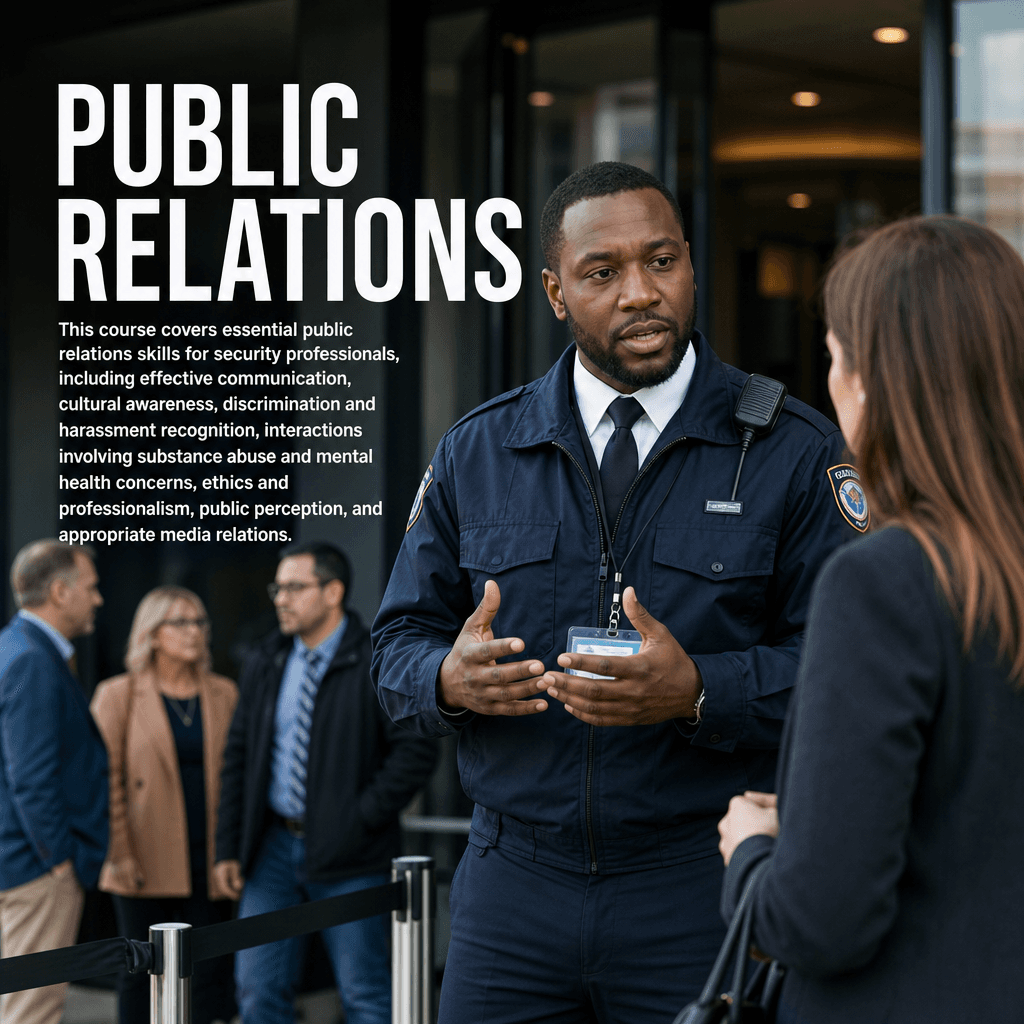
Public Relations
This course covers essential public relations skills for security professionals, including effective communication, cultural awareness, discrimination and harassment recognition, interactions involving substance abuse and mental health concerns, ethics and professionalism, public perception, and appropriate media relations.
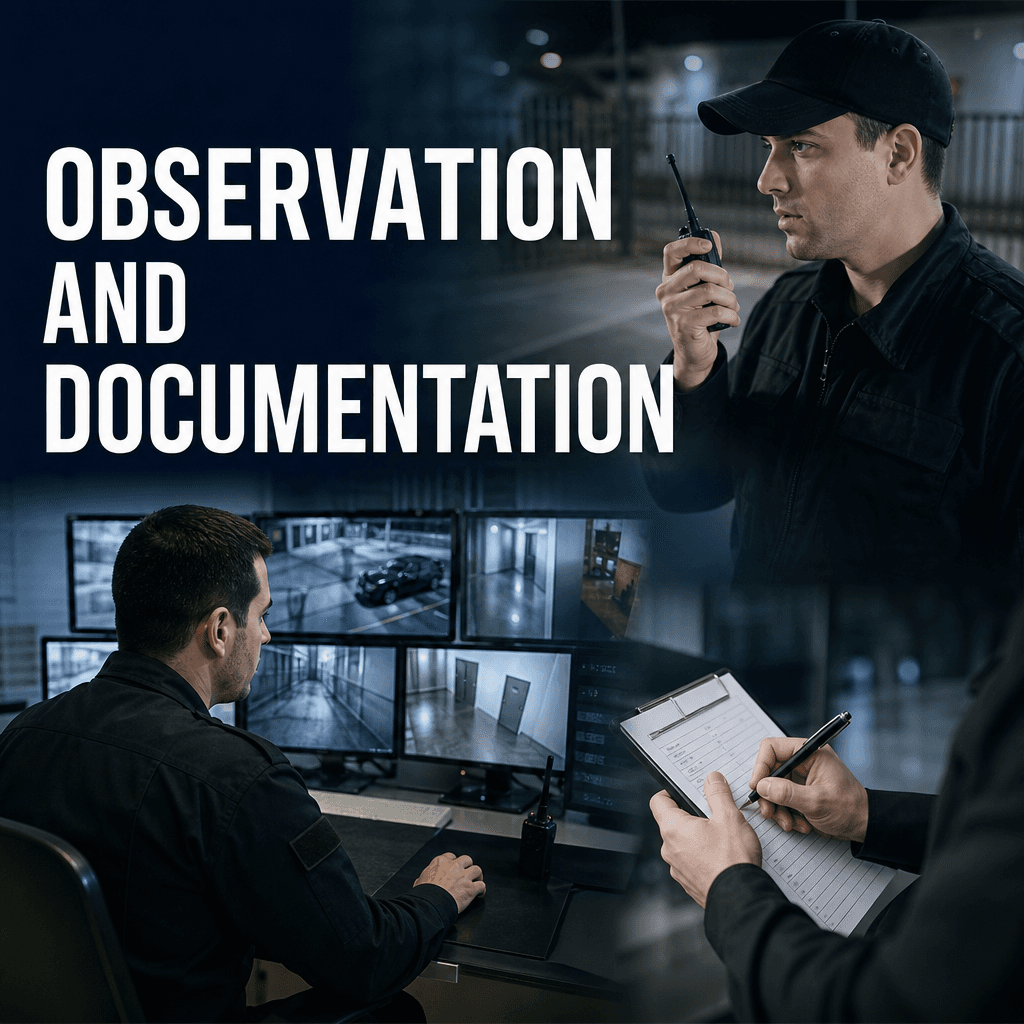
Observation and Documentation
This course covers essential observation and documentation skills for security professionals, including patrol techniques, intelligence gathering, recognizing suspicious activity, daily activity and incident report writing, and the effective monitoring of security cameras and alarm systems.
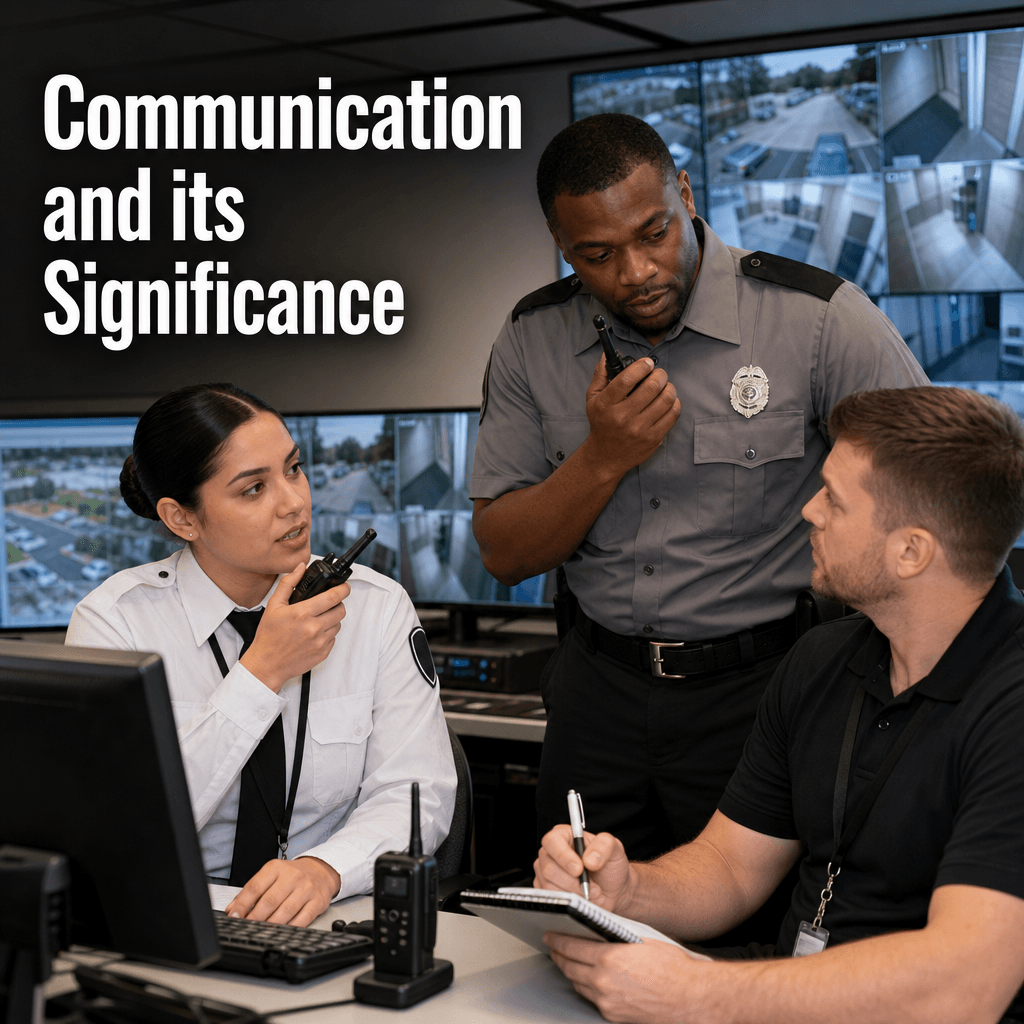
Communication and its Significance
This course covers essential communication skills for security professionals, including internal and radio communication, the phonetic alphabet, communication with first responders and process servers, and professional interactions that demonstrate gender, racial, religious, and cultural sensitivity.

Liability/Legal Aspects
This course covers key legal and liability considerations for security professionals, including BSIS codes and regulations, decision-making and personal liability, employer and contractor responsibilities, and the civil, criminal, and administrative liabilities that may affect security officers and security companies.
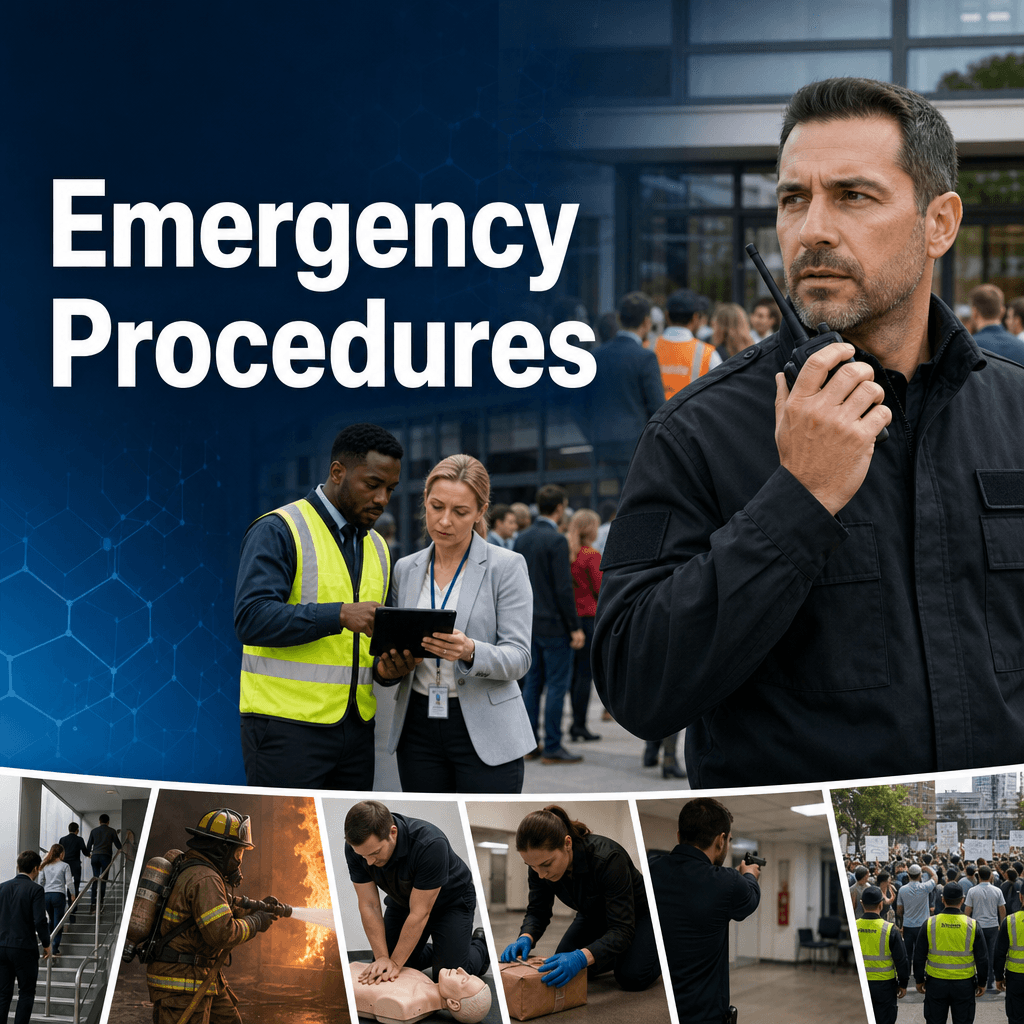
Emergency Procedures
This course provides security professionals with essential knowledge and practical strategies for recognizing, assessing, and responding to a wide range of emergencies using established Emergency Action Plans (EAPs). It covers fundamental emergency response procedures, earthquakes and tornadoes, fires, bomb threats, medical emergencies and cardiac arrest, active shooter incidents, suspicious mail and packages, and riots or civil disturbances. Participants will learn how to evaluate changing conditions, take appropriate protective actions, communicate and coordinate during emergencies, support evacuation or lockdown procedures when necessary, and make informed decisions that help protect people, property, and facilities during critical incidents.
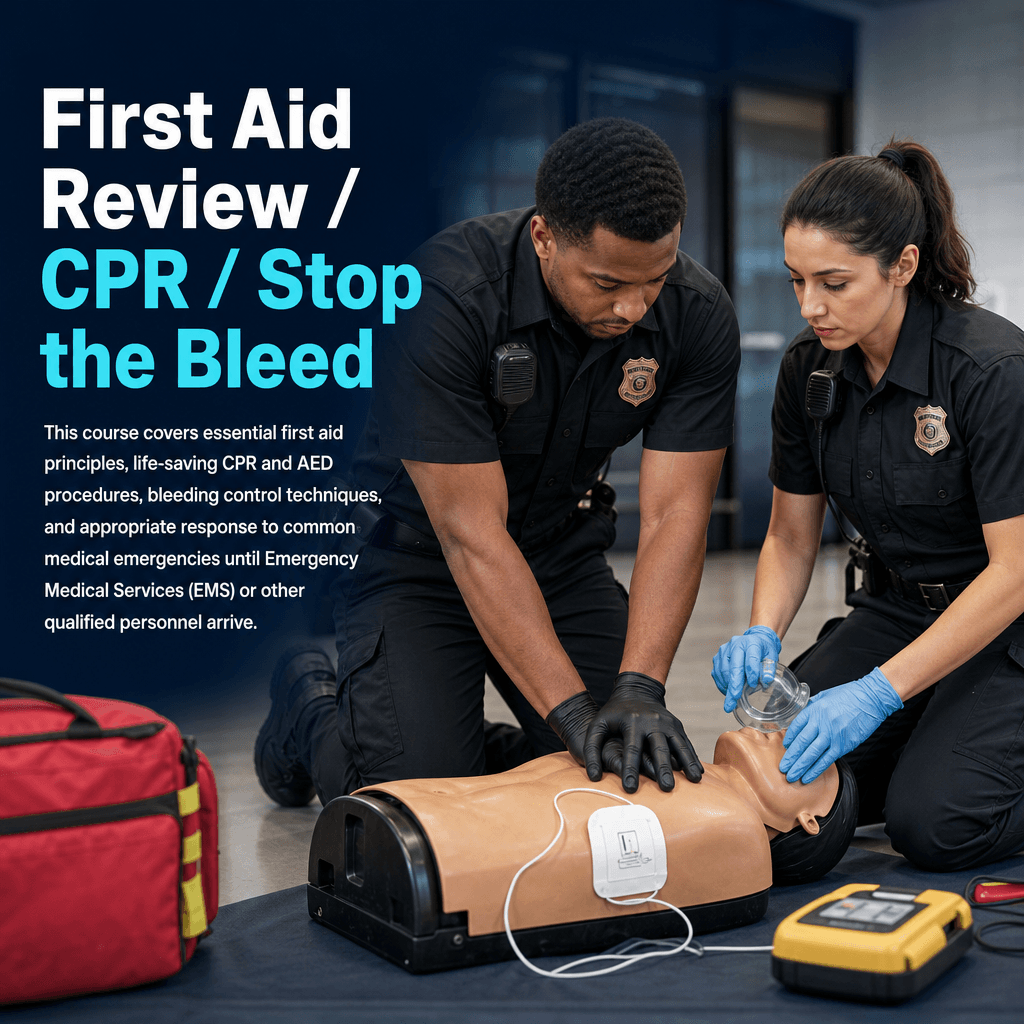
First Aid Review / CPR / Stop the Bleed
This course covers essential first aid principles, life-saving CPR and AED procedures, bleeding control techniques, and appropriate response to common medical emergencies until Emergency Medical Services (EMS) or other qualified personnel arrive.

Handling Difficult People
This course prepares security professionals to manage difficult, confrontational, and high-risk interactions through effective communication, conflict management, negotiation, and structured de-escalation strategies. It covers active listening, verbal diffusion, interpersonal communication, public relations, use-of-force communication considerations, and techniques for reducing resistance and resolving conflicts constructively. Participants will also explore communication strategies for complex crisis situations involving hostages or individuals considering self-harm, including assessing risk, buying time, applying OODA-based decision-making, and identifying safer resolution options. The course emphasizes professionalism, sound judgment, and maintaining control while reducing unnecessary escalation and protecting the safety of everyone involved.
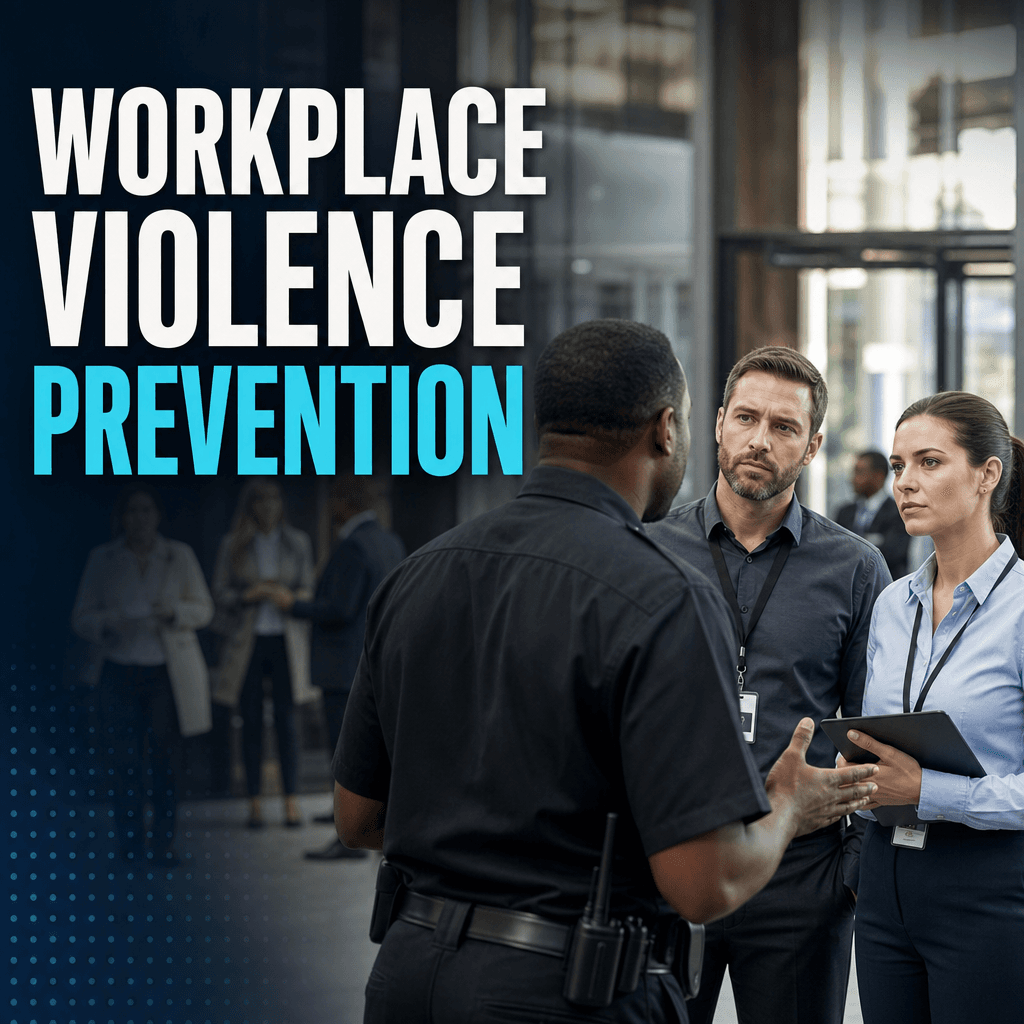
Workplace Violence Prevention
This course provides security professionals with a comprehensive foundation in workplace violence prevention, focusing on the early recognition, assessment, reporting, and management of behaviors and conditions that may indicate a developing threat. It covers unusual and concerning behavior, human behavior and body language, situational awareness, social media and online behavioral indicators, open-source intelligence gathering, pre-incident warning signs, interdisciplinary threat assessment teams, and appropriate threat reporting. Participants will learn to recognize pathways to violence, evaluate potential risks objectively and without profiling, gather and communicate relevant information, document concerns effectively, and support coordinated prevention and intervention efforts before threatening behavior escalates into violence.
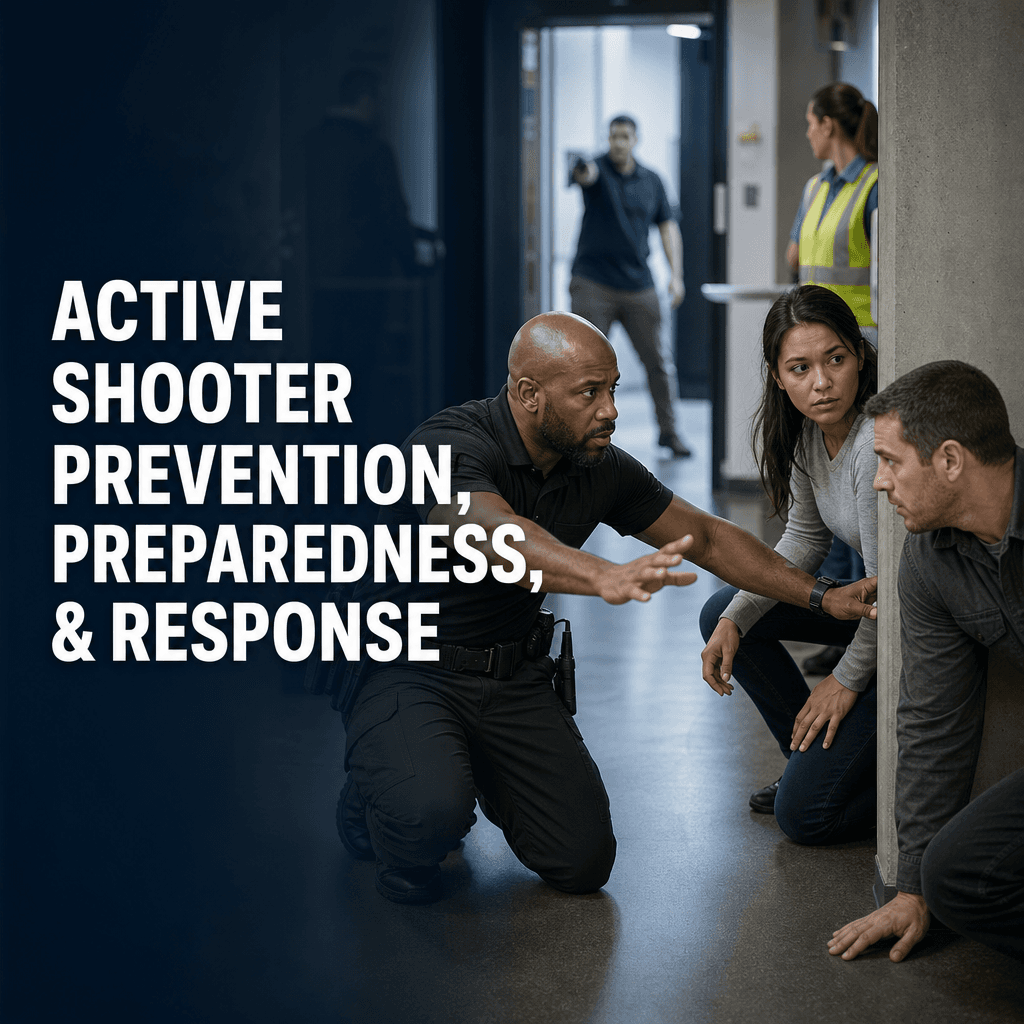
Active Shooter Prevention, Preparedness, & Response
This course provides comprehensive training in active shooter and workplace violence prevention, preparedness, and response, guiding security professionals through the full progression from recognizing potential threats to responding during an active attack. It covers early warning indicators, proactive security and deterrence, vulnerability assessment, emergency planning, policies and procedures, training exercises and drills, and scenario-based self-assessment. Participants will also develop critical response knowledge involving situational awareness, threat recognition, evacuation, cover and concealment, lockdown procedures, and the Run, Hide, Fight methodology. Through prevention strategies, preparedness planning, realistic scenarios, and rapid-response principles, the course strengthens decision-making, personal resilience, and the ability to reduce risk, protect people and assets, and respond effectively during high-risk incidents.
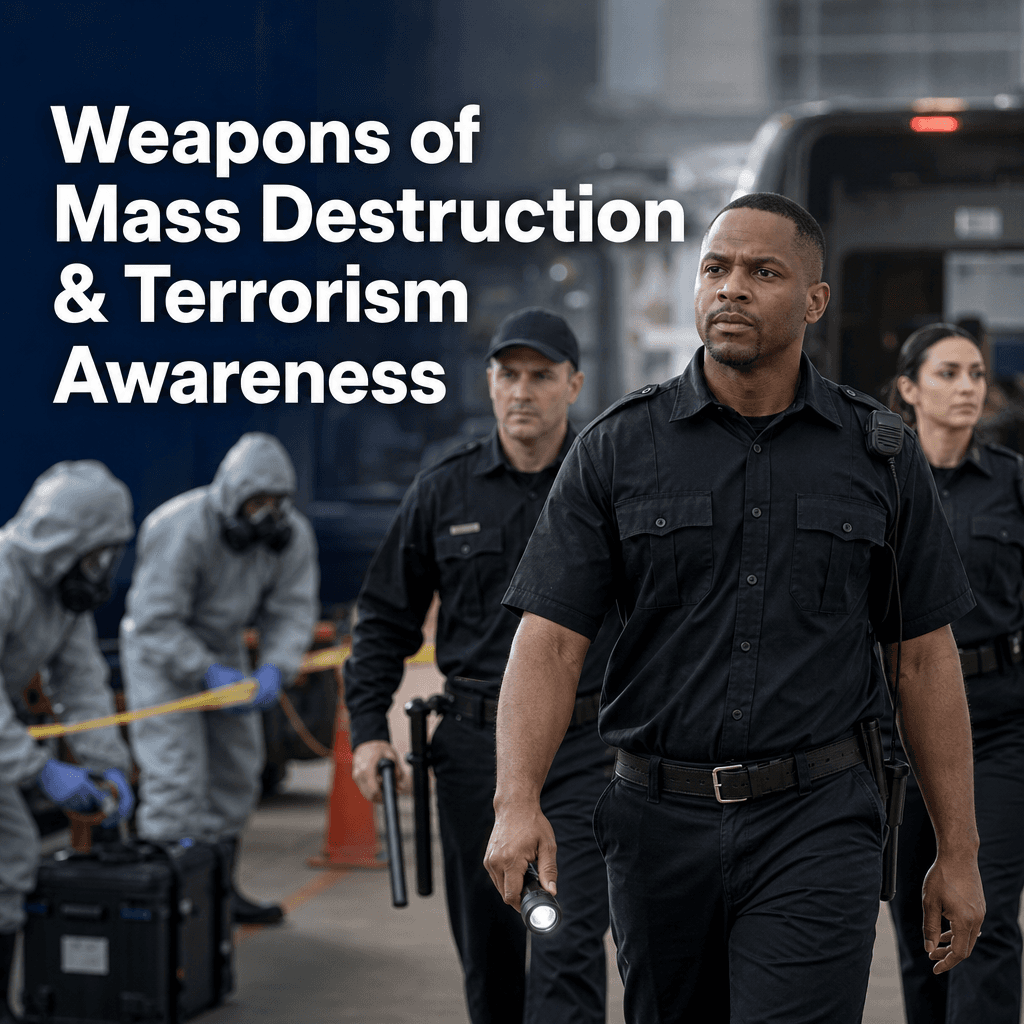
Weapons of Mass Destruction & Terrorism Awareness
This course provides comprehensive terrorism and Weapons of Mass Destruction (WMD) awareness training for security professionals, emphasizing prevention, recognition, reporting, and appropriate response. Participants examine the fundamentals and changing nature of terrorism, the role security personnel play in preventing WMD-related incidents, the Terrorism Planning Cycle, suspicious activity and pre-incident indicators, and the major categories of Weapons of Mass Destruction. The course also addresses WMD incident management and response, personal safety considerations, and the coordination and sharing of critical information with supervisors, emergency responders, law enforcement, and other appropriate authorities. Together, these modules strengthen situational awareness, threat recognition, professional judgment, communication, and emergency-response readiness, helping security professionals identify developing threats, protect themselves and others, and contribute effectively to terrorism prevention and coordinated incident response.

Active Shooter in Bars, Restaurants, and Clubs
This course provides focused training for security professionals responsible for protecting bars, restaurants, and clubs during active shooter incidents. Participants will develop practical knowledge of threat recognition, situational awareness, evacuation and escape strategies, hiding and taking cover, and last-resort defensive actions when confronted with an immediate threat. The course addresses the unique challenges of nightlife and hospitality environments, where crowds, noise, limited visibility, restricted movement, and rapidly changing conditions can complicate emergency response. Through practical response principles and realistic scenarios, participants strengthen their ability to make rapid safety-focused decisions, identify appropriate response options, reduce exposure to danger, and protect themselves and others during a critical incident.

Officer Safety
This course provides security professionals with essential knowledge and practical strategies for maintaining personal safety, situational awareness, and operational readiness across a wide range of working conditions and potential hazards. It covers environmental threat assessment, safer subject contact, situational awareness, bloodborne pathogen exposure, cold and hot weather operations, hazardous materials, and communication strategies related to use-of-force situations. Participants will learn to identify developing risks, evaluate environmental and behavioral hazards, apply appropriate protective measures, use communication and de-escalation effectively, and make informed decisions that help reduce injuries, unnecessary escalation, exposure to hazards, and other risks while protecting themselves and others in the line of duty.
How it works
Step 1
Purchase
Sign in and pay once through Stripe. Your training unlocks immediately.
Step 2
Complete the training
Work through the courses at your own pace. Your progress saves automatically.
Step 3
Finish and get credit
Your completion is recorded on your MyGuardForce profile, so you and your employer can see where you stand.
Officers working toward CA Guard Card. This bundle is published under that license.
Training your whole team?
Assign this bundle to every new hire from your MyGuardForce dashboard and get bulk pricing.
Our programs are hand-crafted by security, public safety, and military experts to provide highly specialized instruction designed to activate the learning centers in the brain. By combining information and experiential training, AEGIS efficiently shares, practices, and tests practical knowledge to ensure mastery of every subject.