This course prepares security professionals to manage difficult, confrontational, and high-risk interactions through effective communication, conflict management, negotiation, and structured de-escalation strategies. It covers active listening, verbal diffusion, interpersonal communication, public relations, use-of-force communication considerations, and techniques for reducing resistance and resolving conflicts constructively. Participants will also explore communication strategies for complex crisis situations involving hostages or individuals considering self-harm, including assessing risk, buying time, applying OODA-based decision-making, and identifying safer resolution options. The course emphasizes professionalism, sound judgment, and maintaining control while reducing unnecessary escalation and protecting the safety of everyone involved.
CA PPO #16744 & CA PI #27756
What's included
Work through the modules at your own pace. Your progress saves automatically, so you can stop and pick up where you left off.
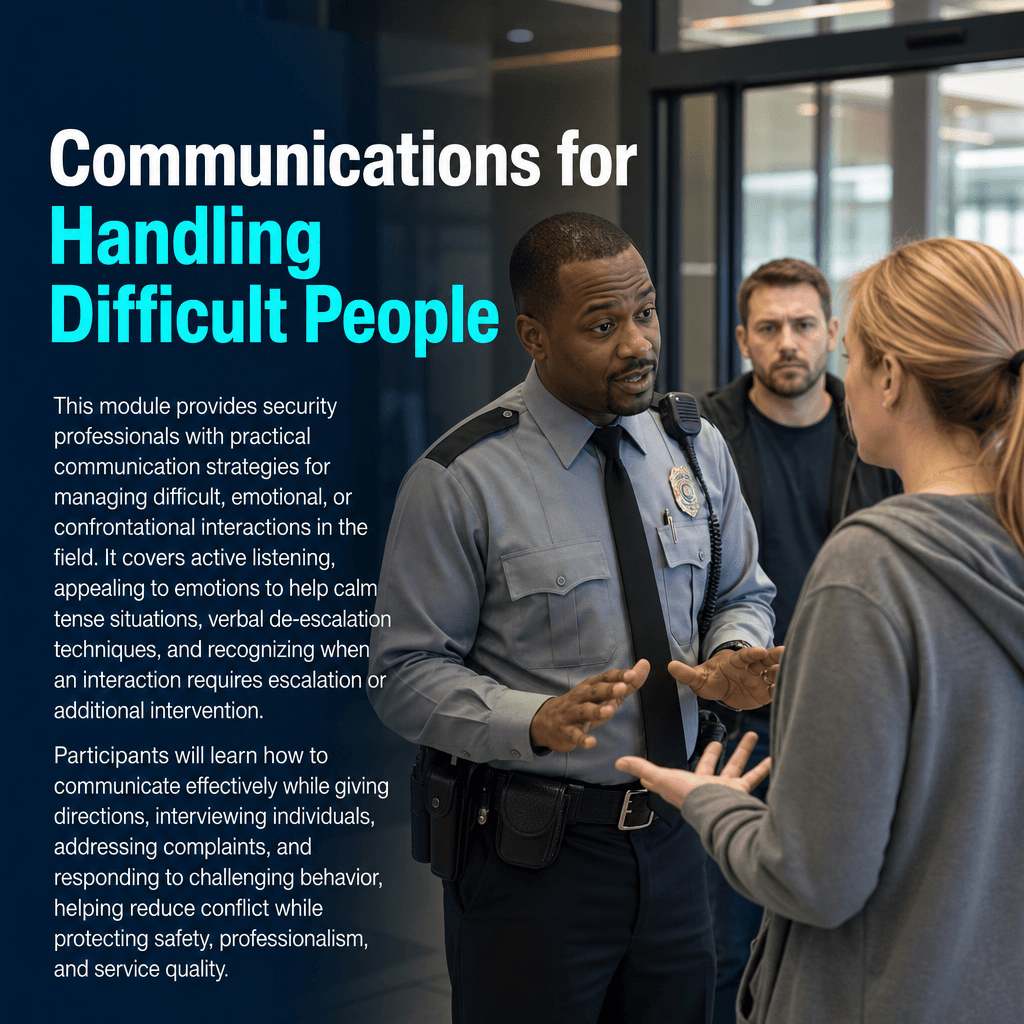
16A Communications for Handling Difficult People
This module provides security professionals with practical communication strategies for managing difficult, emotional, or confrontational interactions in the field. It covers active listening, appealing to emotions to help calm tense situations, verbal de-escalation techniques, and recognizing when an interaction requires escalation or additional intervention. Participants will learn how to communicate effectively while giving directions, interviewing individuals, addressing complaints, and responding to challenging behavior, helping reduce conflict while protecting safety, professionalism, and service quality.
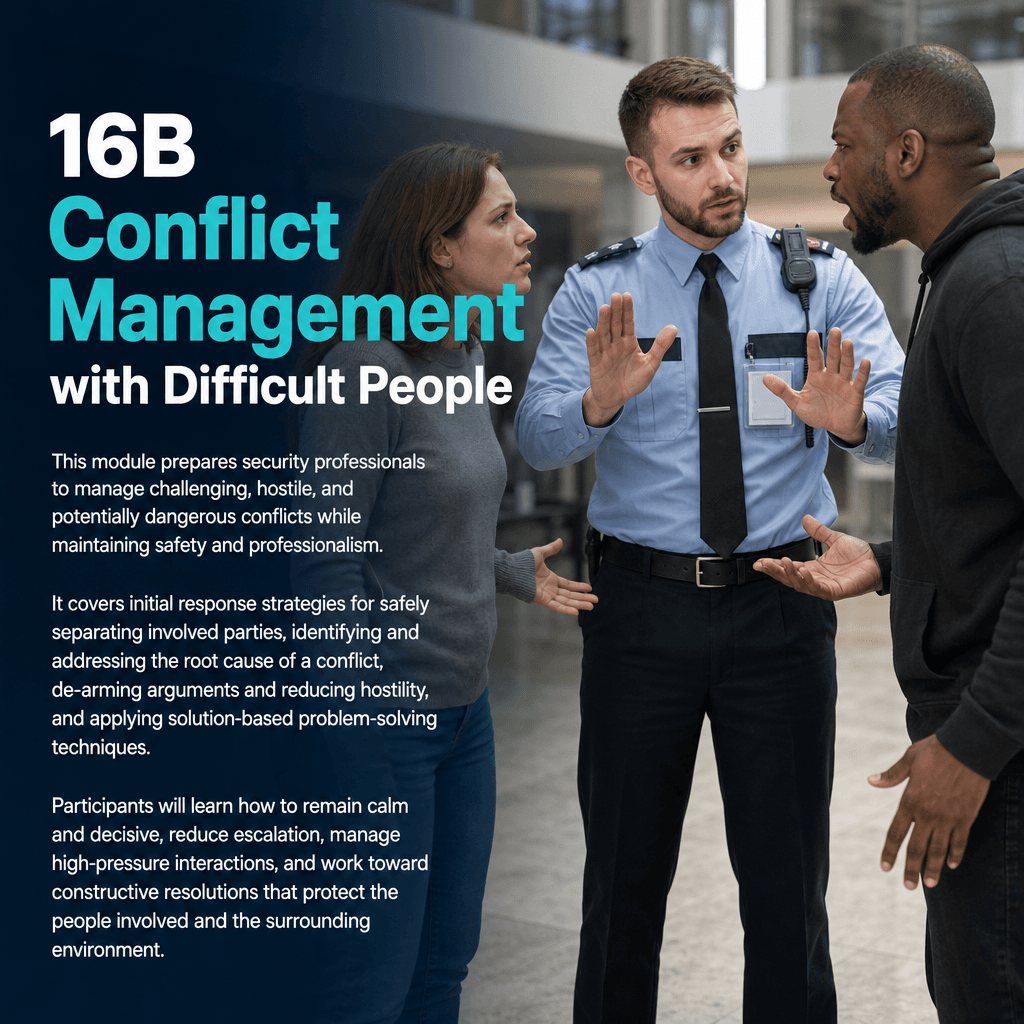
16B Conflict Management with Difficult People
This module prepares security professionals to manage challenging, hostile, and potentially dangerous conflicts while maintaining safety and professionalism. It covers initial response strategies for safely separating involved parties, identifying and addressing the root cause of a conflict, de-arming arguments and reducing hostility, and applying solution-based problem-solving techniques. Participants will learn how to remain calm and decisive, reduce escalation, manage high-pressure interactions, and work toward constructive resolutions that protect the people involved and the surrounding environment.
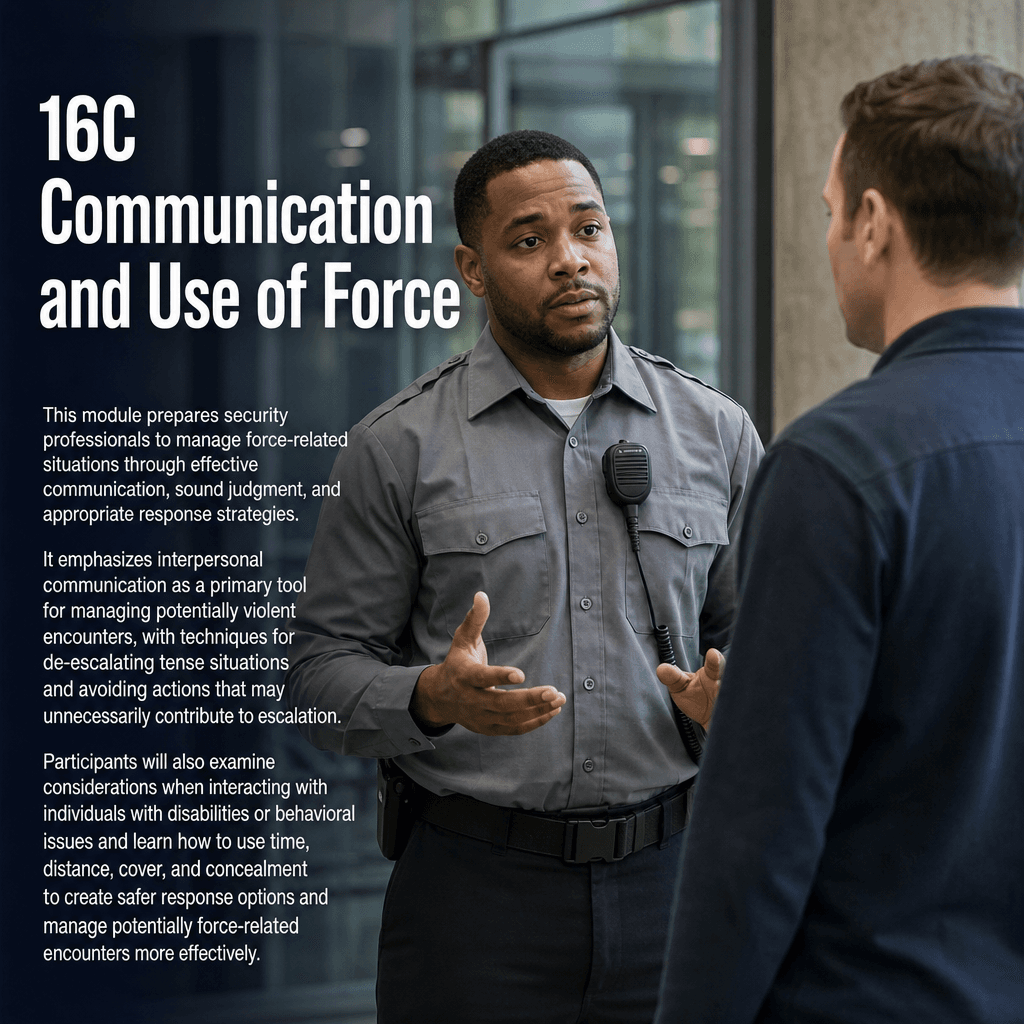
16C Communication and Use of Force
This module prepares security professionals to manage force-related situations through effective communication, sound judgment, and appropriate response strategies. It emphasizes interpersonal communication as a primary tool for managing potentially violent encounters, with techniques for de-escalating tense situations and avoiding actions that may unnecessarily contribute to escalation. Participants will also examine considerations when interacting with individuals with disabilities or behavioral issues and learn how to use time, distance, cover, and concealment to create safer response options and manage potentially force-related encounters more effectively.
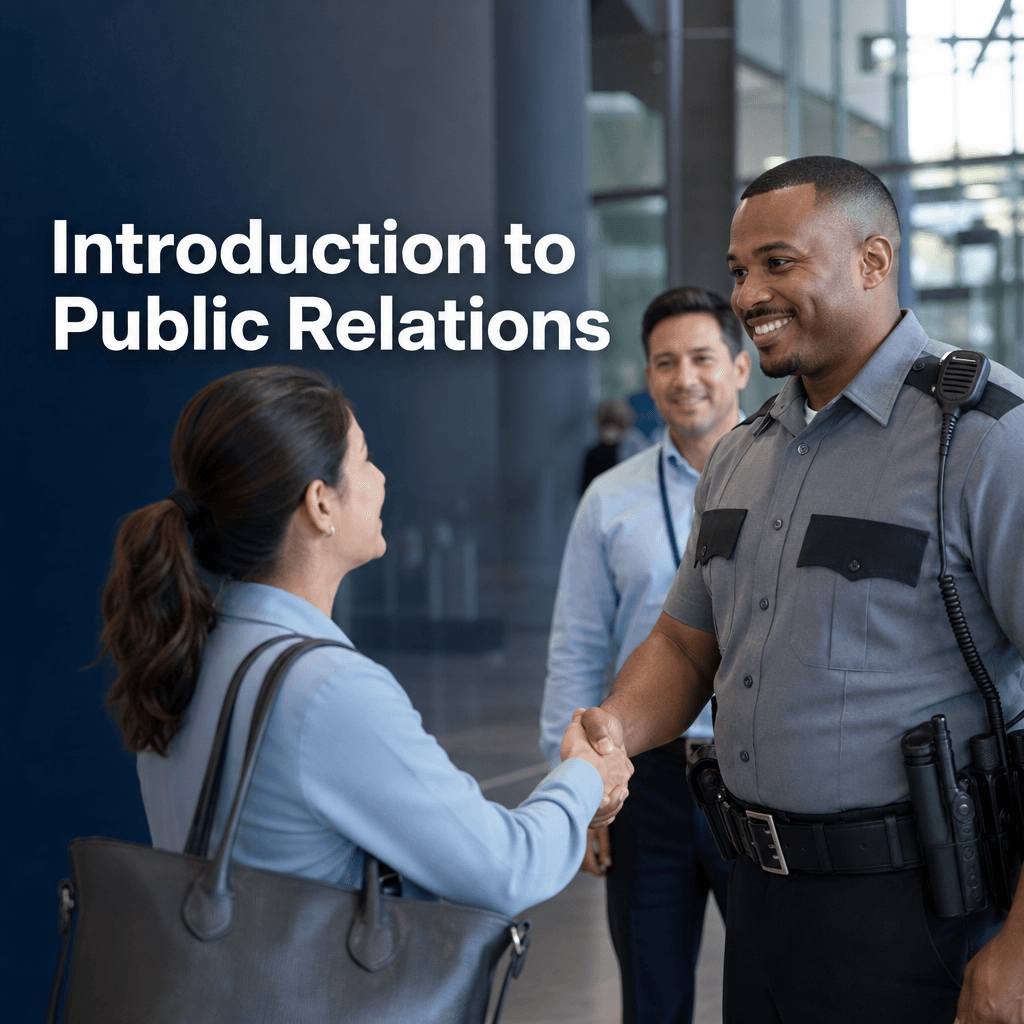
16D Introduction to Public Relations
This module introduces security professionals to essential public relations principles for building positive and professional interactions with the public. It covers diversity and cultural awareness, earning and demonstrating respect, professional image, attitude and public perception, and recognizing and overcoming stereotypes. Participants will learn how ethical conduct, effective communication, cultural sensitivity, and professional behavior influence public trust, strengthen relationships with diverse communities, and positively represent both the security professional and the organization they serve.
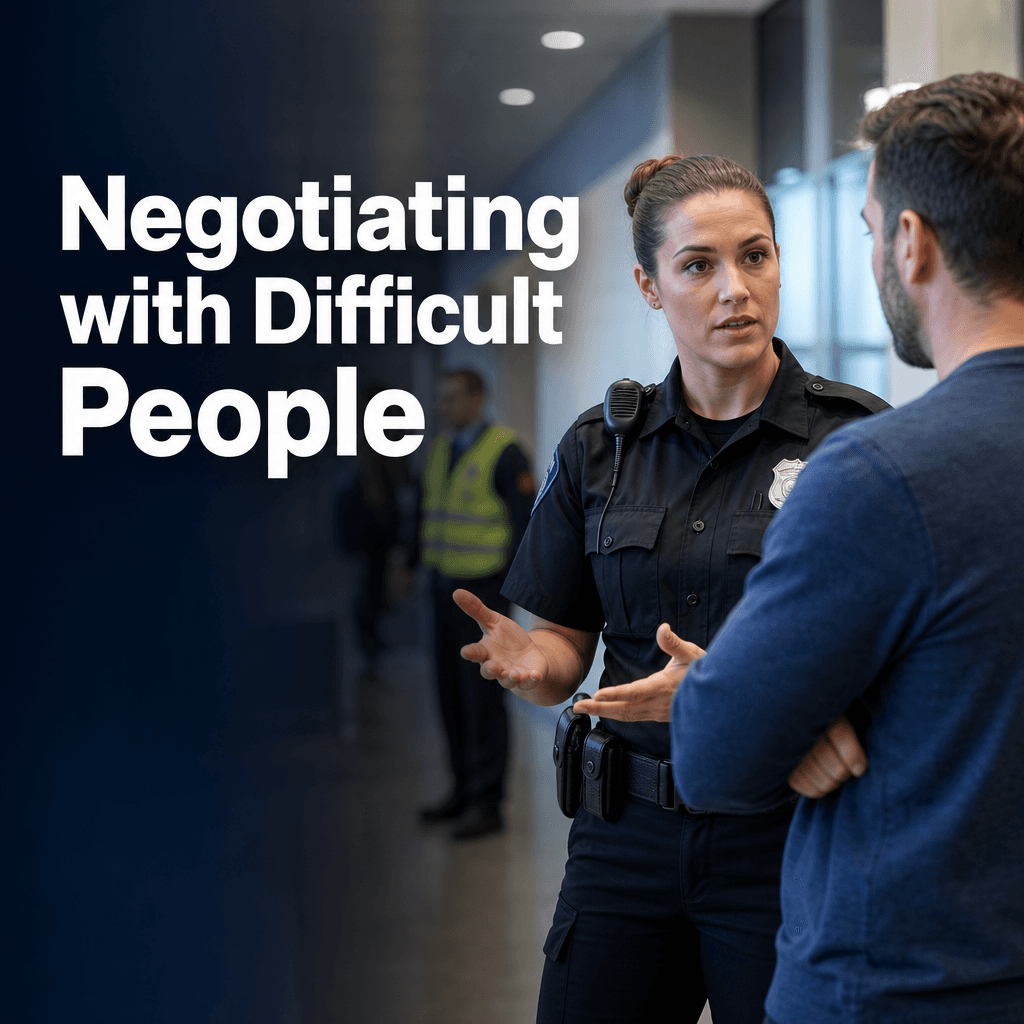
16E Negotiating with Difficult People
This module provides security professionals with practical negotiation and communication techniques for managing difficult or challenging interactions in the field. It covers active listening, appealing to emotions to help calm tense situations, verbal de-escalation strategies, and recognizing when an interaction requires escalation or additional intervention. Participants will learn how to communicate effectively while giving directions, interviewing individuals, responding to complaints, and navigating conflict, helping protect safety, maintain professionalism, and achieve more constructive outcomes during difficult encounters.
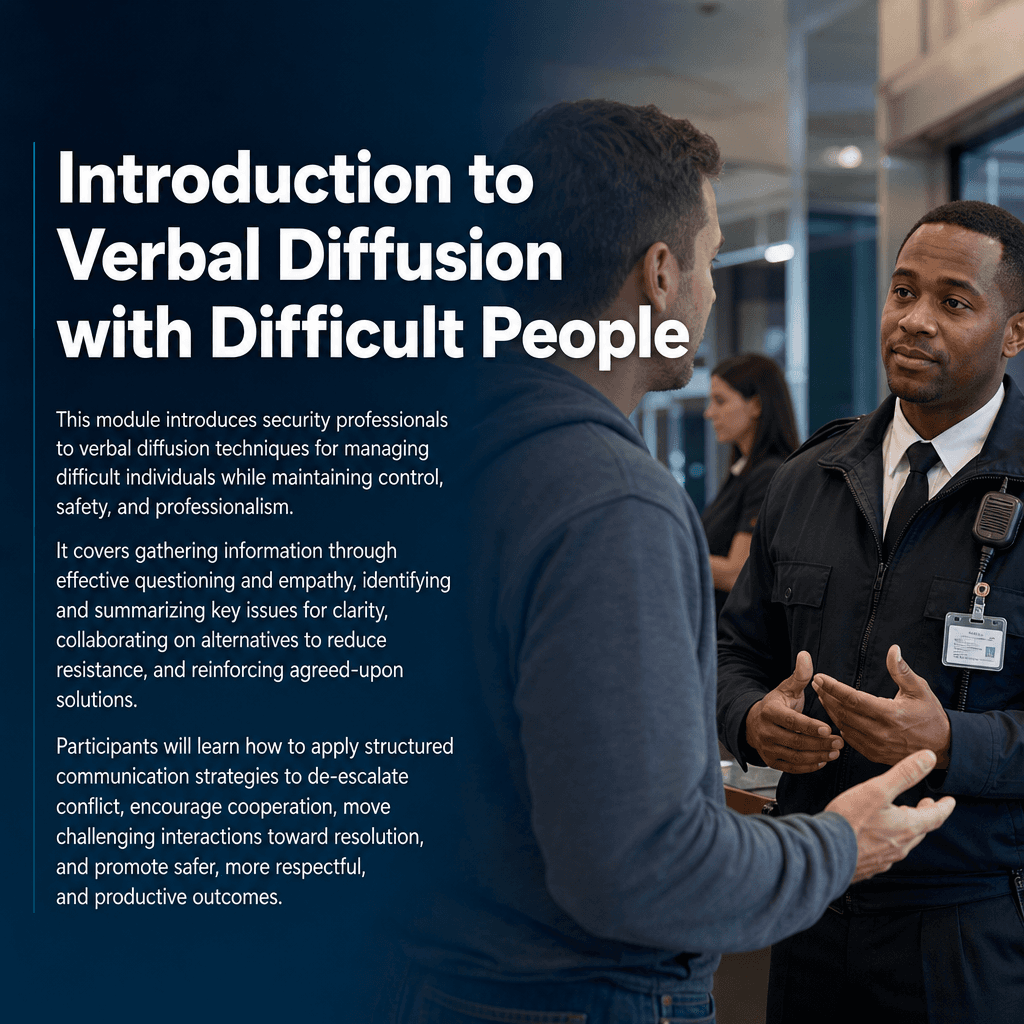
16F Introduction to Verbal Diffusion with Difficult People
This module introduces security professionals to verbal diffusion techniques for managing difficult individuals while maintaining control, safety, and professionalism. It covers gathering information through effective questioning and empathy, identifying and summarizing key issues for clarity, collaborating on alternatives to reduce resistance, and reinforcing agreed-upon solutions. Participants will learn how to apply structured communication strategies to de-escalate conflict, encourage cooperation, move challenging interactions toward resolution, and promote safer, more respectful, and productive outcomes.
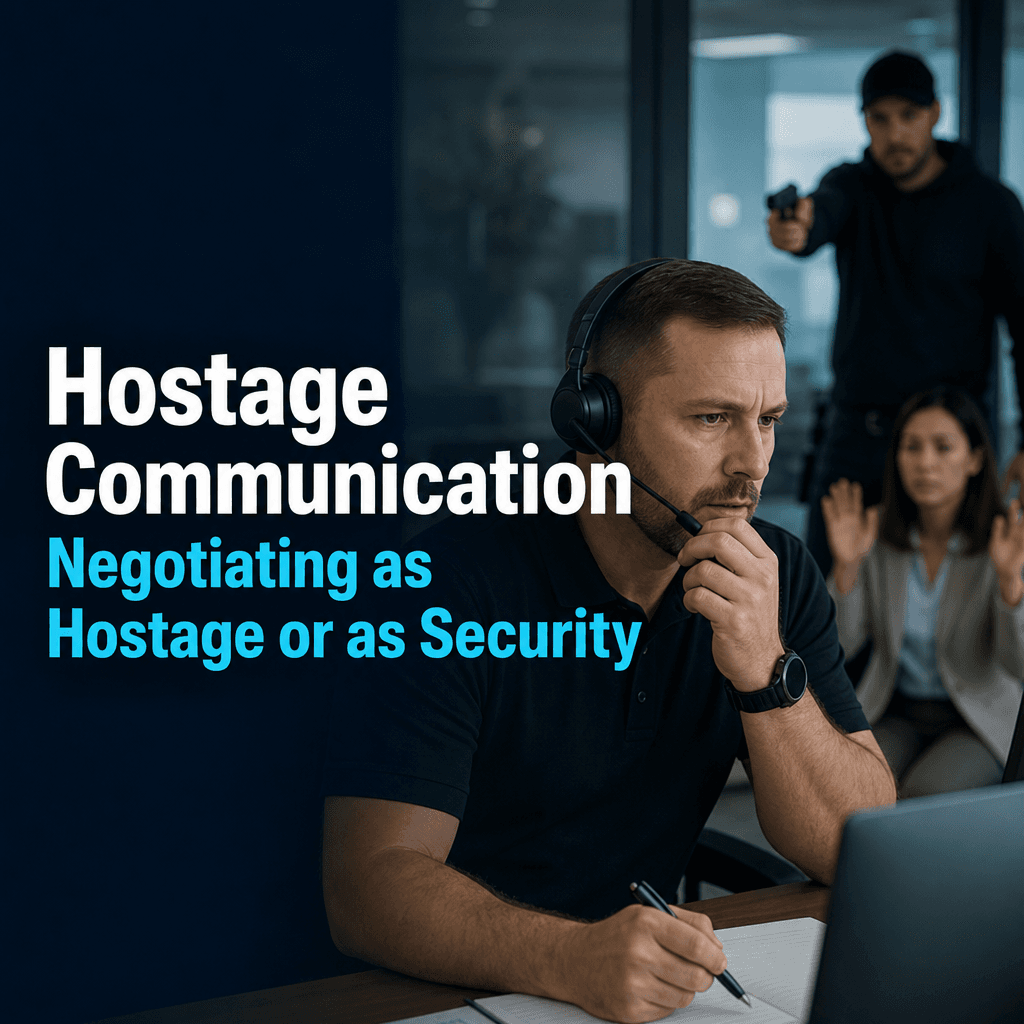
16G Hostage communication - Negotiating as Hostage or as Security
This module prepares security professionals to respond to high-stakes hostage situations through structured communication, assessment, and de-escalation strategies. It covers analyzing the root causes of an incident, identifying whether hostages are involved, using communication to buy time and stabilize volatile situations, and filtering critical information while operating under pressure. Participants will also learn to apply the OODA loop framework to scenario planning and decision-making, evaluate possible resolutions, and support a safer, controlled response until emergency professionals or law enforcement take over.
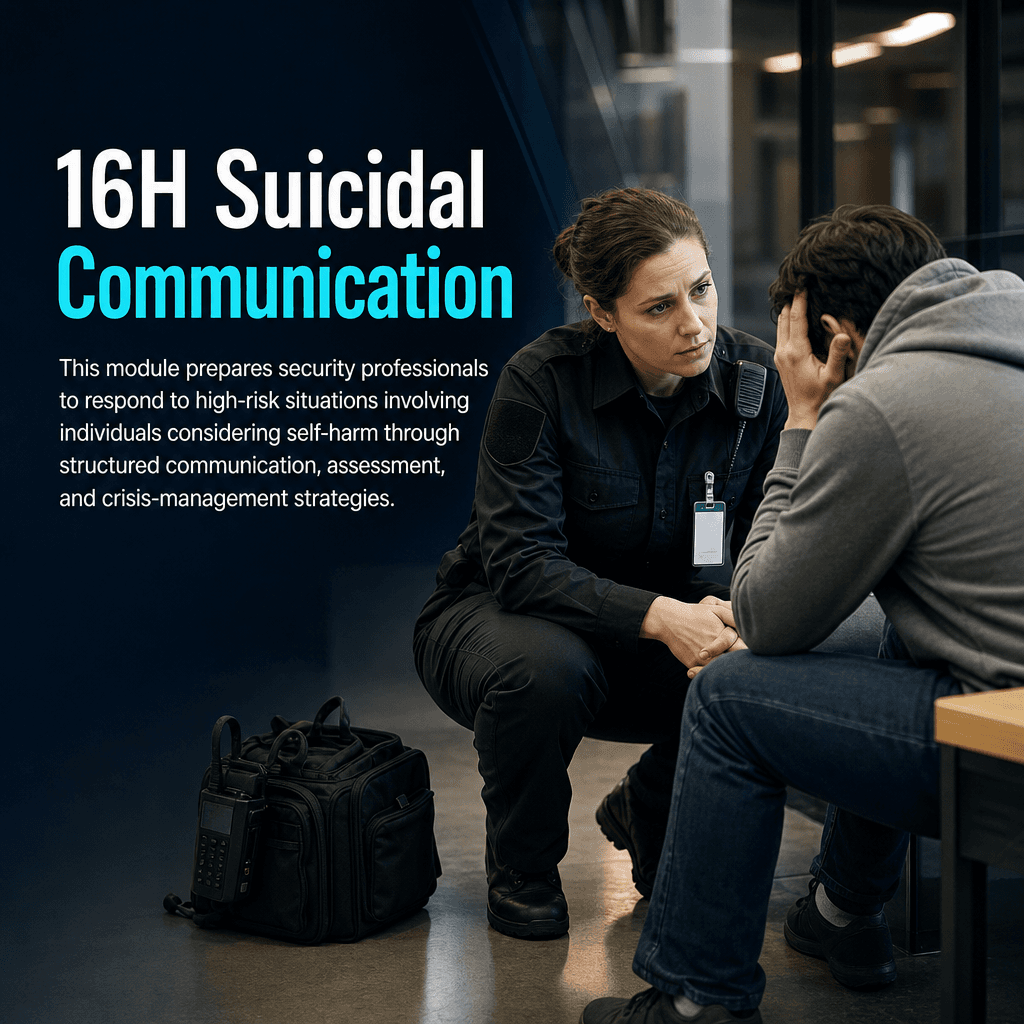
16H Suicidal Communication
This module prepares security professionals to respond to high-risk situations involving individuals considering self-harm through structured communication, assessment, and crisis-management strategies. It covers recognizing warning signs, assessing suicidal intent and risk, creating space for safe dialogue, using communication to buy time and stabilize the situation, and applying OODA-based scenario planning to support effective decision-making. Participants will learn to identify possible safe resolutions, maintain communication, and manage the immediate situation until specialized emergency or mental health professionals can take over.
How it works
Step 1
Purchase
Sign in and pay once through Stripe. Your training unlocks immediately.
Step 2
Complete the training
Work through the modules at your own pace. Your progress saves automatically.
Step 3
Finish and get credit
Your completion is recorded on your MyGuardForce profile, so you and your employer can see where you stand.
Officers working toward CA PSO Card. This course is published under that license.
Training your whole team?
Assign this course to every new hire from your MyGuardForce dashboard and get bulk pricing.
Our programs are hand-crafted by security, public safety, and military experts to provide highly specialized instruction designed to activate the learning centers in the brain. By combining information and experiential training, AEGIS efficiently shares, practices, and tests practical knowledge to ensure mastery of every subject.