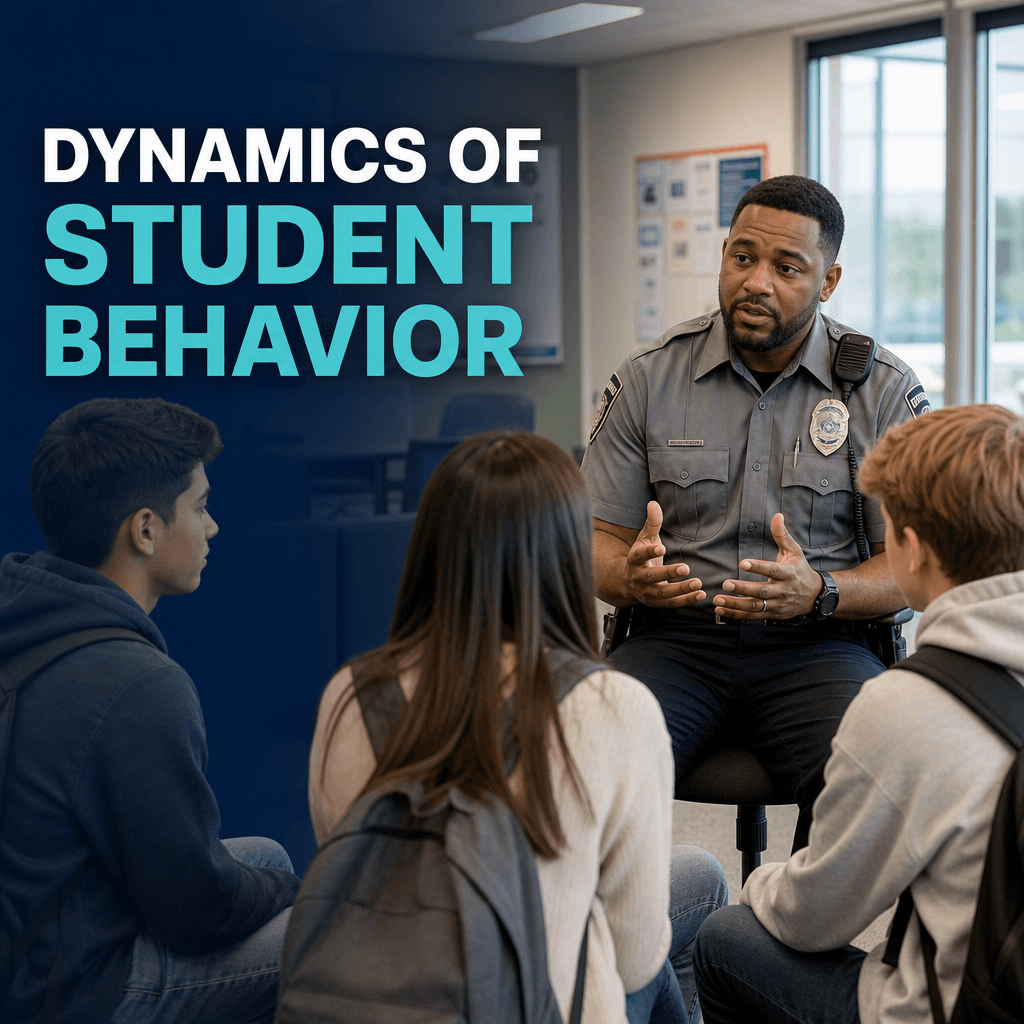
This course provides comprehensive training on the behavioral, social, and environmental factors that influence student conduct in educational settings. It covers mental health stressors and behavioral indicators, substance abuse involving students and families, dysfunctional family dynamics, cultural differences, special education considerations, gang dynamics, interpersonal conflict, and sensitivity in student interactions. Participants will develop practical skills for recognizing behavioral concerns, communicating effectively, applying appropriate intervention and de-escalation strategies, and responding professionally to complex student situations. Through awareness, prevention, and practical response techniques, the course strengthens the ability of security professionals to support student safety, reduce escalation, collaborate with school personnel, and contribute to a safe, respectful, and inclusive learning environment.
CA PPO #16744 & CA PI #27756
What's included
Work through the modules at your own pace. Your progress saves automatically, so you can stop and pick up where you left off.
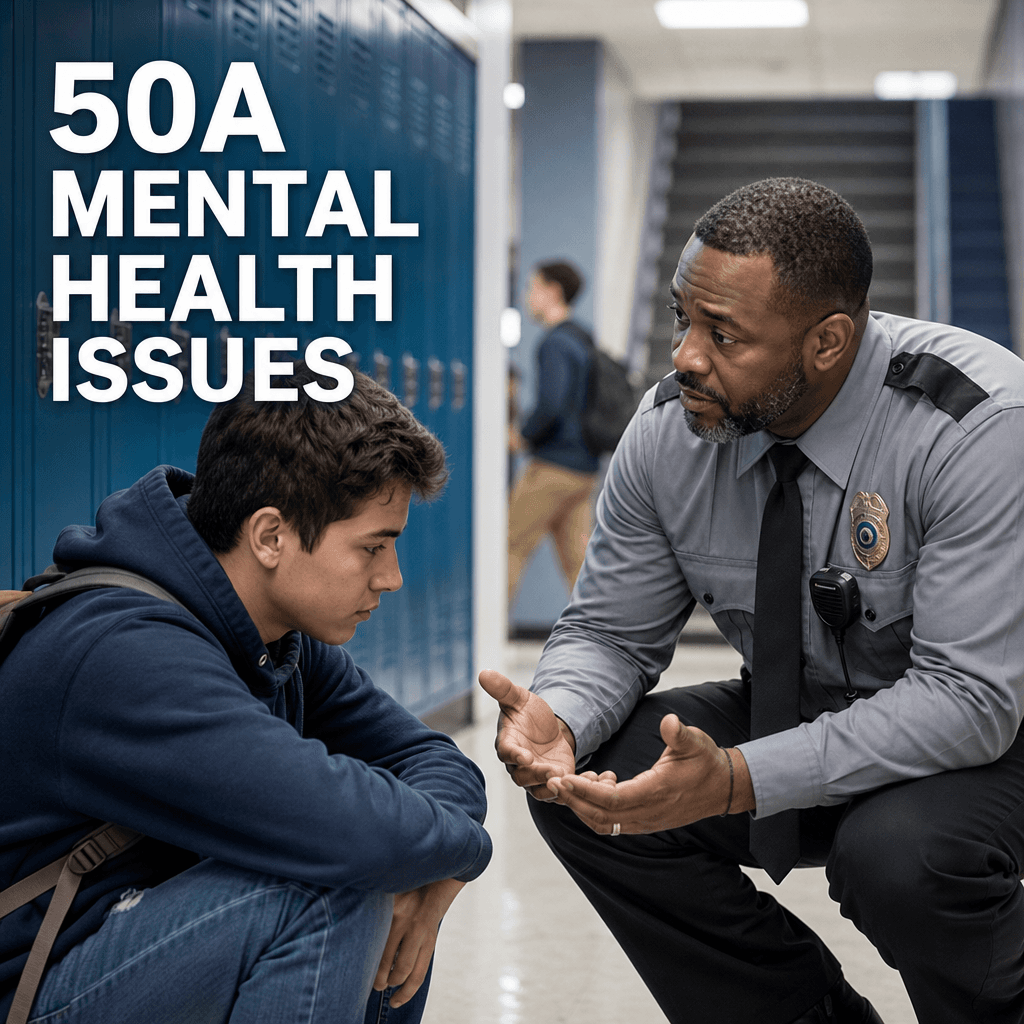
50A Mental Health Issues
This module prepares security professionals working in educational environments to recognize and respond appropriately to student behaviors associated with mental health challenges and emotional distress. Participants will examine common mental health stressors, observable behavioral changes, and warning signs that may affect safety, communication, and the overall campus environment. The training emphasizes professional observation, appropriate de-escalation techniques, and the legal and procedural considerations that guide a security guard’s response. By completing this module, participants will be better prepared to identify concerning behaviors, respond calmly and respectfully, support early intervention, and maintain safe, professional, and appropriate interactions with students experiencing mental health-related challenges.
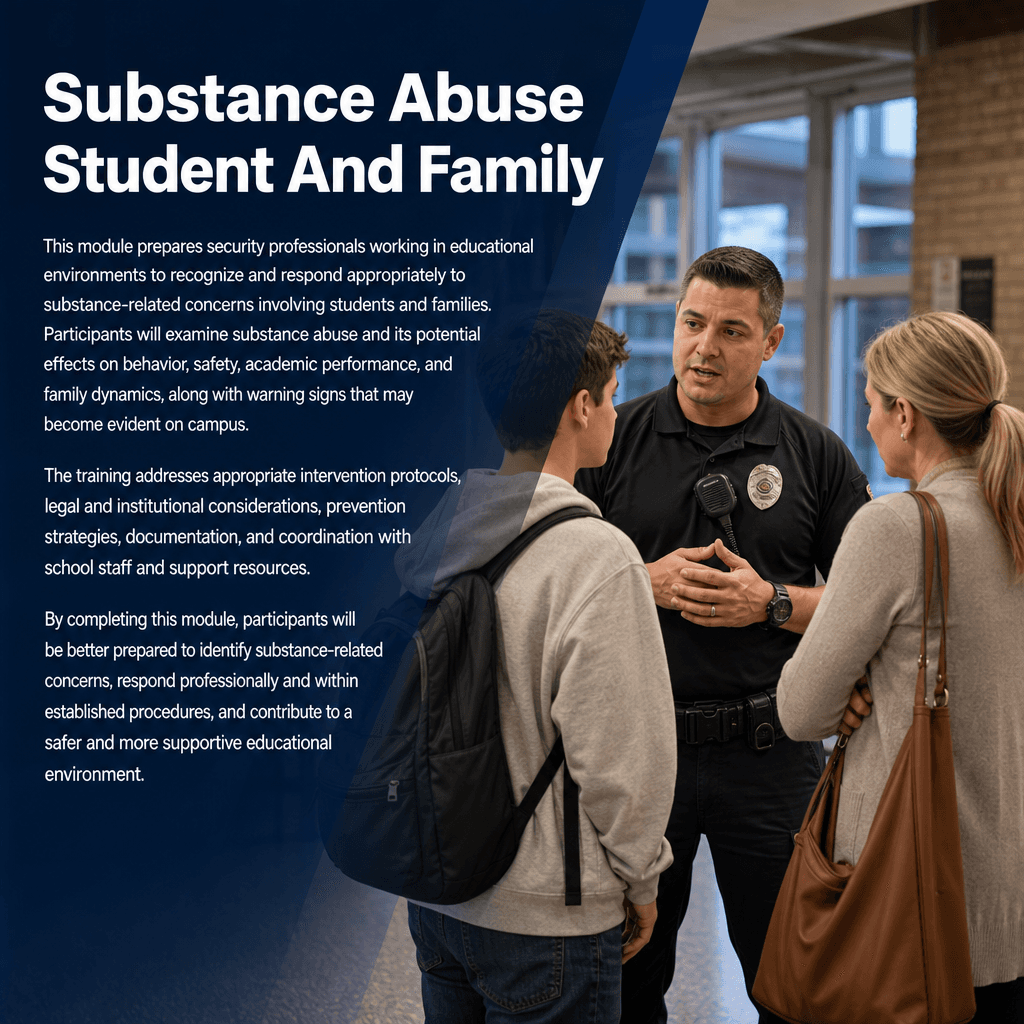
50B Substance Abuse Student And Family
This module prepares security professionals working in educational environments to recognize and respond appropriately to substance-related concerns involving students and families. Participants will examine substance abuse and its potential effects on behavior, safety, academic performance, and family dynamics, along with warning signs that may become evident on campus. The training addresses appropriate intervention protocols, legal and institutional considerations, prevention strategies, documentation, and coordination with school staff and support resources. By completing this module, participants will be better prepared to identify substance-related concerns, respond professionally and within established procedures, and contribute to a safer and more supportive educational environment.
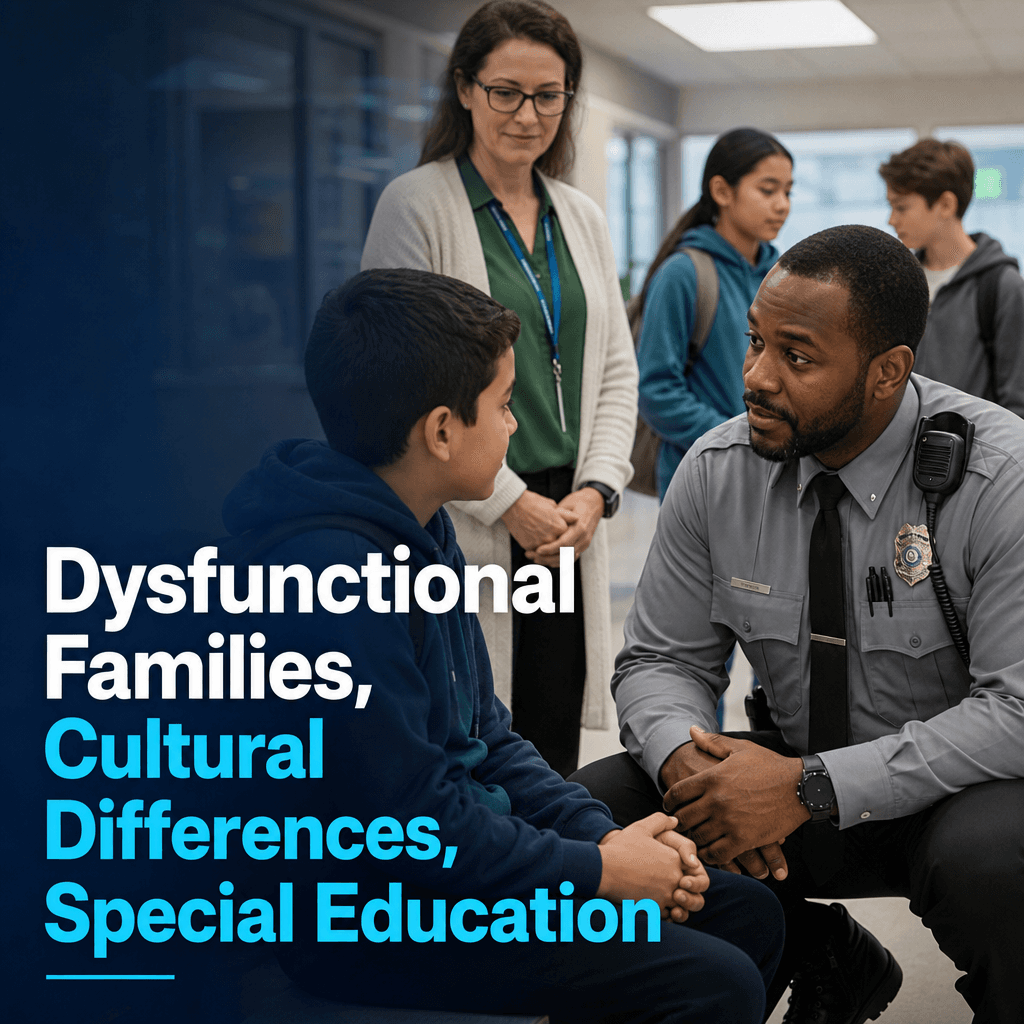
50C Dysfunctional Families_Cultural Differences_Special Education
This module prepares security professionals working in educational environments to understand how family dynamics, cultural differences, and special education needs may influence student behavior, communication, emotional regulation, and responses to authority. Participants will examine how these factors can affect security interactions and learn practical strategies for responding professionally, fairly, and without unnecessary escalation. The training emphasizes recognizing underlying influences on behavior, adapting intervention approaches appropriately, collaborating with school personnel, and maintaining awareness of individual student needs. By completing this module, security guards will be better prepared to manage student behavior respectfully and effectively while supporting a safe, inclusive, and professional learning environment.
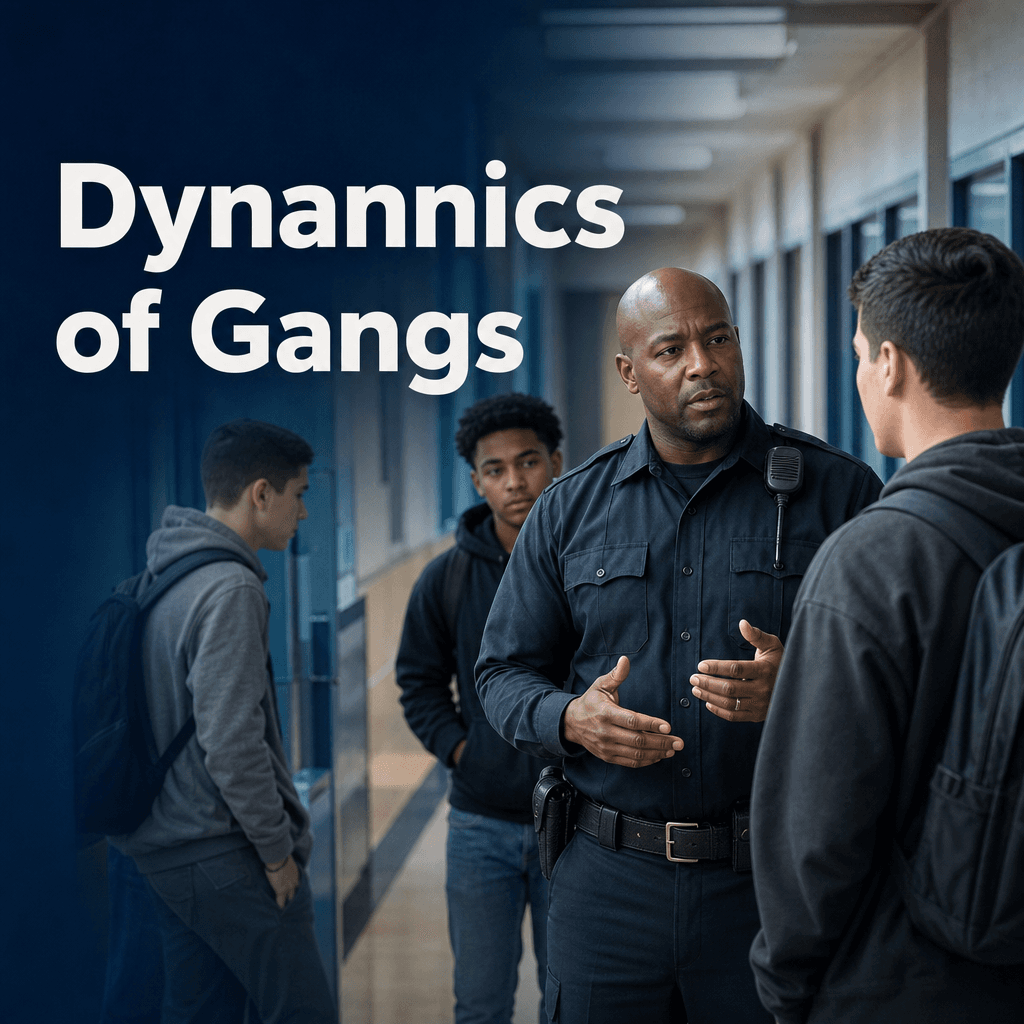
50D Dynamics of Gangs
This module prepares security professionals working in educational environments to recognize and respond appropriately to gang-related behaviors and concerns that may affect students and campus safety. Participants will examine gang culture and its potential influence on students, behavioral indicators that may suggest gang involvement, and intervention strategies designed to reduce escalation and maintain safety. The training also emphasizes professional observation, de-escalation, accurate reporting, and prevention-focused practices that support school administrators and partner agencies. By completing this module, security guards will be better prepared to identify potential gang-related concerns, respond safely and professionally, document incidents accurately, and contribute to efforts that reduce gang-related activity on campus.
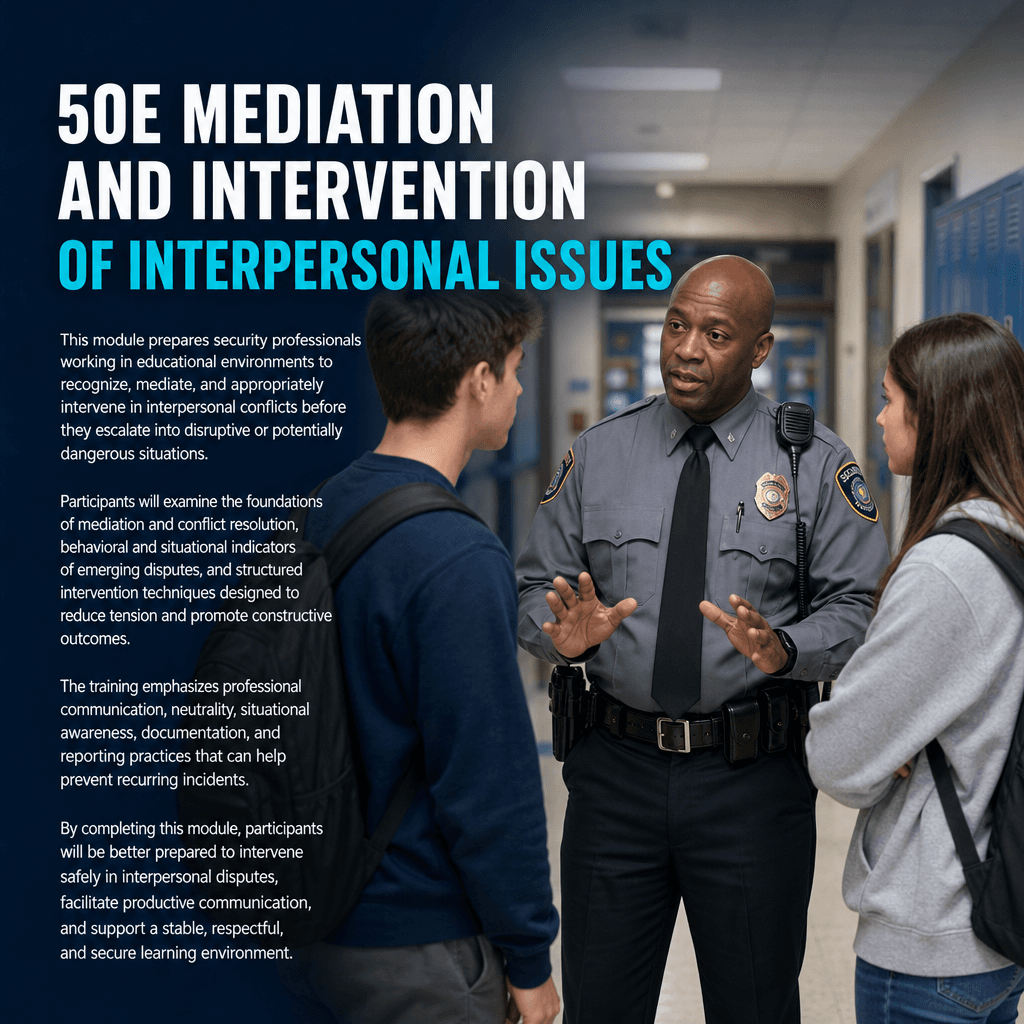
50E Mediation and Intervention of Interpersonal Issues
This module prepares security professionals working in educational environments to recognize, mediate, and appropriately intervene in interpersonal conflicts before they escalate into disruptive or potentially dangerous situations. Participants will examine the foundations of mediation and conflict resolution, behavioral and situational indicators of emerging disputes, and structured intervention techniques designed to reduce tension and promote constructive outcomes. The training emphasizes professional communication, neutrality, situational awareness, documentation, and reporting practices that can help prevent recurring incidents. By completing this module, participants will be better prepared to intervene safely in interpersonal disputes, facilitate productive communication, and support a stable, respectful, and secure learning environment.
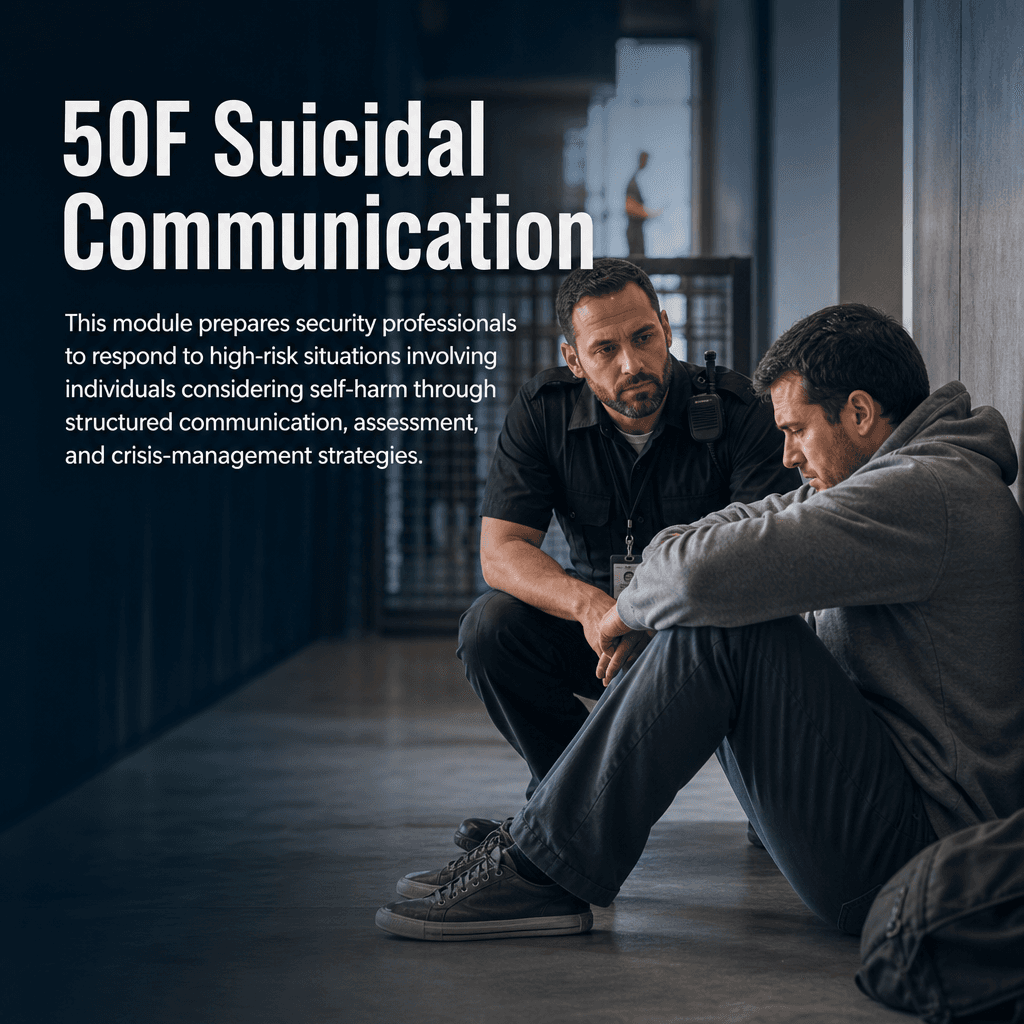
50F Suicidal Communication
This module prepares security professionals to respond to high-risk situations involving individuals considering self-harm through structured communication, assessment, and crisis-management strategies. It covers recognizing warning signs, assessing suicidal intent and risk, creating space for safe dialogue, using communication to buy time and stabilize the situation, and applying OODA-based scenario planning to support effective decision-making. Participants will learn to identify possible safe resolutions, maintain communication, and manage the immediate situation until specialized emergency or mental health professionals can take over.
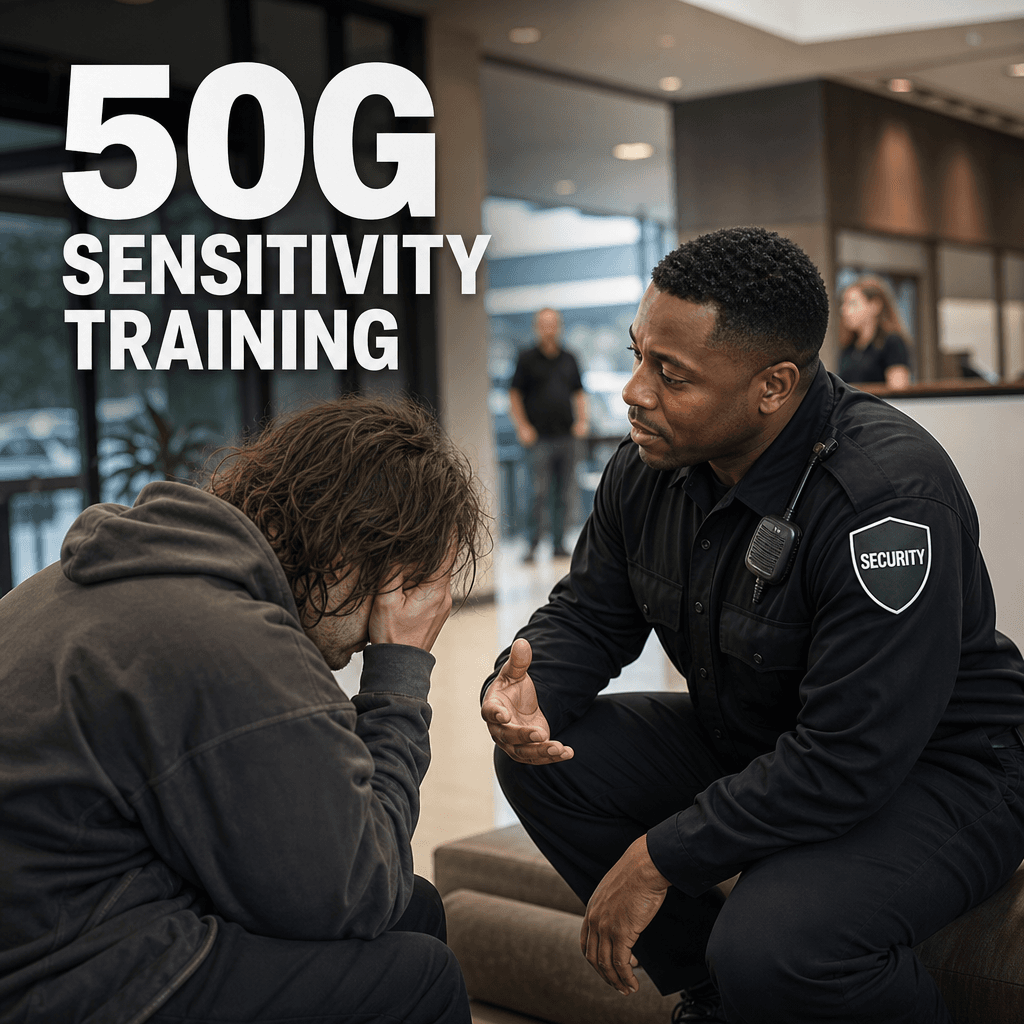
50G Sensitivity Training
This module prepares security professionals to respond appropriately and professionally when interacting with individuals experiencing emotional distress, trauma, substance-related concerns, or crisis situations. Participants will examine Trauma-Informed Communication (TIC), harm reduction, de-escalation strategies, and restorative practices that emphasize safety, trust, collaboration, and respectful interaction. The training focuses on reducing unnecessary escalation while helping security personnel maintain situational awareness, professional boundaries, and effective communication during challenging encounters. By completing this module, participants will be better prepared to manage sensitive situations with professionalism, sound judgment, and respect while supporting safer environments for everyone involved.
How it works
Step 1
Purchase
Sign in and pay once through Stripe. Your training unlocks immediately.
Step 2
Complete the training
Work through the modules at your own pace. Your progress saves automatically.
Step 3
Finish and get credit
Your completion is recorded on your MyGuardForce profile, so you and your employer can see where you stand.
Officers working toward CA PSO Card. This course is published under that license.
Training your whole team?
Assign this course to every new hire from your MyGuardForce dashboard and get bulk pricing.
Our programs are hand-crafted by security, public safety, and military experts to provide highly specialized instruction designed to activate the learning centers in the brain. By combining information and experiential training, AEGIS efficiently shares, practices, and tests practical knowledge to ensure mastery of every subject.