
This course provides comprehensive training for security professionals working in bars, nightclubs, entertainment venues, and special events, where access control, intoxication, crowd behavior, and conflict can create unique safety challenges. It covers ID checking and the detection of borrowed or fake identification, pat downs and bag checks, criminal, civil, and administrative liability, and the recognition and management of alcohol- and drug-related behavior. Participants will also develop practical skills for handling disputes, confronting conflicts constructively, applying appropriate use-of-force principles, and maintaining a customer-service-oriented approach to security. Through legal awareness, observation, communication, de-escalation, and sound decision-making, the course strengthens participants’ ability to manage challenging situations, protect patrons, staff, and property, and maintain a safe, professional environment in nightlife and event settings.
CA PPO #16744 & CA PI #27756
What's included
Work through the modules at your own pace. Your progress saves automatically, so you can stop and pick up where you left off.
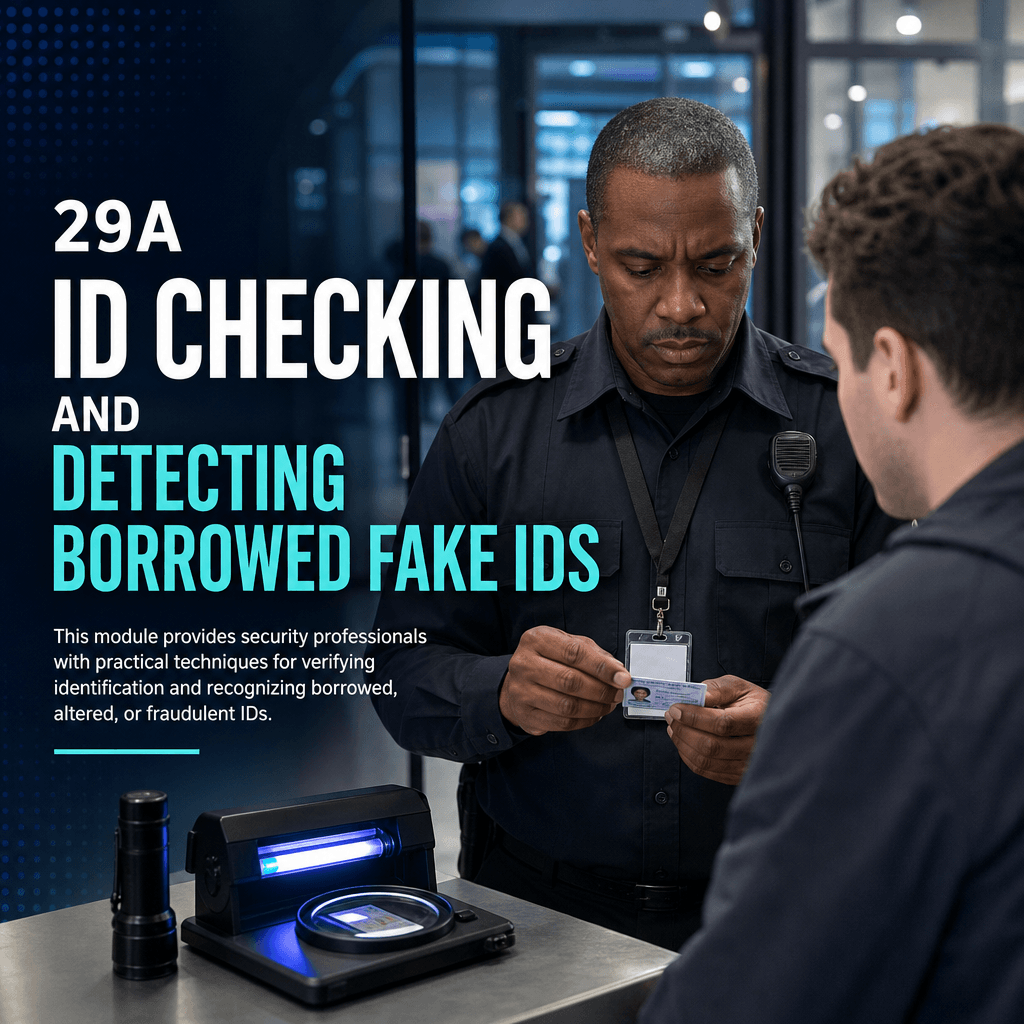
29A ID Checking and Detecting borrowed fake IDs
This module provides security professionals with practical techniques for verifying identification and recognizing borrowed, altered, or fraudulent IDs. Participants will learn how to use appropriate ID-checking tools, follow a systematic verification process, examine identification for inconsistencies or suspicious characteristics, and identify indicators that an ID may not belong to the person presenting it. The training strengthens accuracy, attention to detail, and confidence when conducting identification checks, helping security personnel detect potential fraud and make more informed access-control decisions.
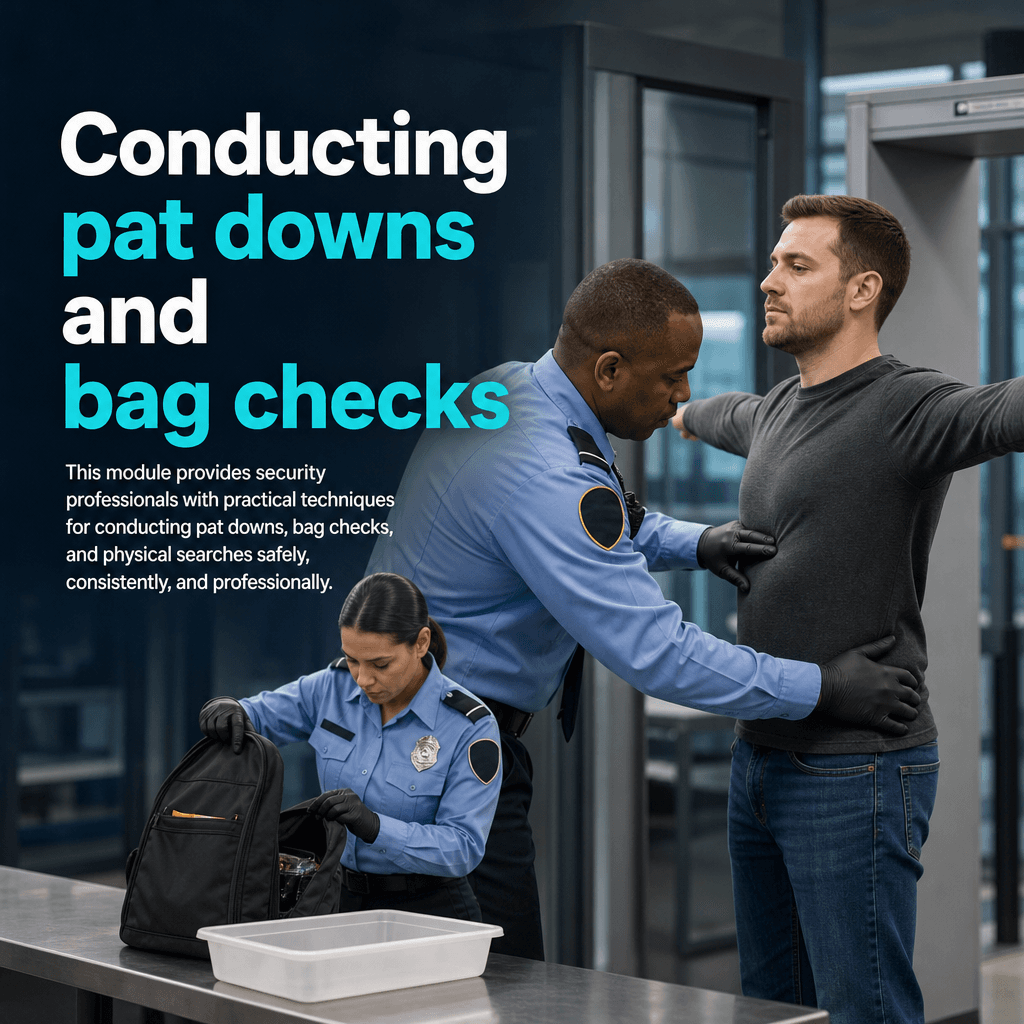
29B Conducting pat downs and bag checks
This module provides security professionals with practical techniques for conducting pat downs, bag checks, and physical searches safely, consistently, and professionally. Participants will learn the importance of established security policies and proper signage, appropriate procedures for screening individuals and personal belongings, and techniques for detecting metal objects and identifying prohibited items before they enter private property. The training emphasizes thorough and accurate screening practices while maintaining professionalism, helping security personnel strengthen access control and reduce risks associated with unauthorized or prohibited items.
29C Criminal, Civil and Administrative Liability Overview
This module provides security professionals with an overview of the criminal, civil, and administrative liabilities that can arise from actions taken while performing security duties. Participants will examine how professional conduct, decision-making, and failure to follow established legal and operational standards may create consequences for individual security guards, employers, and security organizations. The training addresses potential crimes and penalties, civil liability and its impact on professional responsibilities, and the employer’s role in maintaining appropriate legal and ethical standards. By understanding these different forms of liability, participants will be better prepared to make responsible decisions, reduce unnecessary legal exposure, and perform their duties with greater awareness of the consequences their actions may carry.
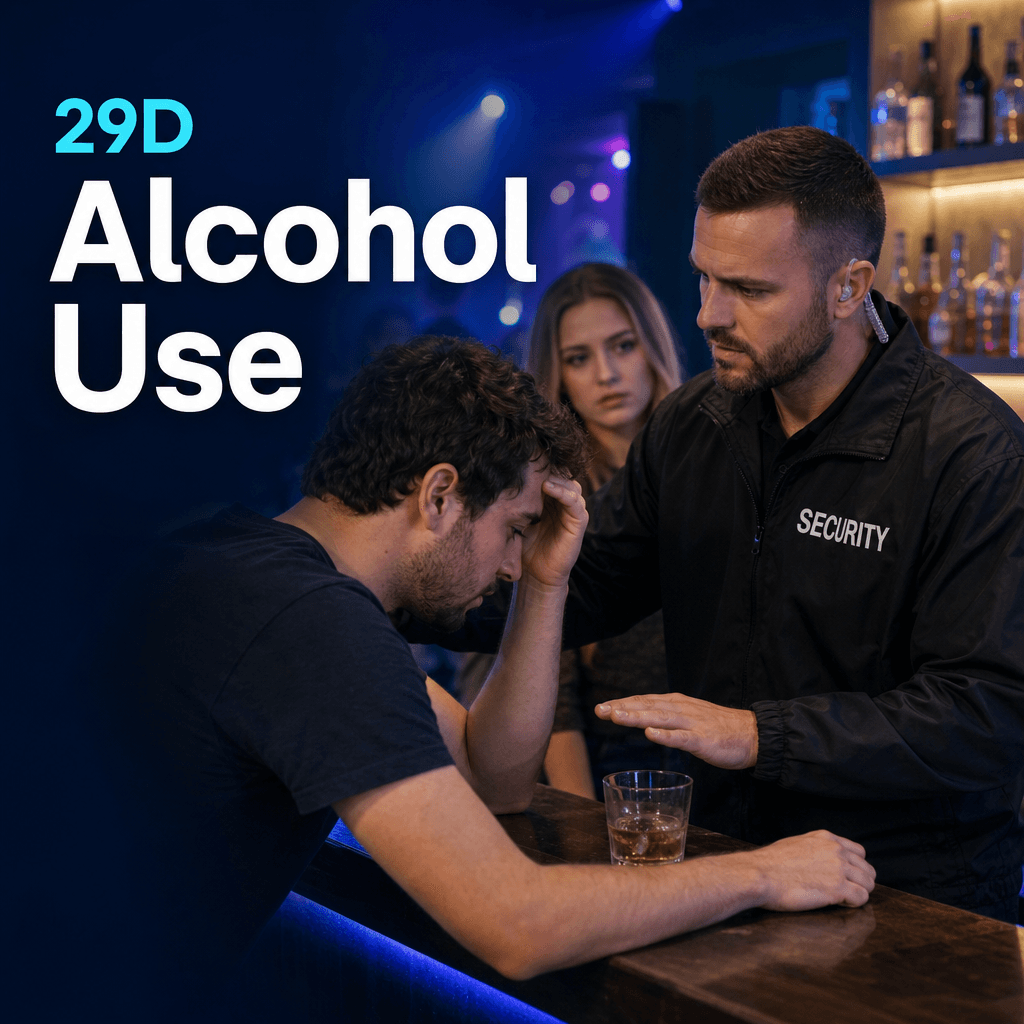
29D Alcohol Use
This module prepares security professionals to recognize and appropriately manage situations involving individuals who may be intoxicated or impaired by alcohol. Participants will learn to identify visible, physical, verbal, and behavioral indicators of alcohol consumption and over-intoxication, assess developing situations before they escalate, and apply practical techniques for interacting with intoxicated individuals safely and professionally. The training emphasizes de-escalation, responsible decision-making, maintaining appropriate legal and professional boundaries, and taking effective action to protect patrons and others while reducing risks associated with alcohol-related incidents.
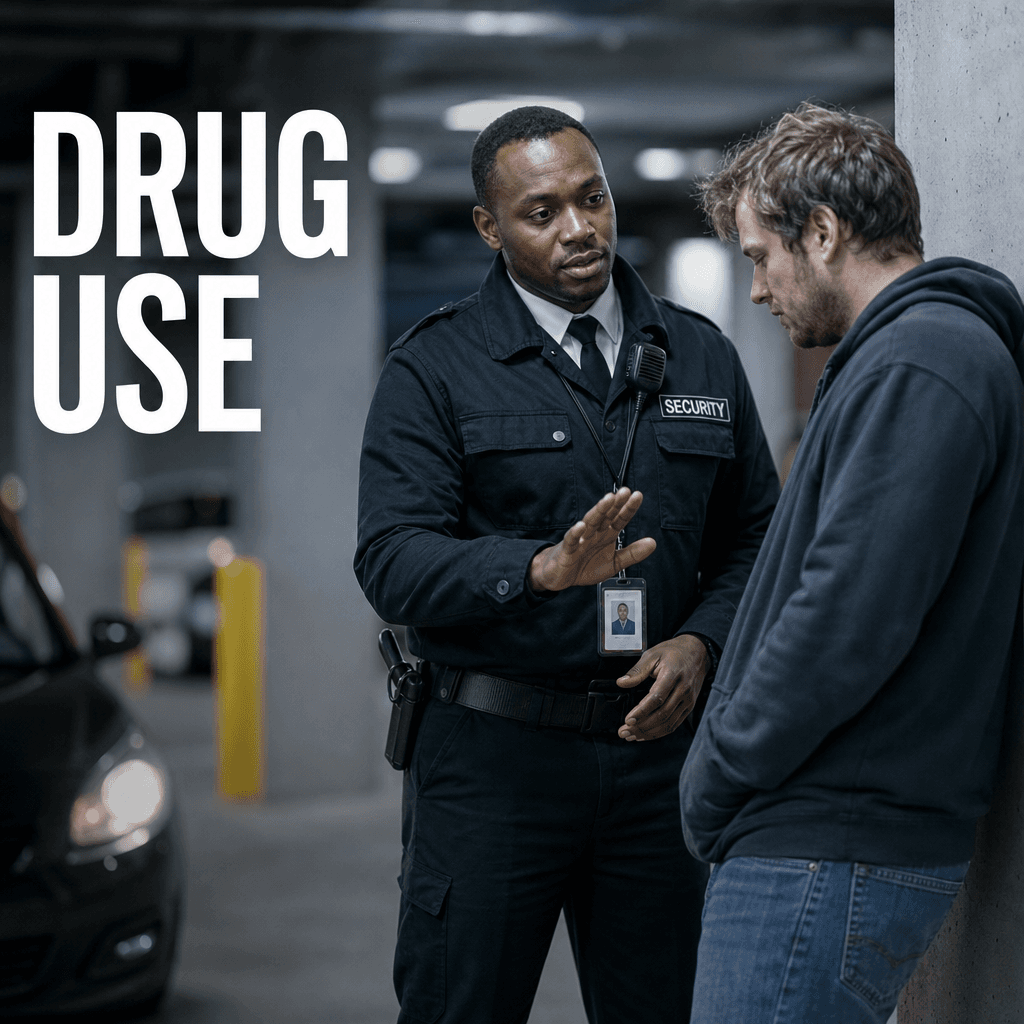
29E Drug Use
This module prepares security professionals to recognize and appropriately manage situations involving suspected drug use or impairment. Participants will examine major classifications of narcotics and other drugs, their potential effects on behavior and risk levels, and the physical, verbal, and behavioral indicators that may suggest substance use or abuse. The training also addresses practical strategies for assessing developing situations and interacting safely and professionally with individuals who may be under the influence. By strengthening drug recognition, situational assessment, and response skills, participants will be better prepared to reduce risk, maintain control, and protect themselves, others, and the property or organization they serve.
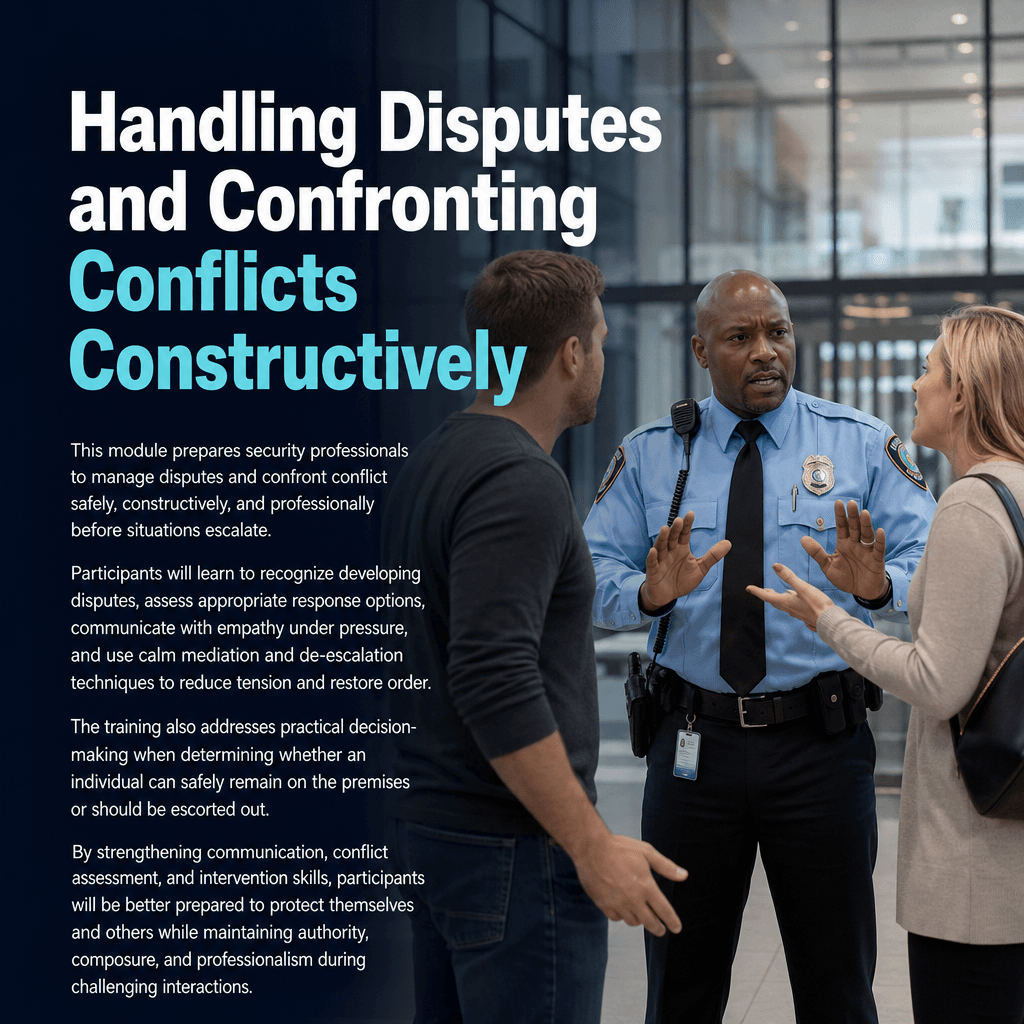
29F Handling Disputes and Confronting Conflicts Constructively
This module prepares security professionals to manage disputes and confront conflict safely, constructively, and professionally before situations escalate. Participants will learn to recognize developing disputes, assess appropriate response options, communicate with empathy under pressure, and use calm mediation and de-escalation techniques to reduce tension and restore order. The training also addresses practical decision-making when determining whether an individual can safely remain on the premises or should be escorted out. By strengthening communication, conflict assessment, and intervention skills, participants will be better prepared to protect themselves and others while maintaining authority, composure, and professionalism during challenging interactions.

29G Use of Force in Nightlife
This module prepares security professionals to make appropriate use-of-force decisions in fast-moving nightlife environments where conflicts can escalate rapidly. Participants will examine the Use of Force Continuum and learn how circumstances may require adjusting their response as a situation changes, including recognizing when to escalate, de-escalate, or disengage. The training covers effective verbal commands as an important first response, appropriate restraint techniques, and coordinated teamwork during physical or potentially violent encounters. By strengthening judgment, communication, control, and team coordination, participants will be better prepared to manage confrontations, protect patrons and staff, and minimize unnecessary risk while maintaining safety and professionalism.

29H Customer Service Oriented Security
This module prepares security professionals to make appropriate use-of-force decisions in fast-moving nightlife environments where conflicts can escalate rapidly. Participants will examine the Use of Force Continuum and learn how circumstances may require adjusting their response as a situation changes, including recognizing when to escalate, de-escalate, or disengage. The training covers effective verbal commands as an important first response, appropriate restraint techniques, and coordinated teamwork during physical or potentially violent encounters. By strengthening judgment, communication, control, and team coordination, participants will be better prepared to manage confrontations, protect patrons and staff, and minimize unnecessary risk while maintaining safety and professionalism.
How it works
Step 1
Purchase
Sign in and pay once through Stripe. Your training unlocks immediately.
Step 2
Complete the training
Work through the modules at your own pace. Your progress saves automatically.
Step 3
Finish and get credit
Your completion is recorded on your MyGuardForce profile, so you and your employer can see where you stand.
Officers working toward CA PSO Card. This course is published under that license.
Training your whole team?
Assign this course to every new hire from your MyGuardForce dashboard and get bulk pricing.
Our programs are hand-crafted by security, public safety, and military experts to provide highly specialized instruction designed to activate the learning centers in the brain. By combining information and experiential training, AEGIS efficiently shares, practices, and tests practical knowledge to ensure mastery of every subject.